4.71,375 kids left Murano with a pendant they made
Murano Glass Blowing Class for Kids Glass Making Workshops in Venice
Book a glass workshop where your kids shape the piece themselves. Patient artisans guide young hands through mosaics and glass beads on Murano, and every session ends with a keepsake to take home. Pick a kid-safe class and reserve your family's spot today.
"Amazing! My husband and I loved the demo + workshop combo, so informative and the staff were phenomenal. 10/10, we'll be buying more pieces from them for sure."
4.7★average rating1,375traveler reviews100%free cancellation27countries travelers came from
Choosing a glass blowing class kids will love
The choice comes down to two things: how close to the fire your child gets, and how old they are. Teens can work a torch or blow at a real furnace; younger kids do better in a mosaic or bead session, and everyone can watch a master at the furnace first.
Grown-ups can book their own private lesson.
AgesHands-on furnace glassblowing takes children from 12 years old, some studios from 14, while mosaic activities welcome kids from 5 and torch bead classes run from 10 to 14.
Adult spotsSome studios let a parent supervise without paying, others charge every attendee, so count the places you need before booking.
CoolingHot glass anneals overnight, so a piece made in an afternoon class is ready the next day, and most studios can ship it home for an extra fee.
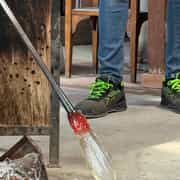
ClothingClosed-toe shoes and long pants in natural fabrics such as jeans, because synthetics melt near furnaces running at 1000 to 1400°C.
TimingMornings are best, when furnaces run at full energy and the rooms stay cooler; many workshops pause for lunch between 1 and 2:30 pm.
WeekendsFurnaces still host demonstrations and workshops on Saturdays and Sundays, but full production shifts run Monday to Friday and trade-only factories close on Sundays.
PhotographyAlways ask before taking photos or video, and keep the flash off while the masters work.
Getting thereBoat departures leave from piers around Riva degli Schiavoni and St. Mark's Square; plan to arrive 15 to 20 minutes early.
BreathingA furnace workshop does not suit anyone with asthma or another respiratory condition; watching a demonstration is the safer pick.
importantHands-on furnace glassblowing classes in Murano take children only from 12 years old (some studios require 14), and torch bead-making workshops set the bar at 10 to 14.
Pick a glass mosaic activity for children from 5 years old, or a bead assembly workshop where kids shape jewelry from ready-made beads, and have everyone wear closed-toe shoes and long trousers if a working furnace is part of the session.
Choosing a glass blowing class for kids in Murano and Venice
Cheapest, teens 14 and up
5.0(114)
Murano: glass workshop, studio tour and bead making
Rated a perfect 5.0 by 114 guests, and the only class here where kids melt glass at a torch themselves; it opens from age 14.
Free cancellationYour price includes:Beads made by guests to take home
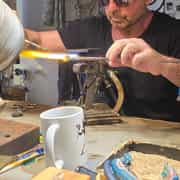
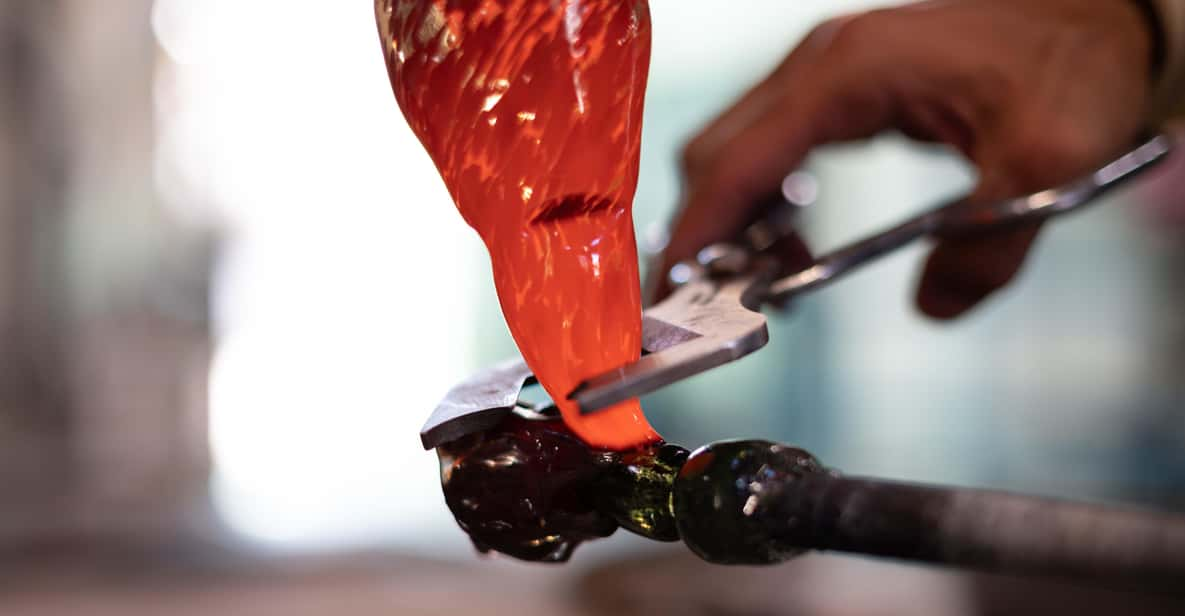
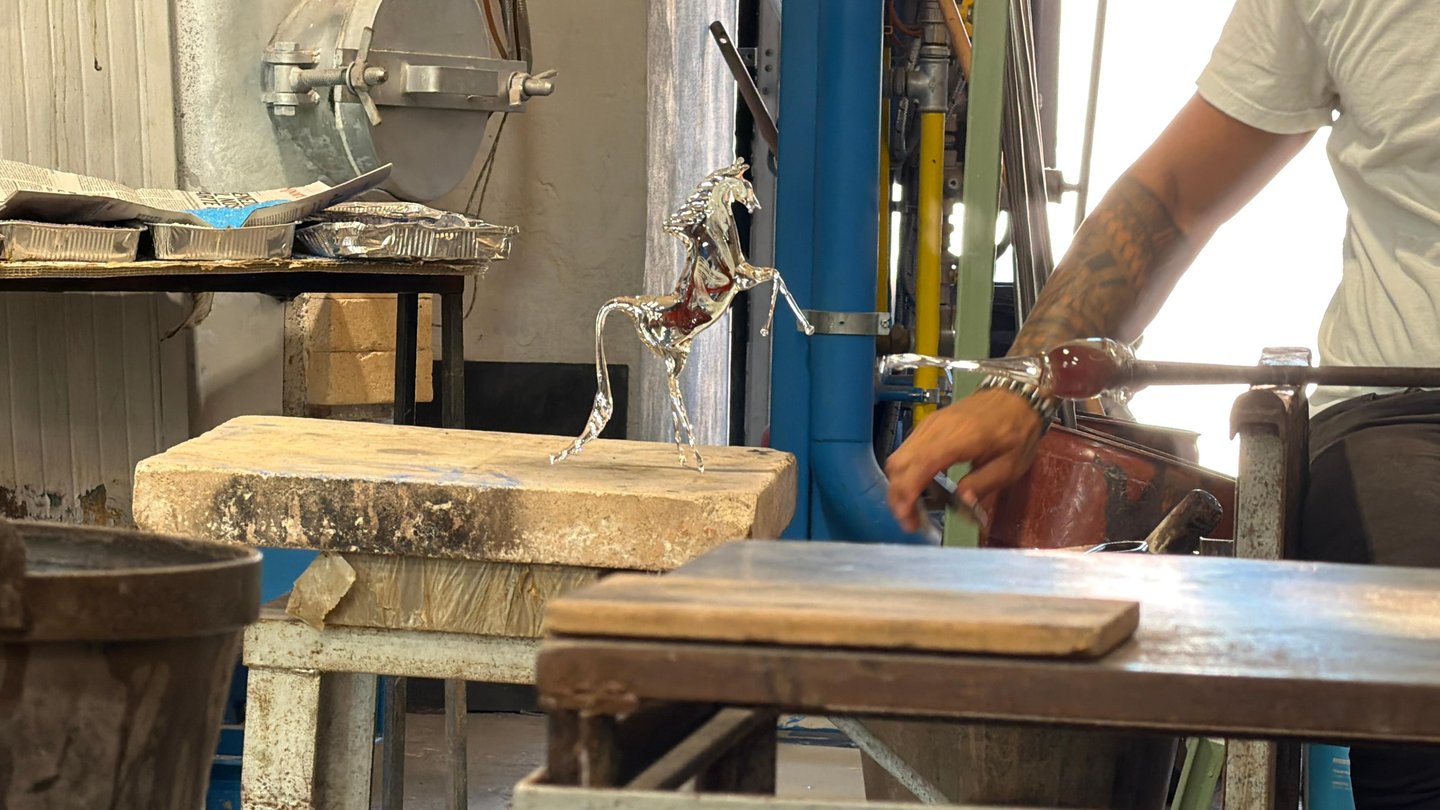
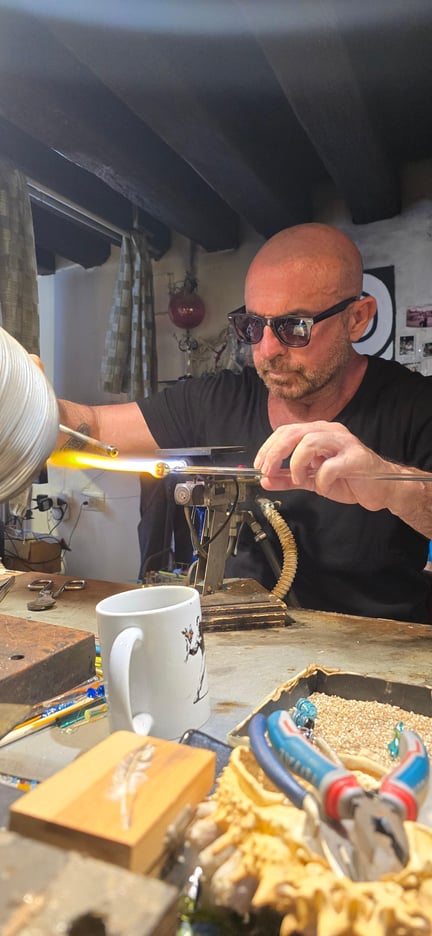
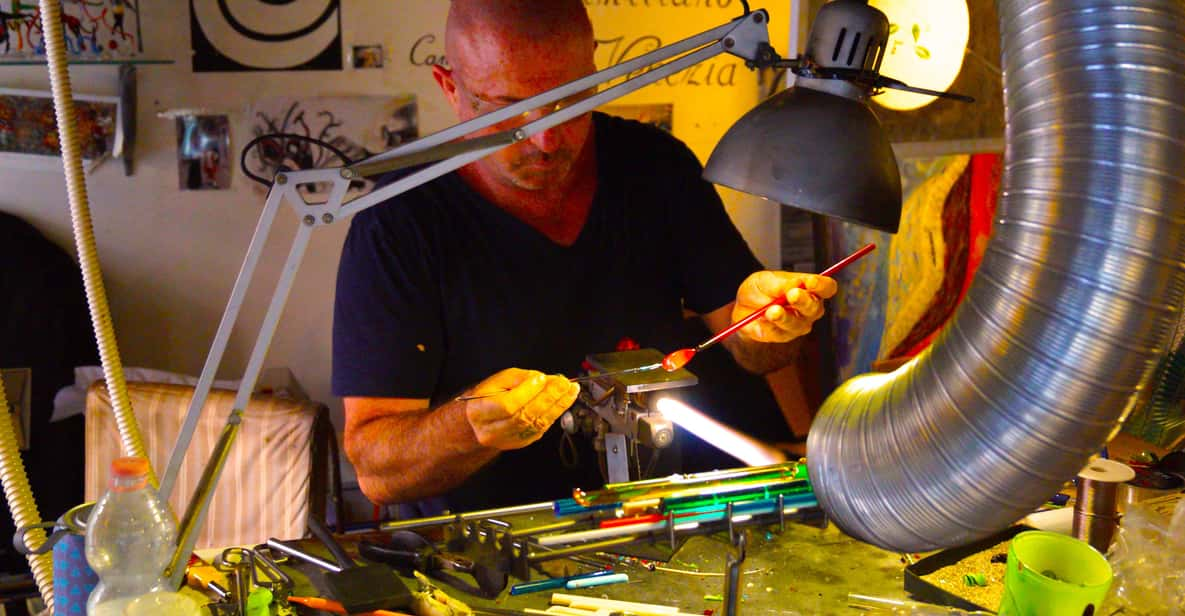
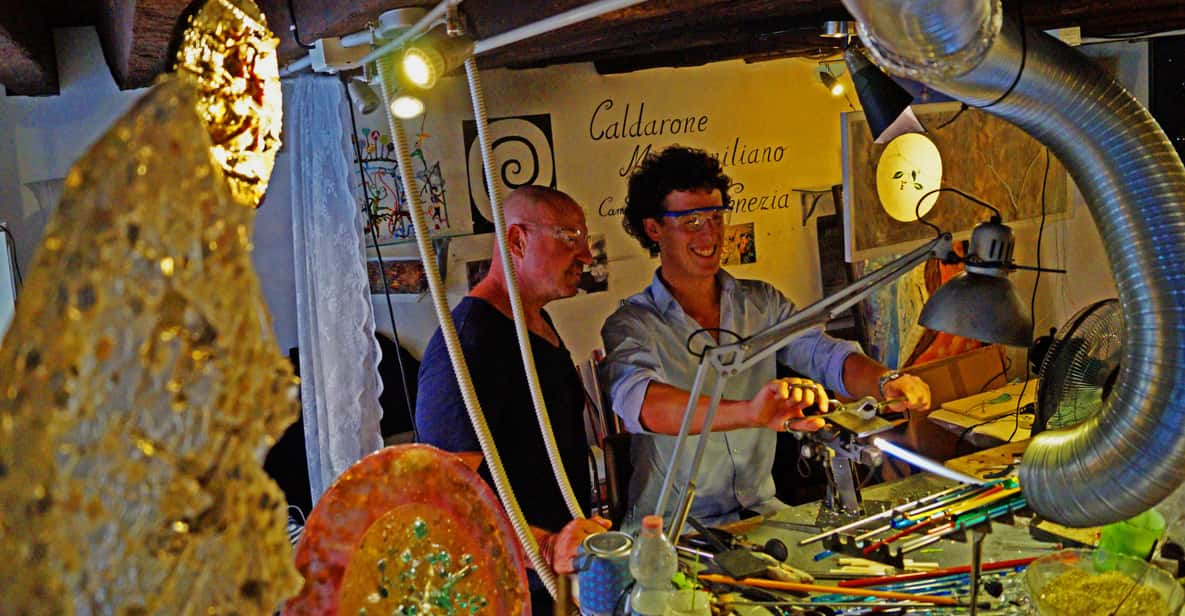
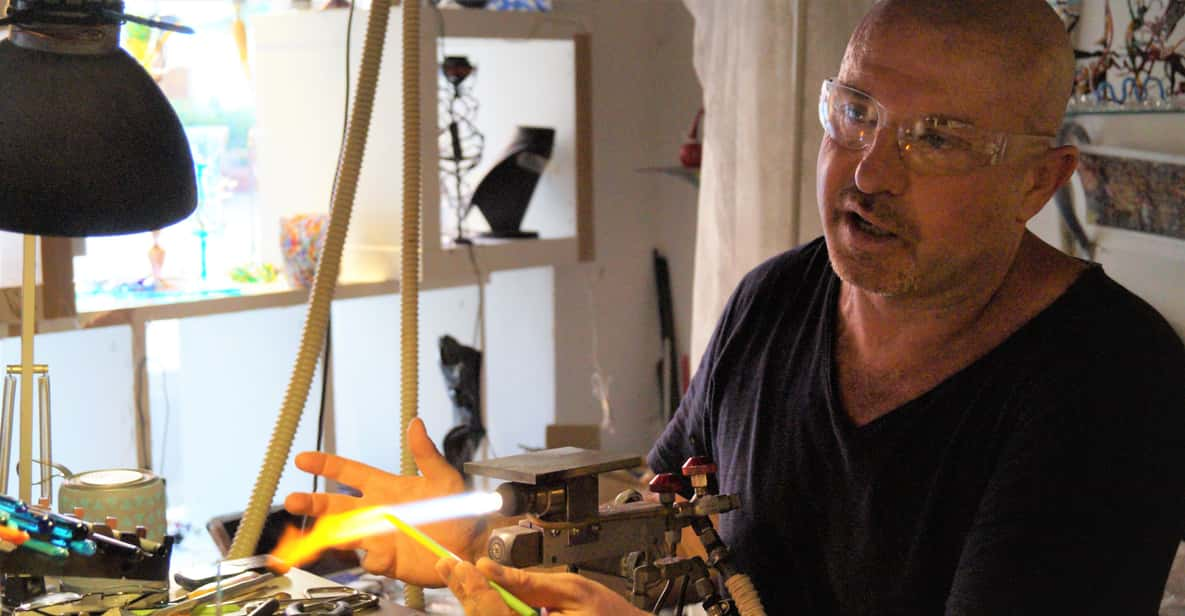
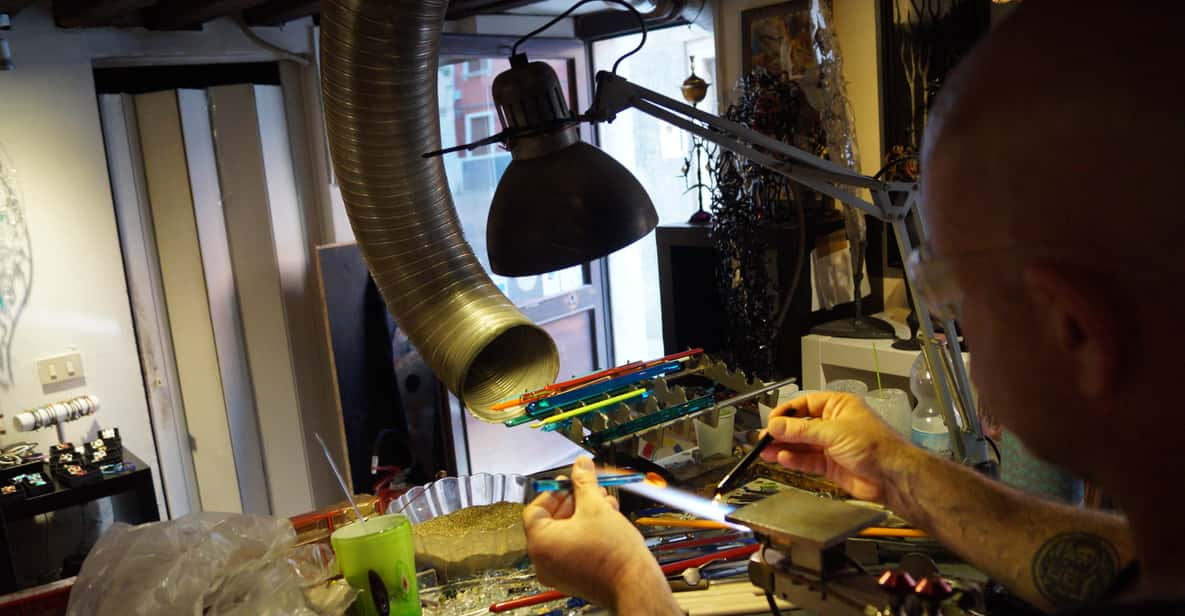
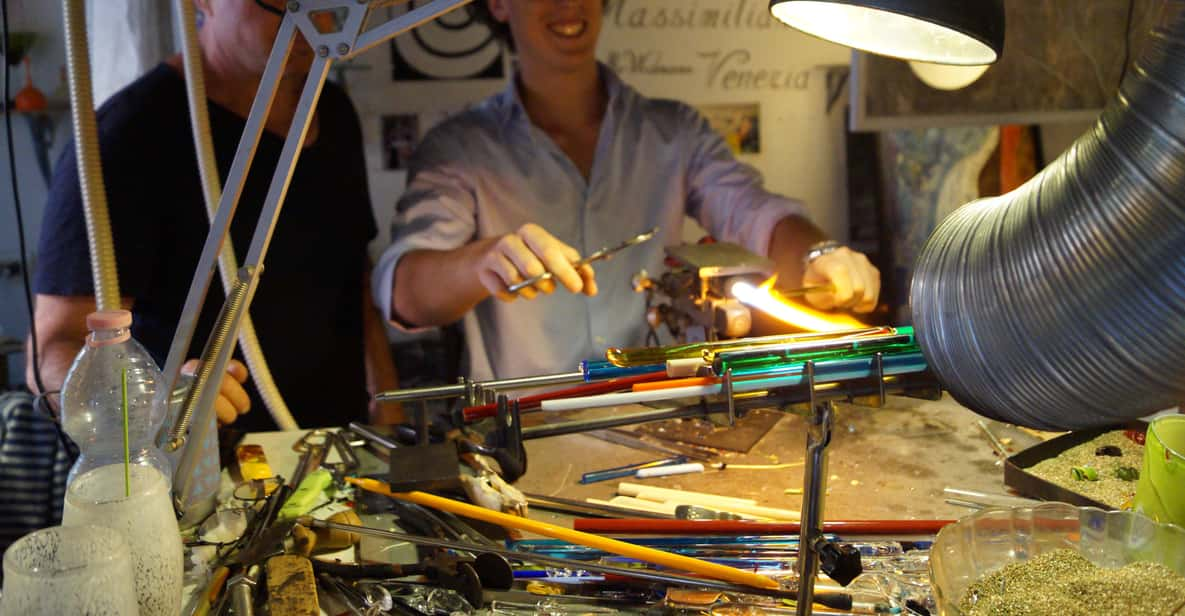
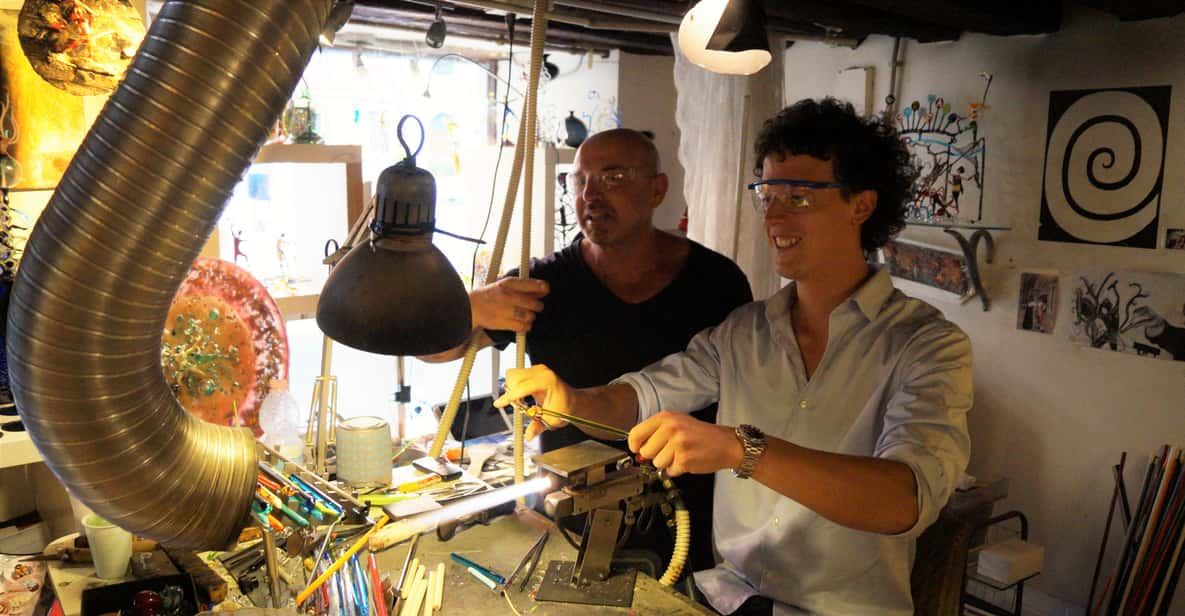
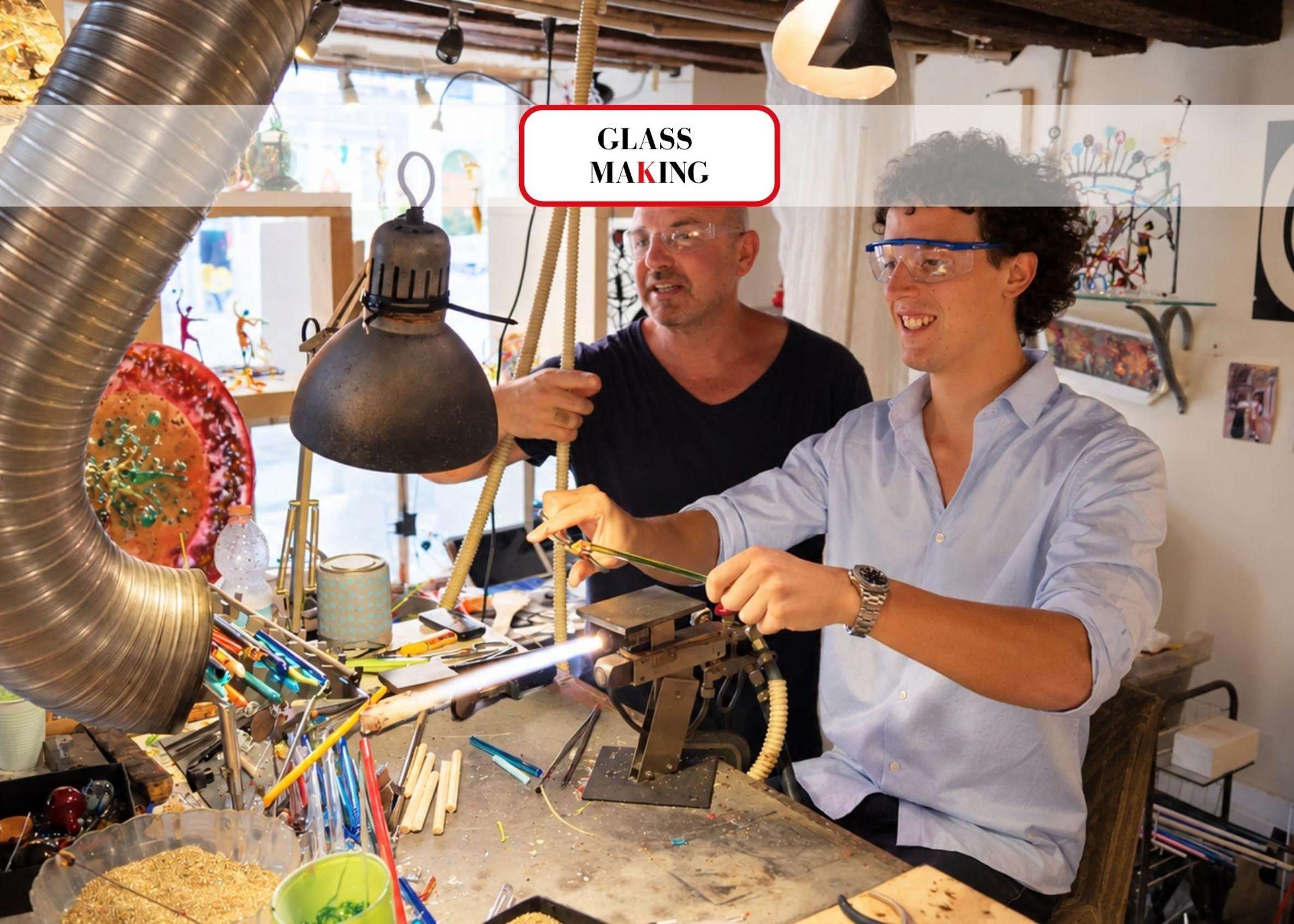
A glass master at a Murano furnace shapes a piece of molten glass in front of you, then makes a second piece using sculpture techniques. That demonstration, about 15 minutes long, comes first on this 2.5-hour trip from Venice. After the furnace, the group walks to a nearby workshop and the making begins.
Kids work with glass elements in different shapes and colors to build a piece from scratch: an ornament or pendant, or a bracelet, key holder or pair of earrings.
Roundtrip transport by public boat, the demonstration and the workshop are all in the price, and you get a 20% discount on anything you buy in the glass factory shop.
1Meeting near the Rialto Bridge· about 10 minMeet your guide at Campo San Bartolomeo, a short walk from the bridge, then head to the boat station facing the lagoon.2Boat across the lagoon· about 30 minA public boat carries the group out to Murano, with the sights of Venice sliding past on the water.3Glassblowing demonstration· 15 minAt a glass factory on Murano, a master blows a piece of molten glass, then shapes a second one using sculpture techniques.4Bead or mosaic workshop· about 55 minPick glass elements in different shapes and colors and build a piece from scratch: an ornament, pendant, bracelet, key holder or earrings.5Free time in Murano· about 30 minWander the quiet streets of the island on your own before the guide gathers the group again.6Back to Venice· about 10 minThe guide walks everyone back to the boat station and explains how to reach your accommodation from there.
Included
Roundtrip transport15-minute glassblowing demonstrationGlass bead or mosaic workshop with self-crafted object20% discount in the glass factory shop
Which glass blowing class for kids fits your trip
Green marks the lowest price. Prices per person.
Tour
Price
Duration
Languages
Best for
Our pick
Venice: Murano Glass-Blowing Demo and Workshop
4.0★ (464)
from $78per person
2.5 hours
English
families with younger kids who want a boat ride, a demo and a mosaic craft
Most reviewers call the artisan teaching them patient and clear, and several name the class their trip's highlight.
Best surprise
Many reviewers expected to mostly watch and were surprised how much of the finished piece they made themselves.
Most common wish
Several reviewers wished the demonstration ran longer and explained more of what the glass master was doing.
How to book a glass blowing class for kids in Venice
01
Match the class to your child's age
Check ages first: hands-on furnace glassblowing takes children from 12, the bead studio asks for 14 and up, and the private artisan lesson in Venice is for adults over 18.
ImportantChildren must be with an adult on the boat ride and inside the factory
Common mistakeBooking the bead studio for a younger child; it is not suitable for anyone under 14
02
Pick a date and go for the morning
Choose your date, then take a morning slot. Furnaces run at full energy before noon and the studios stay cooler. From about noon to 2:30 pm, many workshops quiet down or pause for lunch.
RecommendedA morning class lets your child collect the finished piece later the same day; afternoon pieces come out the next day
Pro tipLagoon boats run in rain, so only dense fog or exceptional high water should change your plans
03
Choose the option that fits your family
The Venice option includes roundtrip boat, a 15-minute demo and the bead or mosaic workshop. On Murano you choose a 2-hour furnace class or the bead studio with a coffee break.
ImportantSome studios give one accompanying adult a free supervising spot, others charge every attendee
Common mistakeSqueezing a class between two other stops; give it a full morning with the crossing
04
Book and read the confirmation
Every class on this page can be cancelled up to 24 hours in advance for a full refund. Pay through the site and the voucher arrives with your meeting point and start time.
ImportantThe voucher names the exact meeting point, which differs between Venice and Murano classes
Pro tipCancel more than 24 hours out and the refund is full; inside that window it is not
05
Plan the day itself
The Venice class meets near the Rialto Bridge at Campo San Bartolomeo. The Murano workshops start at the studio. Closed-toe shoes are required at the furnace, and bead making asks for a hair tie.
Common mistakeArriving in sandals or flip flops; open footwear is turned away at the furnace
RecommendedGet there 15 minutes early so finding the meeting point stays calm
What to know before you book a glass blowing class for kids in Murano
Can stop the dayGood to knowGood news
01
ChoosingWhat it is, who it suits, when to go
4
Safety gear
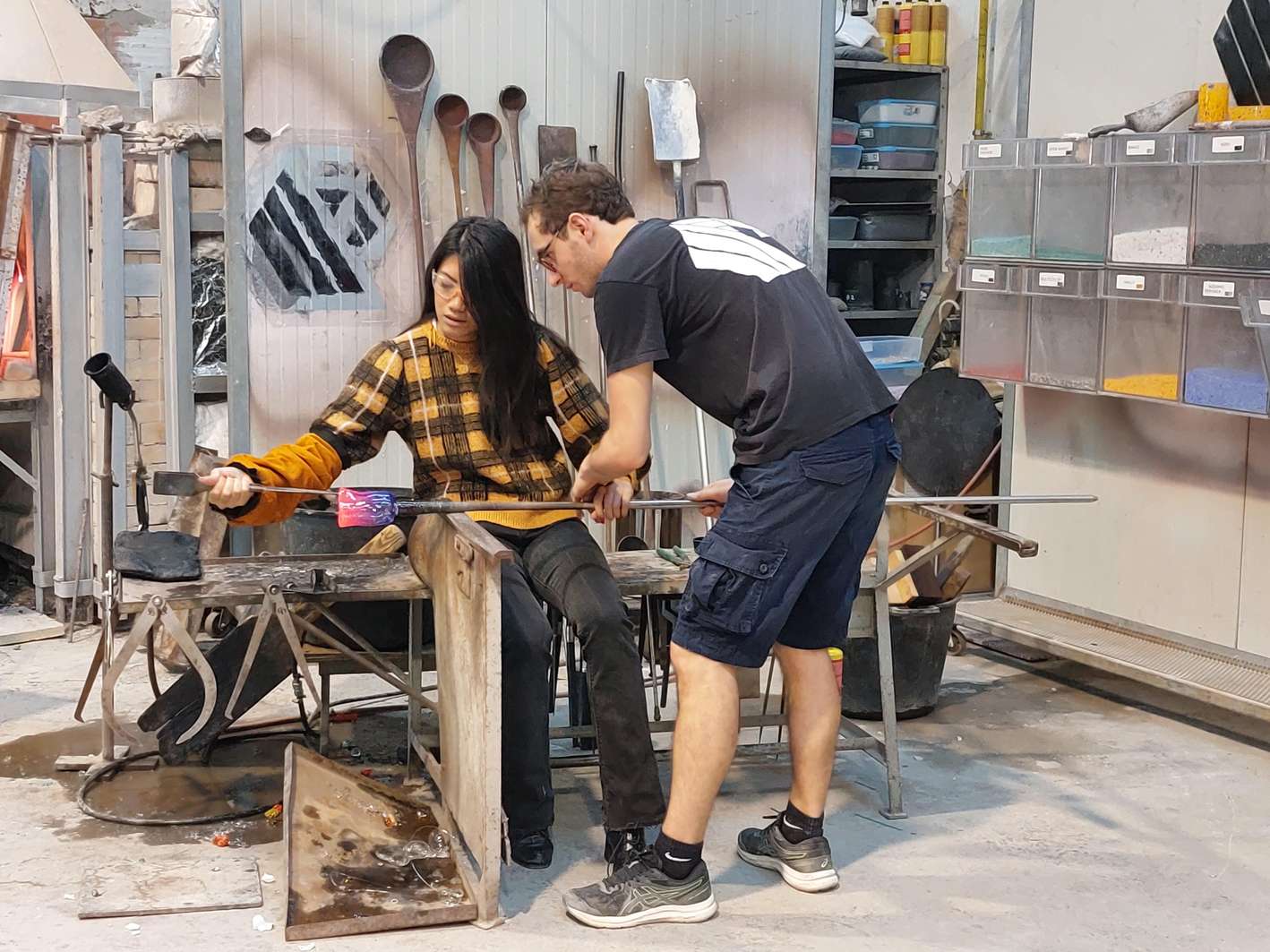
Studios hand out safety glasses and a protective sleeve that shields the arm from furnace heat. During the hands-on parts, an artisan stays beside your child the whole time.
Taking it home
Hot glass cools slowly in a dedicated oven, about three hours, so a finished piece cannot leave in your hands right away. Work from a morning class is often ready the same day, while afternoon pieces are collected the next day or shipped home for a fee.
Timing
Mornings before noon are when the furnaces run at full energy and the rooms stay coolest. Between about noon and 2:30 many workshops pause for lunch, and afternoons bring hotter rooms and shifts winding down. Book the first slot of the day.
Showroom selling
Arriving with a pre-booked session keeps showroom selling to a minimum. The boat workshop includes a discount in its factory shop, and no visitor has to buy anything after a demonstration.
02
BookingHow far ahead, and what happens if plans change
1
Cancellation
Plans with children move around, and each glass workshop can be cancelled up to 24 hours in advance for a full refund. Hold the morning slot you want and adjust later if the day changes.
03
Before you goPapers, health, what to bring
4
Age limitsCan stop the day
Furnace glassblowing takes children from 12 years old, and the bead-making studio in Murano asks for 14 and up. The private lesson with a single artisan is for adults only. With younger kids, the mosaic and bead-jewelry workshop is the one that fits.
What kids make
The workshop reached by boat from Venice has kids assemble a mosaic ornament or bead jewelry, a bracelet, key holder or pendant. Older children in the beginner furnace class shape a drinking cup or a small vase under a master's instruction.
What to wear
Closed-toe shoes are required near a working furnace, and sandals or flip flops are turned away. Long pants of natural fabric such as jeans are the rule, because synthetic clothing melts when it gets close to molten glass.
Health
A furnace workshop is not the place for a child with asthma or another breathing condition, since rising heat and humidity make breathing harder. Watching a demonstration from a step back works instead.
04
On the dayWhere to be, when, and how you get there
1
Meeting point
The Venice-based workshop meets near the Rialto Bridge at Campo San Bartolomeo and crosses the lagoon by public boat. No studio in historic Venice runs hands-on furnace classes; the furnaces have stood on Murano since 1291.
05
During the tourWhat is expected of you
1
Supervision
Studios differ on parents. Some let one adult come along and supervise without a paid spot, others ask every attendee to book. If you want to stay next to your child while they work, settle that rule when you book rather than at the door.
Planning a glass blowing class kids can take in Murano
Mosaic benches take children from age five; a furnace pipe waits until twelve. The session picked, the clothes on the kids, and the boat caught decide whether the day works.
Venice
If you only remember three things
1
Mosaic benches take kids from five, torch bead making from ten to fourteen, hands-on furnace blowing from twelve.
2
Go before noon: studios open around nine, pause for lunch between one and two, and mornings run coolest inside.
3
Closed-toe shoes and long cotton trousers are the entry rule, and sandals stay at the hotel.
Is a glass blowing class with kids in Murano worth it?
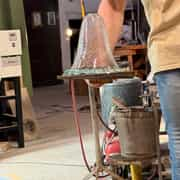
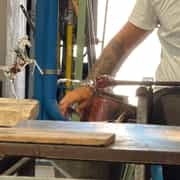
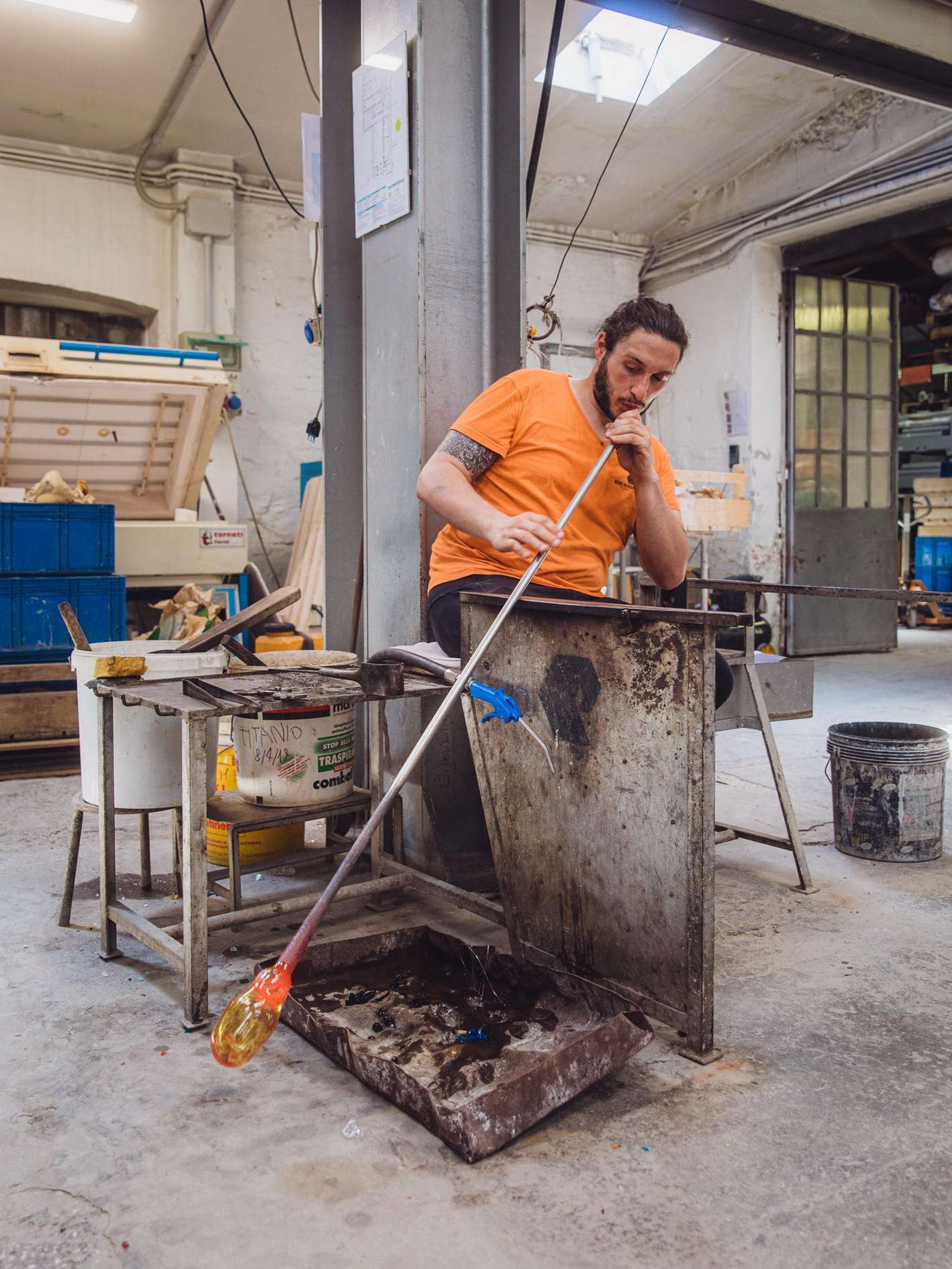
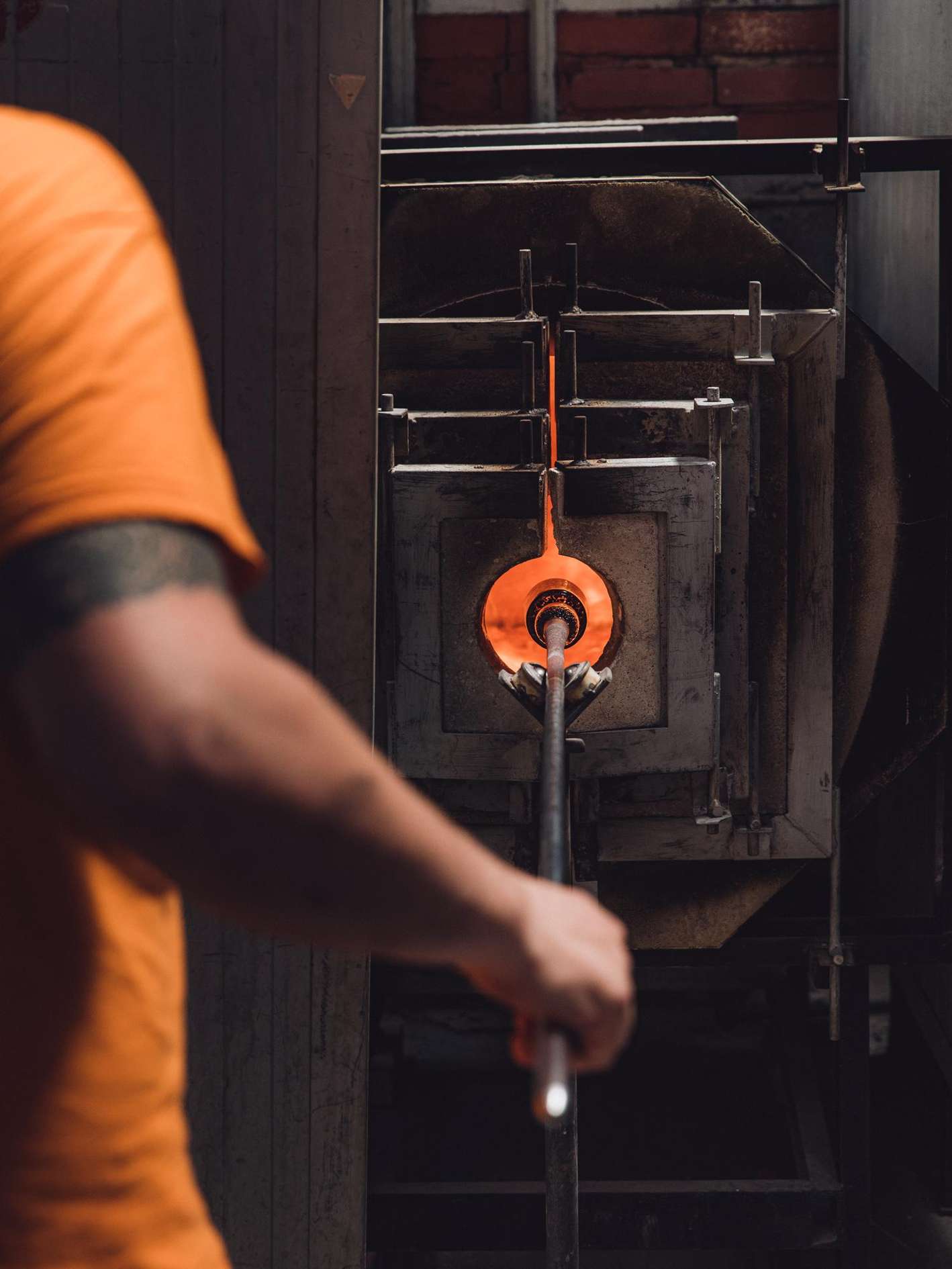
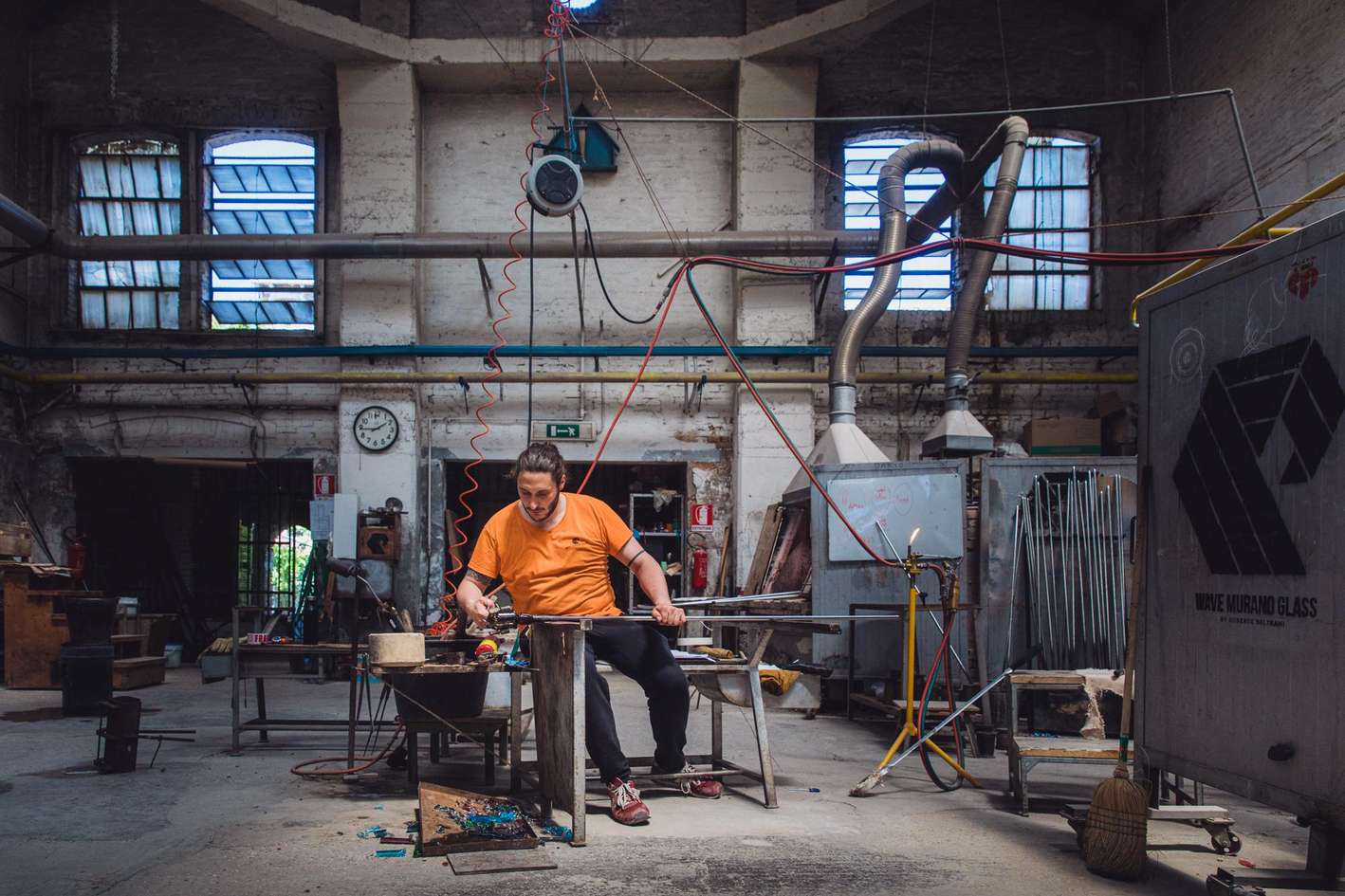
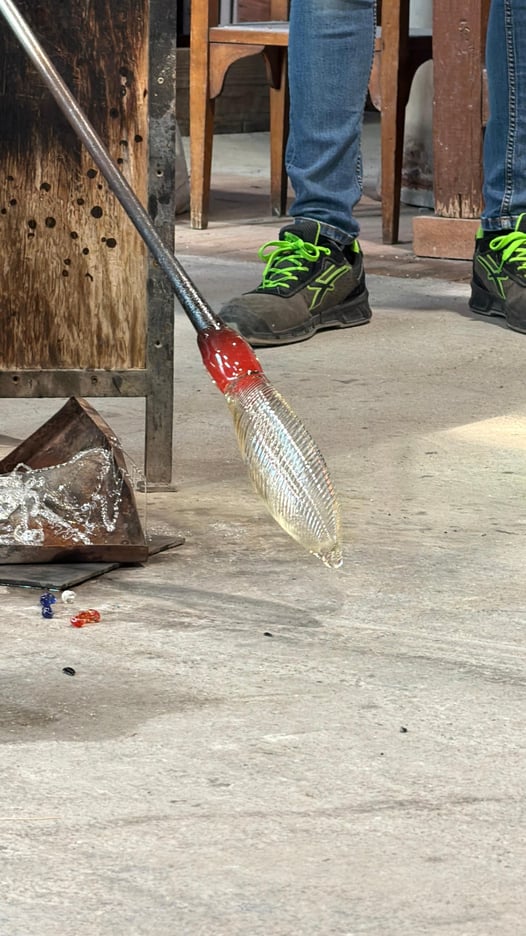
The first thing a working furnace does is hum. Along Rio dei Vetrai the ovens burn through the day, and a master can turn a lump of molten glass into a finished shape in the ten to twenty minutes a standard demonstration lasts. Children press against the rail and forget the gelato entirely.
What separates a show from a lesson is what happens next. Standard factory demonstrations keep visitors behind a barrier and steer the group into the showroom. A class booked in advance runs one to two hours with step-by-step guidance, and arriving with a ticket takes the sales pressure off.
The waterfront has its own sales rhythm. Promoters at the water bus stops who dangle a free shuttle are feeding the big showrooms nearby, so walk past them; the smaller studios where furnaces run all day sit further along the canal, and those are the classrooms.
Plenty of what parents repeat about Murano glass before the trip turns out to be shaky.
Three beliefs worth dropping before you book
MythMurano glass is just souvenir junk
Reality
Hand-blown pieces carry real furnace fuel, manual labor and rare mineral ingredients, which is where the prices come from
MythThe best demonstration is the one at the water bus stop
Reality
Large showrooms near the stops that offer free entry lean harder on sales than on craft
MythWatching a master at work is the same as learning
Reality
A demonstration lasts ten to twenty minutes behind a rail; a workshop runs one to two hours with the tools in your child's hands
The price tags are the honest part. Every hand-blown piece carries furnace fuel, manual labor and rare minerals loaded into the batch, cobalt for blue, pure gold for ruby red, which is why real glass costs what it costs.
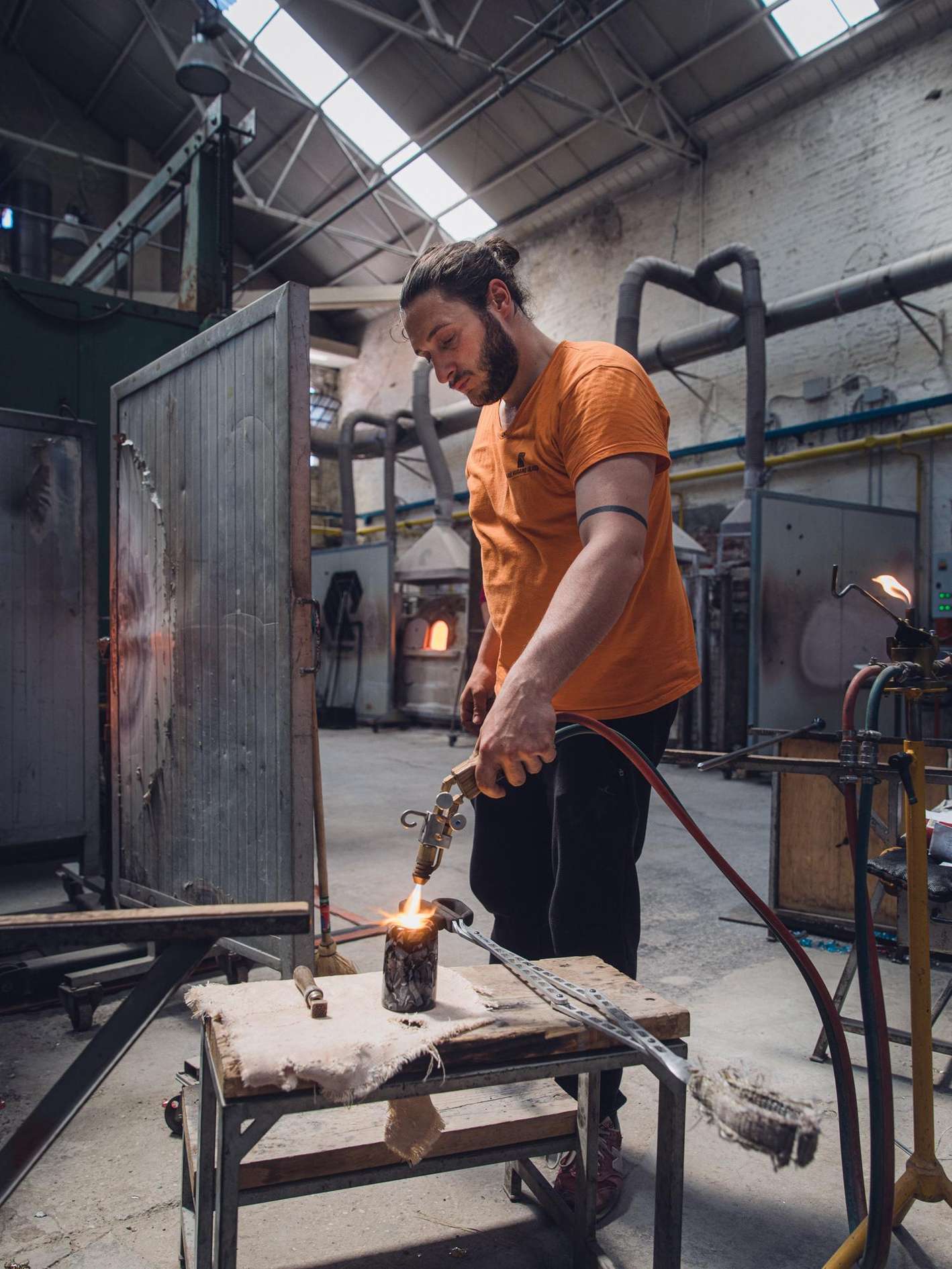
Molten glass in a working furnace sits above a thousand degrees, and Murano studios are strict about what walks in the door. Closed-toe shoes are mandatory, so sandals and flip-flops stay at the hotel. Long trousers of natural fiber, jeans for preference, matter because synthetic fabric can melt under furnace heat.
The studio covers the protective side. Workshops hand out safety glasses, and the blowing bench adds a padded sleeve for the arm that works near the pipe. Nobody needs to buy kit.
Pass one habit to the kids before you go: glass that has stopped glowing can still burn bare fingers. The masters work bare-handed because gloves would dull their feel for the tools, and they know their own distances; visitors keep the sleeve on and stay behind the line, even for a photo.
Only the walk to the studio changes with the seasons.
Murano furnace attire by season
Jun to AugHot outside (up to 30°C) and roasting near furnaces. Wear closed-toe shoes, breathable cotton trousers or jeans, and no synthetic tops.
Sep to OctMild outdoors (20°C to 25°C) and hot inside. Wear closed-toe shoes, natural fiber pants, and a light tee with a removable outer layer.
Nov to FebChilly outside (8°C to 13°C) but intense heat at the ovens. Wear closed shoes, jeans, and warm jackets over easily peeled cotton layers.
Mar to MayPleasant outside (14°C to 22°C) with hot furnace interiors. Wear closed-toe shoes, non-synthetic pants, and breathable cotton layers.
The pattern across the year stays constant: breathable cotton, closed shoes, one layer that comes off. Outside weather decides the walk, furnace heat decides the rest.
Tour for this
Murano: glass workshop, studio tour and bead making5.0★ (114) · Free cancellation
Murrina making, the island's mosaic-glass technique, is where artisans start the youngest visitors. Directions come in short, clear steps, and the masters wait while small hands catch up. Mosaic benches start at age five, and the piece a child assembles is genuinely theirs.
The age ladder matters when you book. Torch bead making, where a small flame melts glass at a table, asks for ten to fourteen. Hands-on furnace blowing starts at twelve, and some studios hold the line at fourteen.
A handful of studios also set up one-on-one ornament sessions, where the master's hands steady even a two-year-old's; a full furnace class is a separate thing and waits.
What beginners make follows the same logic of forgiveness.
What nobody tells you
First pieces are pumpkins and simple beads
The form forgives a wobble, so a first attempt that leans still counts as a success
Ask for a single-gather session for small lungs
One dip of the pipe and one quick heat need no sustained blowing, so children without much lung power keep up
The master blows first, the kids copy
Artisans demonstrate each move, then let children repeat it with clear directions
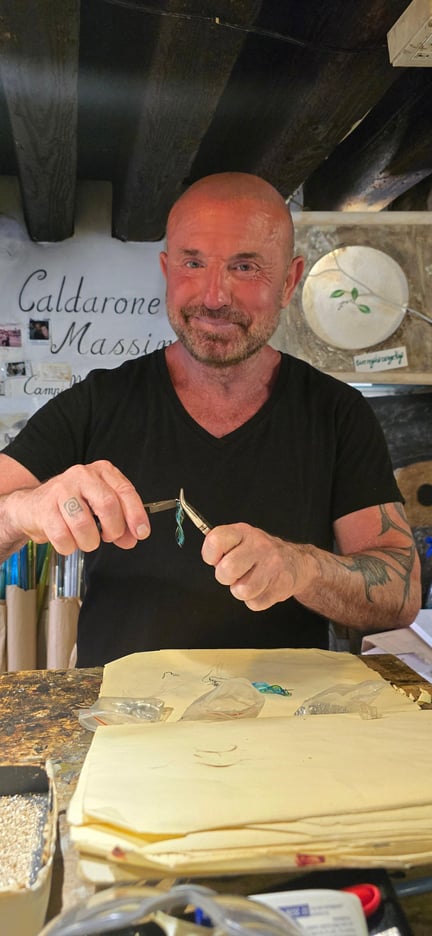
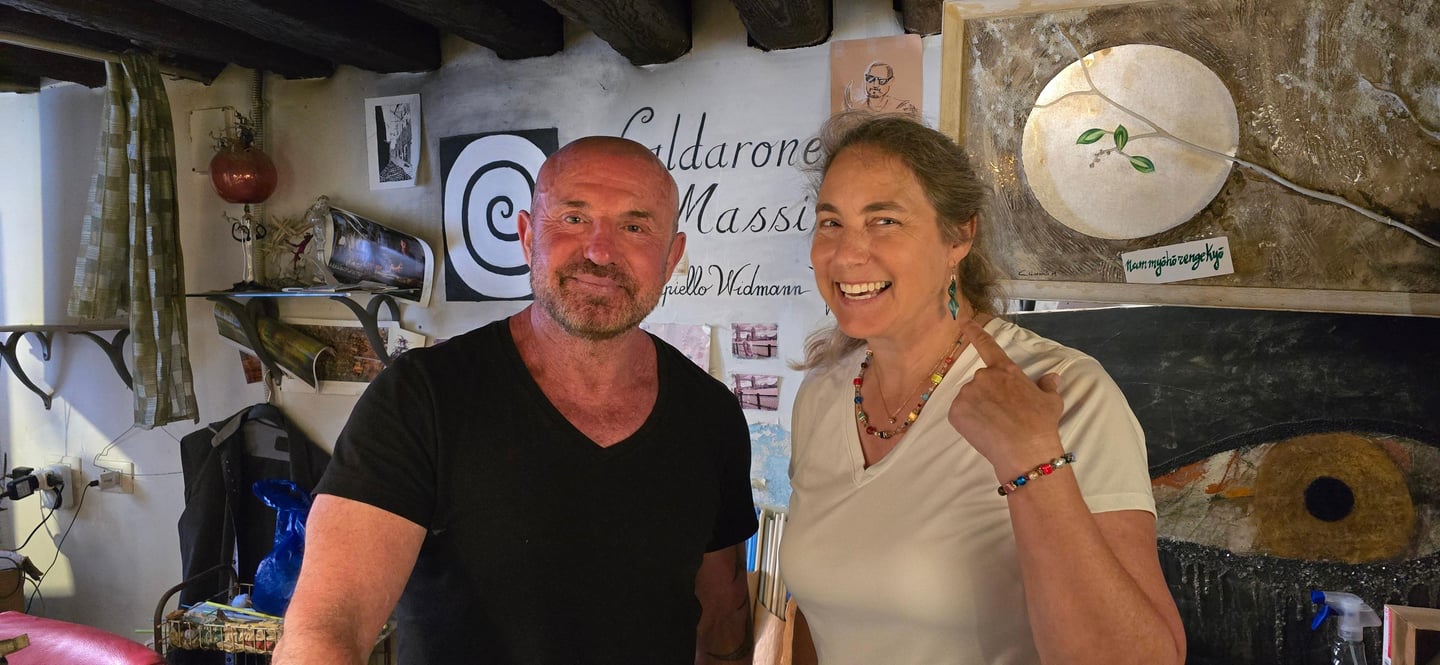
That is also why the right studio matters as much as the right age. A bench run by two working artists, one a glassmaker of more than thirty years and the other a trained teacher, settles a nervous nine-year-old faster than any big demonstration hall.
Furnaces keep craftsman's hours. Studios open to visitors between nine and half past nine, demonstrations wind down between four and half past, and the morning before noon is when ovens run at full energy with masters actively working. Indoors, it is also the coolest part of the day.
Midday belongs to lunch. Traditional workshops pause between one and two, some studios from noon until half past two, and afternoon benches run hotter as furnace shifts wind down. A morning class keeps children fresher and gets their piece into the annealing oven early.
Weekends work too, with a caveat.
Murano furnace activity by day of the week
Mon: the busiest. Full production shifts and master demonstrations operate across active hotshops.
Bar height: how busy each day is, from very quiet to the busiestThe busiest: Mon
Tap a day to read it.
The pattern is simple: full production Monday to Friday, demonstrations and classes on Saturday, and a Sunday where only a few visitor furnaces fire while the trade factories stay closed. A weekday morning gives the richest visit; a Sunday still runs a booked class.
One month changes the picture.
How busy it gets, month by month
August: 5 out of 5 for how busy it gets.
HighestMar to Apr, Aug, Oct
In betweenFeb, May to Jul, Sep
LowestNov to Jan
Darker: a higher how busy it gets score, out of 5
Tap a month to read it.
August is the busiest month on the island, and it is also when commercial kilns close for maintenance. Visitor furnaces keep demonstrations and classes running through August and the holidays, so even the crowded weeks still teach; book earlier for them.
Tour for this
Create Your Glass Artwork: Private Lesson With Local Artisan4.9★ (646) · 75 minutes · Free cancellation
How to get the kids to a glass blowing class on Murano
The crossing is half the pleasure for most children. From Fondamente Nove in northern Venice, direct lines 4.1 and 4.2 reach Murano Colonna in about nine to ten minutes, and lines 12 and 13 take roughly nine minutes to Murano Faro.
From San Zaccaria near St. Mark's, the direct seasonal line 7 needs twenty-four to thirty minutes.
Two details save a family real time. Get off at Murano Colonna, at the island's southern tip, where the dock sits at the entrance of Rio dei Vetrai and the historic furnace district. And from Piazzale Roma, line 3 crosses direct in twenty-one minutes.
The lesson in those routes: the northern piers are dramatically closer, and a circular line from San Zaccaria can stretch the crossing past forty minutes. Pick a direct service and the boat ride becomes the shortest part of the day.
Three formats sit side by side, and the right one depends on age and nerve. Furnace blowing is the full experience, molten glass on the end of a pipe, from twelve up. Mosaic work assembles cold glass into a pattern, from five up. Torch bead making melts glass at a table flame, from about ten.
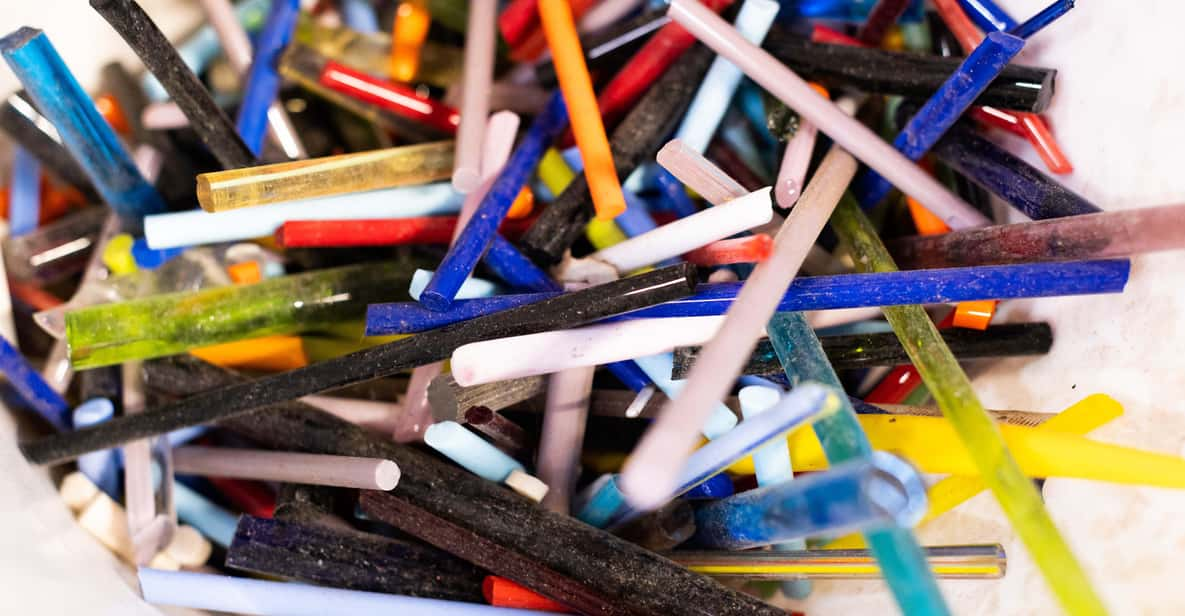
Assembly sessions are the gentlest of the three. Children select finished Venetian beads, sometimes antique ones, and string pendants, bracelets or keychains that leave the studio in a pocket the same day. No furnace, and the souvenir is real island glass all the same.
Whichever bench you choose, check what the attached shop sells. Genuine work carries the official Vetro Artistico Murano sticker with its QR code, and a proper studio hands over a certificate on request.
A label reading Made in Murano marks an import, deep discounts and glass stacked in windows mark a factory abroad, and a shop that also sells carnival masks is saying the same thing.
Furnace class or mosaic bench for your kids
Furnace blowing class
Mosaic or bead workshop
Minimum age
from 12 at most studios, 14 at some
from 5 for mosaic; torch beads from 10 to 14
The heat
molten glass above 1000°C at the bench
none at the assembly table
What they make
a blown cup or small vase
a pendant, bracelet or keychain of glass beads
Taking it home
the piece cools in the oven, ready later
assembled jewelry leaves the same day
Furnace blowing class
Minimum age
from 12 at most studios, 14 at some
The heat
molten glass above 1000°C at the bench
What they make
a blown cup or small vase
Taking it home
the piece cools in the oven, ready later
Mosaic or bead workshop
Minimum age
from 5 for mosaic; torch beads from 10 to 14
The heat
none at the assembly table
What they make
a pendant, bracelet or keychain of glass beads
Taking it home
assembled jewelry leaves the same day
Most families with children under ten land on the mosaic bench, and nobody walks away shortchanged. The beads are genuine Murano glass, the teaching is the same island craft, and the finished piece fits in a school bag.
What to check before booking a glass blowing class for kids
Studios split on who pays. Some let one adult step in and supervise a child without a paid spot; others charge every seat or set a minimum number of paying participants. Ask when you book, because a family of four feels the difference.
Health forms the second gate. Blowing workshops are unsuitable for anyone with respiratory issues, and for a child with asthma the rising heat and humidity near a furnace make breathing harder. Watching a demonstration from a distance is usually the workable alternative, and a simple cold rules out in-depth factory tours.
The strictness has old roots. Venice ordered every glass furnace across to Murano in 1291, officially because of fire, and by 1295 a glassworker who leaked the trade's secrets faced the death penalty. The rooms your kids enter keep a craft that old.
The booking itself is where the small print lives, so put three questions to it.
How to choose a glass blowing class for kids
Check
Why it matters
Our pick
Cancellation terms
kids get sick and fog rolls in
free cancellation up to 24 hours before the class
Transport
the lagoon crossing needs its own plan
roundtrip boat from Venice sits inside the booking
Format
a demonstration alone leaves kids watching
a 15-minute demonstration plus a workshop where each child makes a piece
One offer deserves a polite refusal on arrival: a free private water taxi to a factory, arranged by a concierge or a dock porter. Those rides funnel visitors into high-priced showrooms, and nobody is ever obliged to buy glass after a demonstration. Declining is normal and frictionless.
What if fog or high tide hits a kids' glass blowing class
The lagoon keeps its own weather. Ordinary rain changes nothing: boats run and classes go ahead. Dense fog is the stopper, because once visibility drops below 150 meters the Harbour Office restricts navigation and operators suspend departures.
High tides reroute before they cancel. From about 95 centimeters above normal, direct services such as line 3 start halting, and Murano's Vivarini bridge clears no boat at 135. Full suspension of lagoon transport comes at 140.
The remedies are simple, and studios know them well.
When the lagoon shuts
If this happens
What happens then
Dense fog suspends departures
call the studio; they move classes and know the drill
A high tide reroutes your vaporetto
switch lines or shift the start time; studios are used to it
You cancel more than 24 hours ahead
the booking refunds in full
Ordinary rain
nothing changes; boats run and the class goes ahead
One note for the smallest travelers: at least one boat service to the island bans strollers outright, so count on carrying toddlers between pier and studio door.
A class and Burano together make a full day of six to eight hours, so start early. Take a morning bench, leave the finished piece to cool in the annealing oven, and be back on a vaporetto by midday.
The transfer has one wrinkle worth knowing. Line 12, the Burano boat, leaves from Murano Faro and does not stop at Murano Colonna.
From the Colonna end, ride line 4.1 or 4.2 one stop to Faro first. The direct crossing from Faro to Burano takes thirty minutes, and the painted houses do the rest of the entertaining.
More to book around Venice
Live dates and prices
How kids take home the glass they make in a blowing class
Fresh glass travels later than children hope. A finished piece cools slowly in an annealing oven so it does not crack, and glass that has lost its glow still burns bare fingers.
Morning class pieces are usually ready the same day; afternoon work waits for the next day. Studios ship worldwide for a fee, which rescues an early departure.
On the flight home, carry-on wins. Glass is permitted in airplane carry-on bags, though a screening officer has the final say at security.
Wrap each piece, shield any sharp point, and pack it in a rigid inner box with cushioning away from the walls, right in the middle of the bag among soft things. Checked luggage is where souvenirs break.
How long to allow for a kids' glass blowing class day
Count the crossing into the start time. From Fondamente Nove, board twenty to thirty minutes before a morning demonstration.
On the water, the direct lines 4.1 and 4.2 take about nine to ten minutes to Murano Colonna; the nine to twelve minutes often quoted covers both Murano piers, Colonna and Faro, plus the walk from the dock to the furnace district.
From San Zaccaria, board forty to fifty minutes ahead, because the direct seasonal line 7 needs twenty-four to thirty minutes and the circular lines run past forty.
That margin is what keeps a booking intact. The whole outing, crossing, demonstration and time along the canals, adds up to three or four hours from central Venice, with two to three of them on the island. Children cover that distance comfortably when the demonstration comes first and an ice cream comes second.
The glass blowing class your kids will remember
The bench where a child makes the piece is the memory that lasts, and one tour covers the arc end to end. Venice: Murano Glass-Blowing Demo and Workshop meets near the Rialto Bridge at Campo San Bartolomeo and runs about two and a half hours, boat both ways included.
A fifteen-minute demonstration at a Murano factory opens the visit, then a workshop where each child assembles a bracelet, pendant or keychain from glass beads, or builds a mosaic piece.
Roundtrip transport is part of the booking, and a discount on glass applies in the factory shop. Reach the meeting point fifteen to twenty minutes early, as most Venetian departures ask.
For a first family visit that combination is hard to beat: the master's fire for the memory, a cold-worked piece for the backpack, and no furnace pipe for anyone too small to hold one.
Quite a private session, guide so friendly. Easy to understand the lesson and Murano glass history, then he helped me make a pendant in my color choice. Beautiful, intricate pieces to buy too.
A glass blowing class for kids on Murano is worth the boat ride, and the mosaic bench is the format most families with young children should book.
Go in the morning, wear closed shoes and cotton trousers, and expect the finished piece to cool in an annealing oven before it travels. Book with a studio that includes the crossing, and the day runs itself.
Go ifYour children are five or older and want to craft a piece with their own handsYou can take a morning slot, when furnaces run at full energyYou book ahead, which lowers the showroom pressure at the factories
Skip ifYour child is under twelve and set on blowing molten glass; mosaic and beads are the way inSomeone in the family has asthma or another lung condition that heat aggravates; watch a demonstration from a distanceYou hoped for a full furnace class in central Venice; the furnaces only run on Murano
Questions parents ask before a glass blowing class for kids
Short answers on ages, safety gear, what kids make and when the piece is ready to travel home.
Venice2026
Your kid's beads cool on the bench while the furnace roars behind them. Book a morning class and the piece is ready the same day.
How old does my child have to be for a glass blowing class?
Hands-on furnace glassblowing takes children from 12 years old, and some studios ask for 14. Glass mosaic activities welcome kids from about age five, sometimes with no age limit at all. Torch bead-making classes sit in between, usually from 10 to 14.
Which bead workshops take younger children?
One bead-making studio on Murano, where guests melt glass at a torch to make their own beads, sets its minimum at 14 years old, so it suits families with teenagers. Mosaic sessions and jewelry classes that use ready-made Venetian beads have no such limit.
What do kids actually make in these workshops?
It depends on the format. In a mosaic or bead session, a child assembles a bracelet, earrings, a keychain or a pendant from colored glass pieces. In a hands-on furnace class, young children blow a small ornament, and teens can make a glass paperweight in a one-to-one lesson.
Will my child bring the glass piece home the same day?
Sometimes. Kids in morning glassblowing classes can collect their finished piece later that day, because it cools for about three hours in the annealing oven. Pieces made in the afternoon are ready the next day, or the studio ships them home.
Do parents have to pay for a spot too?
That varies from studio to studio. Some Murano workshops let one adult supervise a child without booking an extra place. Others ask every attendee to have a paid spot, or set a minimum number of paying participants.
Can kids do a glass workshop in Venice itself, without the boat trip?
The furnaces run on Murano, where glassmaking was moved in 1291 to keep fire away from Venice's historic center. One workshop meets near the Rialto Bridge, crosses to the island by boat and runs a bead or mosaic session there, with no glassblowing.
How do I tell a real lesson from a showroom pitch?
Standard factory demonstrations keep visitors behind a barrier for 10 to 20 minutes and then steer them into a shop. A hands-on beginner workshop runs one to two hours with step-by-step guidance, and the child keeps the piece made. Arriving with a pre-booked class also lowers the sales pressure.
What safety gear does my child get near the furnace?
Workshops hand out safety glasses and a protective sleeve that shields the arm from furnace heat. Closed-toe shoes are required and sandals are not allowed. Long pants in natural fabrics work best, since synthetic material melts under heat.
Can we fly home with the glass our kids made?
Glass is allowed in carry-on bags, and airport screening officers make the final call at security. Wrap each piece on its own, cushion it inside a rigid inner box and keep it away from the suitcase walls.
What if the piece is still cooling when we leave Murano?
Studios that keep a piece in the annealing oven overnight can ship it anywhere in the world for an extra fee. Some can also hold it for pickup the next day, which works well if your trip keeps you in Venice.
From a blowing class for kids to the masters at work