Murano Glass Blowing Demonstration Where to See Live Shows
Watch a master shape molten glass in front of you. Book a live glass blowing demonstration on Murano, from a 20-minute furnace show to a full guided factory tour, with guaranteed entry and commentary as the glass takes form. Pick your show, confirm your slot, step up to the furnace.
"Favorite tour of my trip! Learned the whole glassmaking process start to finish, watched artisans up close, and our guide was super knowledgeable. Staff and artists were friendly too."
4.4★average rating5,557traveler reviews100%free cancellation34countries travelers came from
Choosing a Murano Glass blowing demonstration
Every Murano glass blowing demonstration puts you in front of a working furnace, and the difference that decides between them is how much you get around the show. A quick ticket covers the 20-minute demonstration alone. A guided factory tour walks you through the whole workshop, and some tickets add a glass gift or a showroom credit.
FootwearClosed-toe shoes are required inside working furnaces, and sandals or flip-flops are turned away.
ClothingWear long pants made of natural fabrics such as jeans, since synthetic clothing melts near molten glass at 1,000 to 1,400 degrees Celsius.
BookingReserve your ticket ahead, because one furnace admits every visitor by reservation with a QR code ticket.
KidsSome demonstrations do not permit children aged 12 and younger, and children must be with an adult on the boat and factory tour.
BreathingSimply watching a demonstration may suit someone who cannot work near a furnace, but heat and humidity can make breathing harder for people with asthma.
ColdA cold rules out the in-depth factory guided tours, where the furnace air is thick.
Lunch pauseTraditional workshops shut down between 1:00 and 2 pm, so book a morning or late-afternoon slot.
SeasonDemonstration kilns stay open through August and across major holidays, even though production kilns close for maintenance.
Meeting pointArrive at the factory a few minutes before your slot, since some tours ask you to meet there five minutes early.
importantMurano glass factories run a midday pause, usually between 1 pm and 2 pm, and some artisan furnaces only hold public demonstrations in the morning.
Book a show in the morning or late afternoon, when furnaces run at full energy, and check the listed times before you set out. A morning demonstration around 9:30 am to 11:30 am gives you the coolest rooms and the most active masters at work.
The glass blowing demos and full demonstrations you can book
Cheapest entry
Valid 1 day·Italian, English
4.1(931)
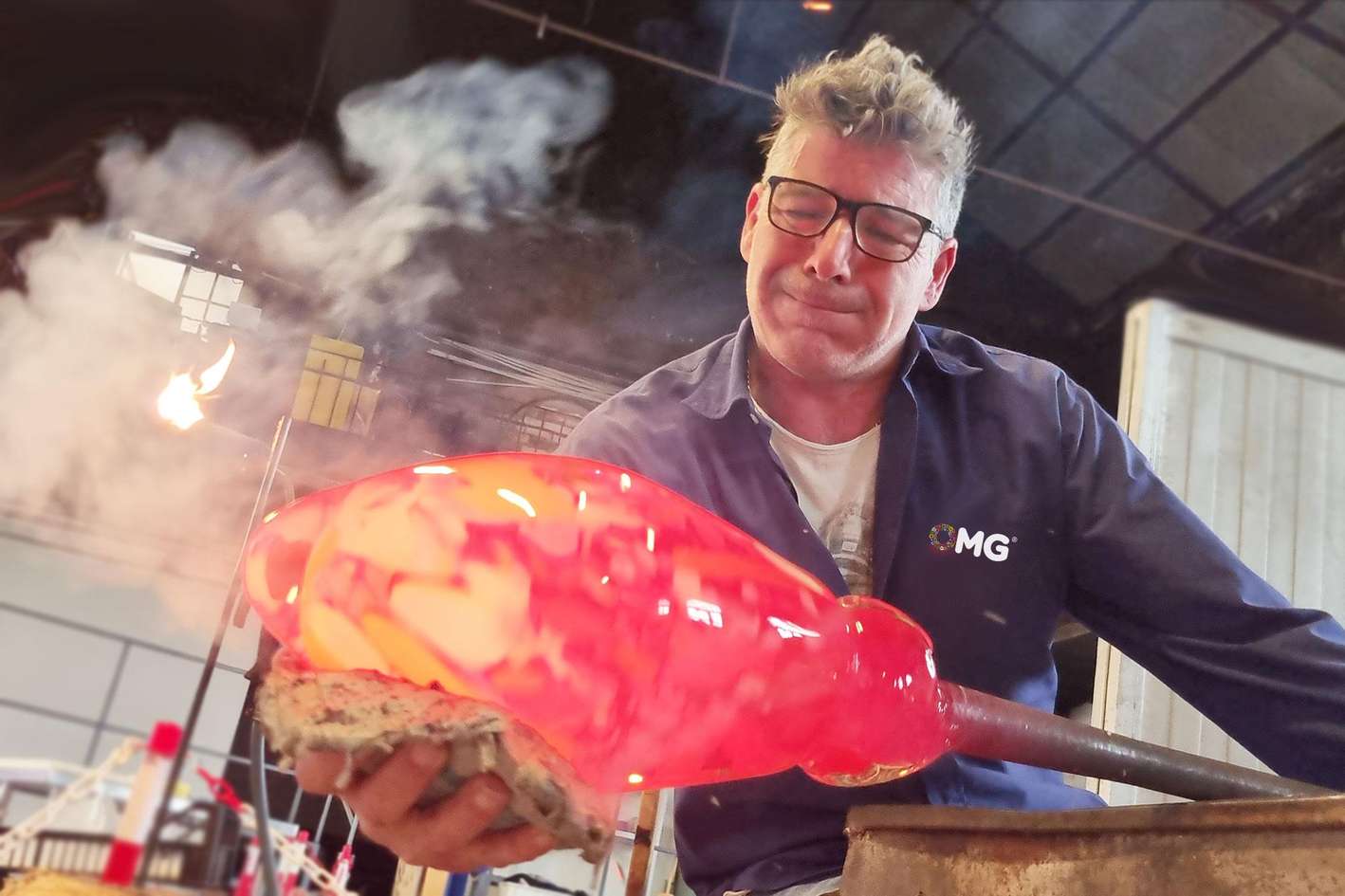
Murano Glass Factory and Showroom Visit with Glassblowing Show OMG
Runs every half hour from 9:30 am, so you can pair it with any island plan
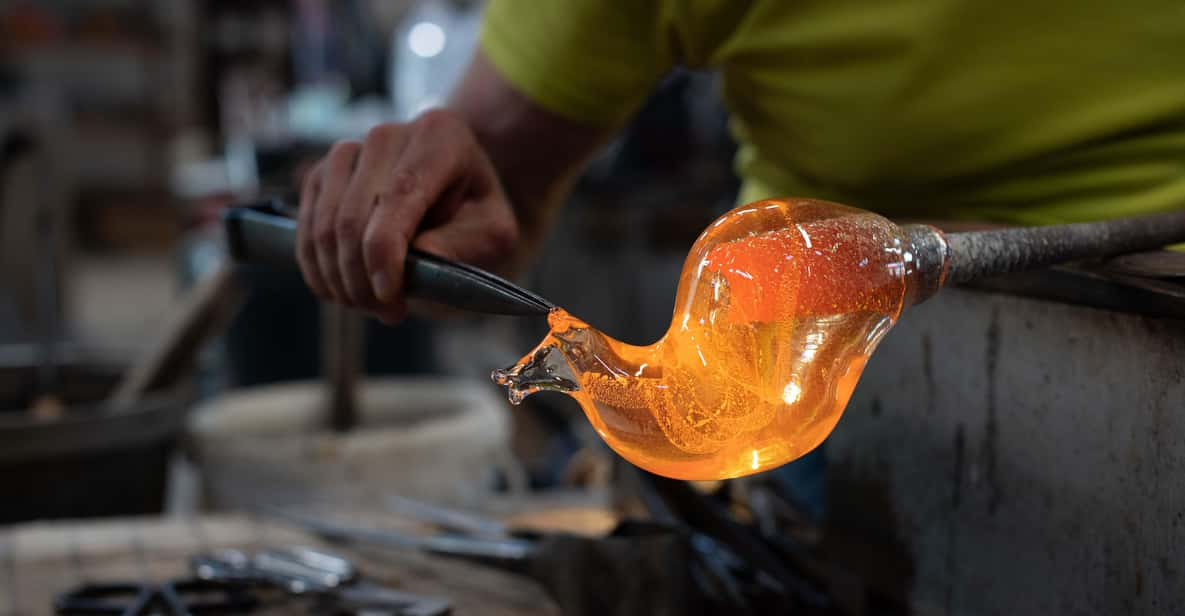
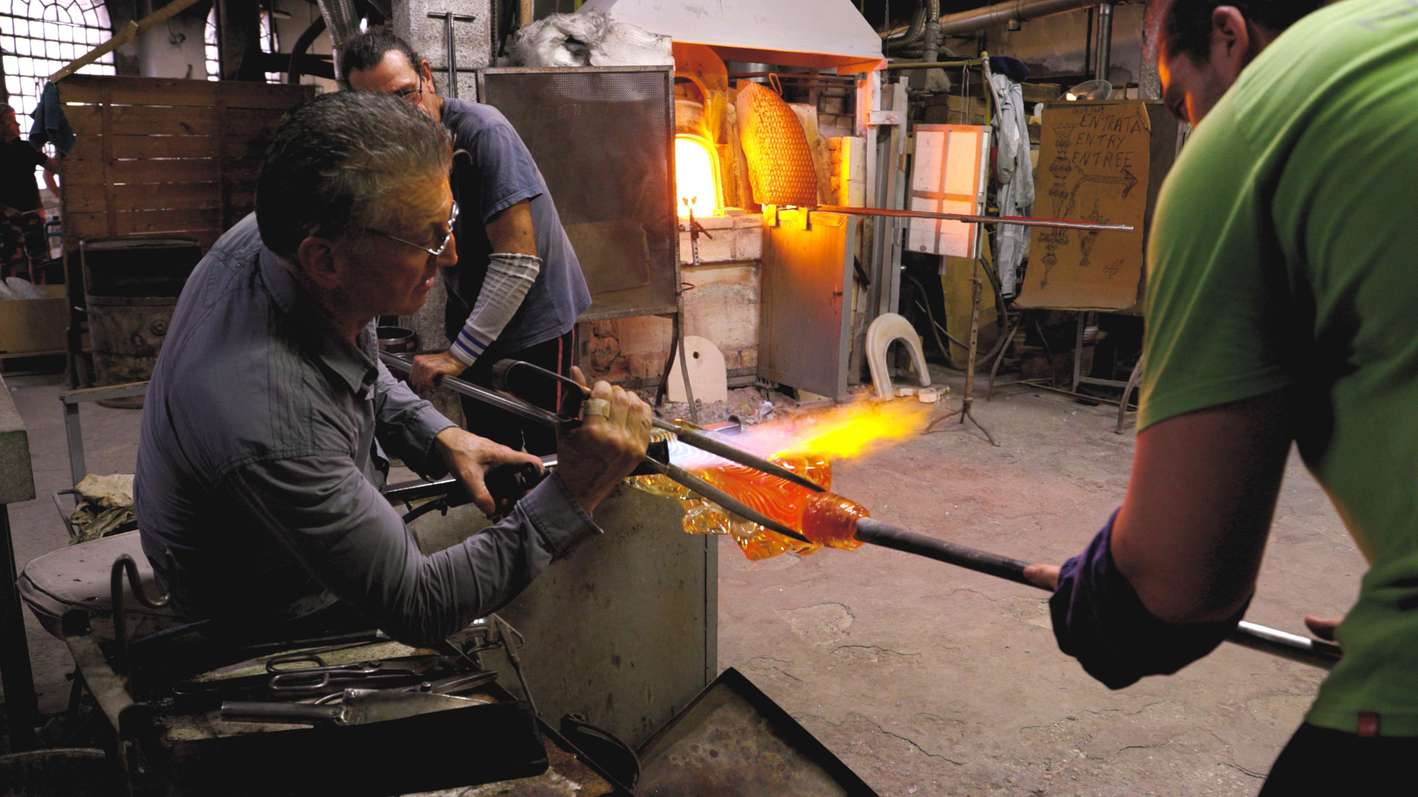
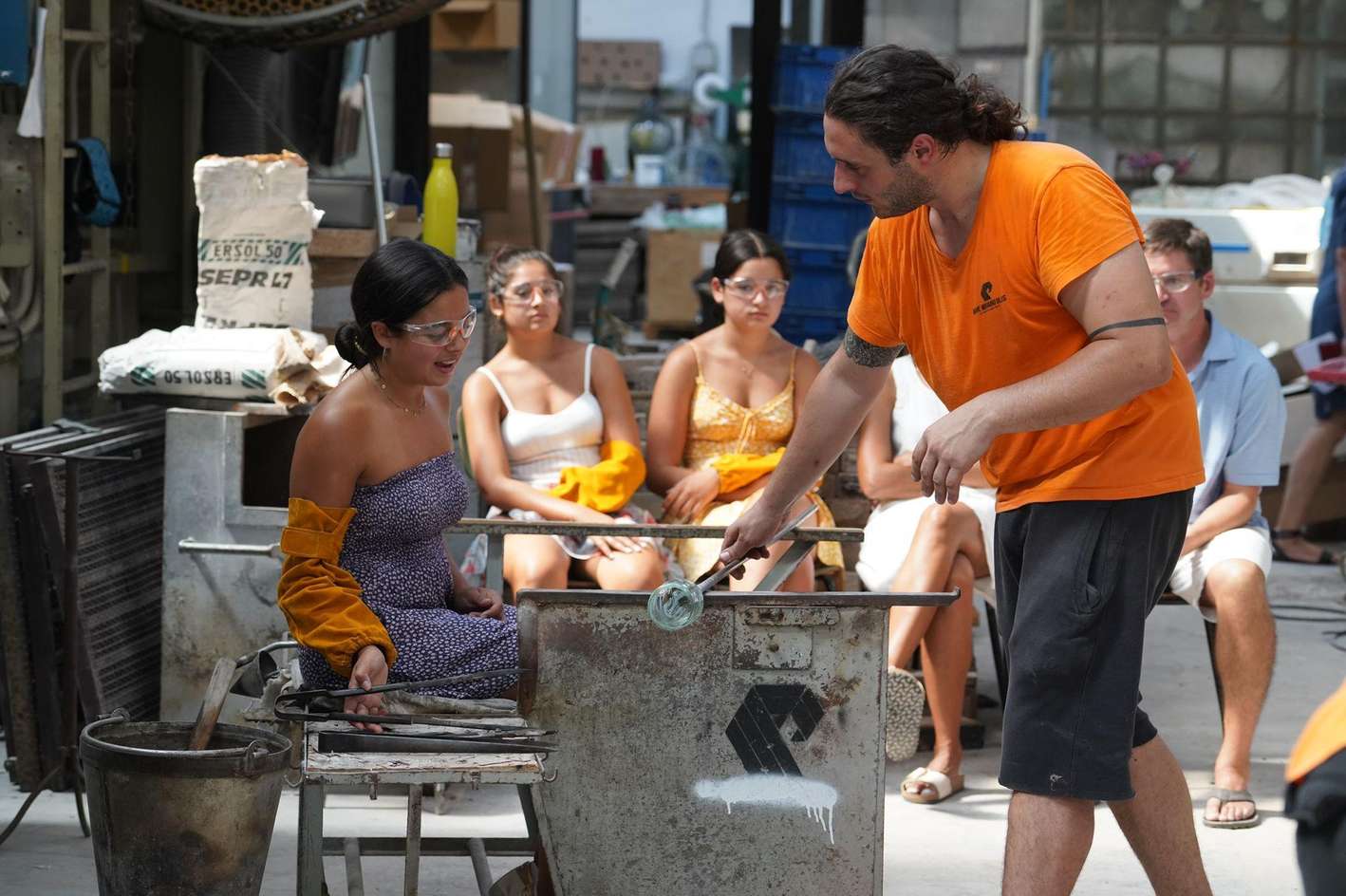
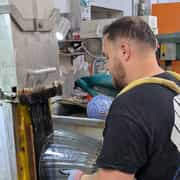
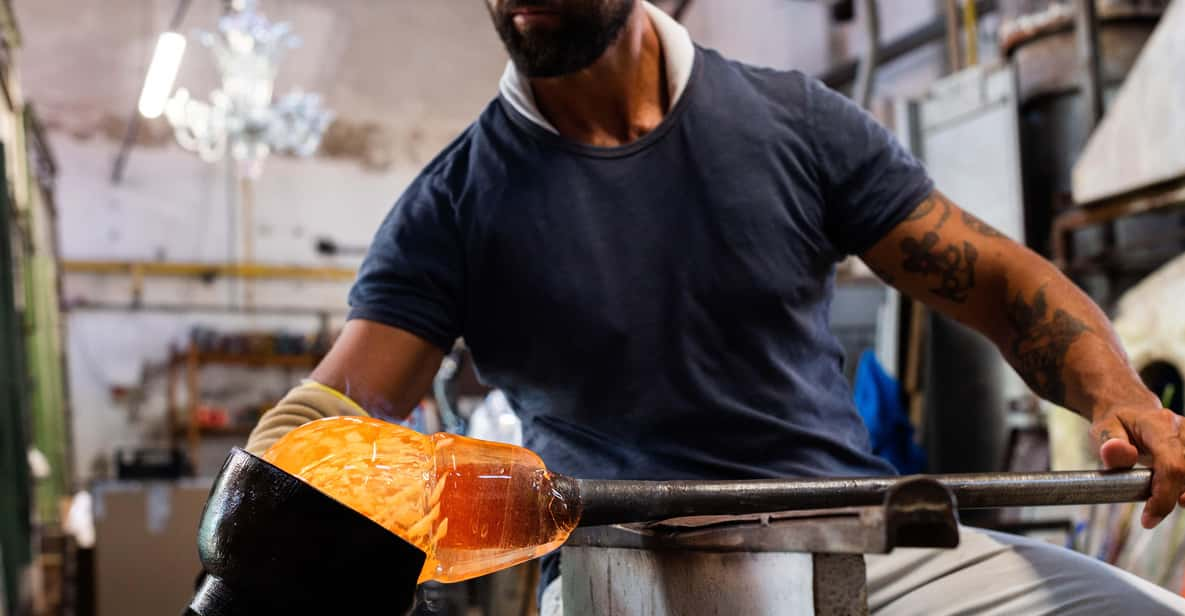
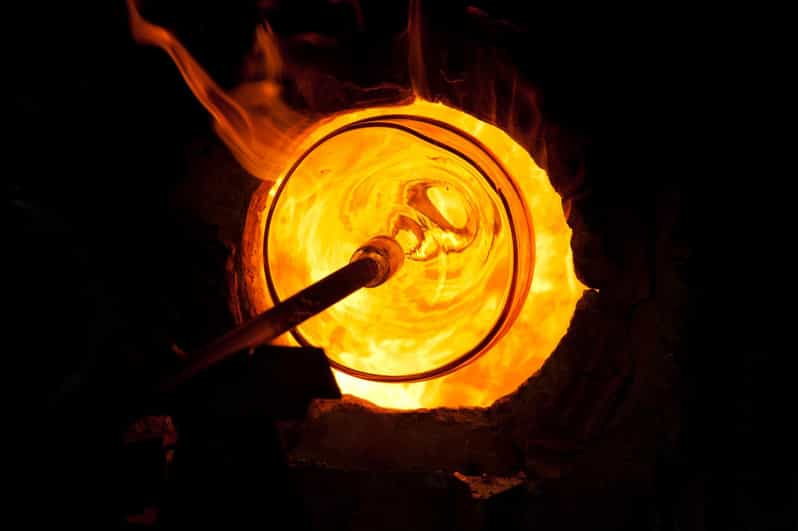
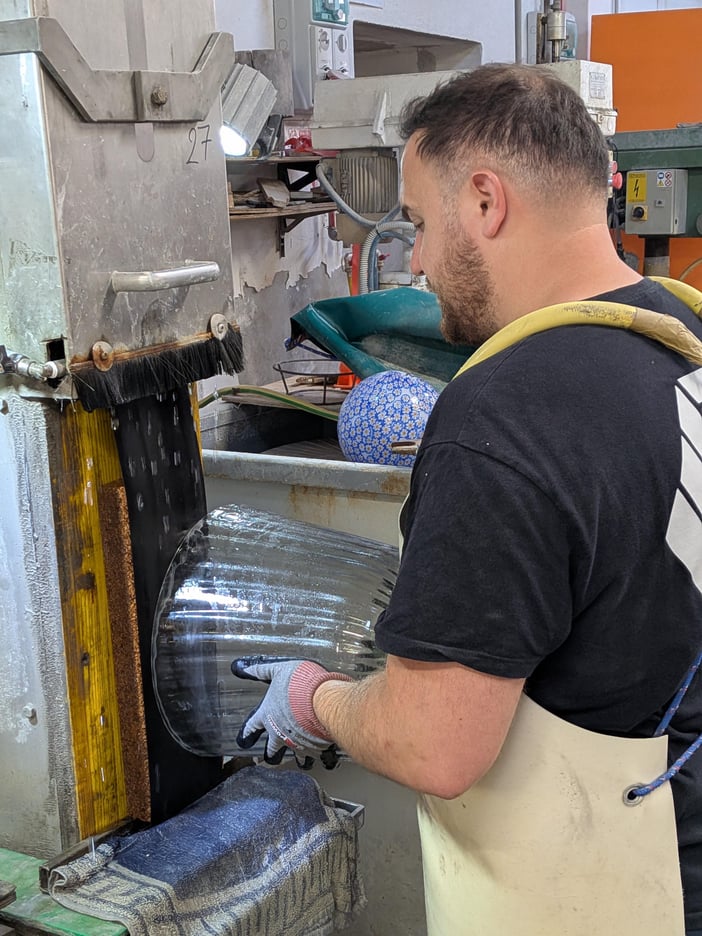
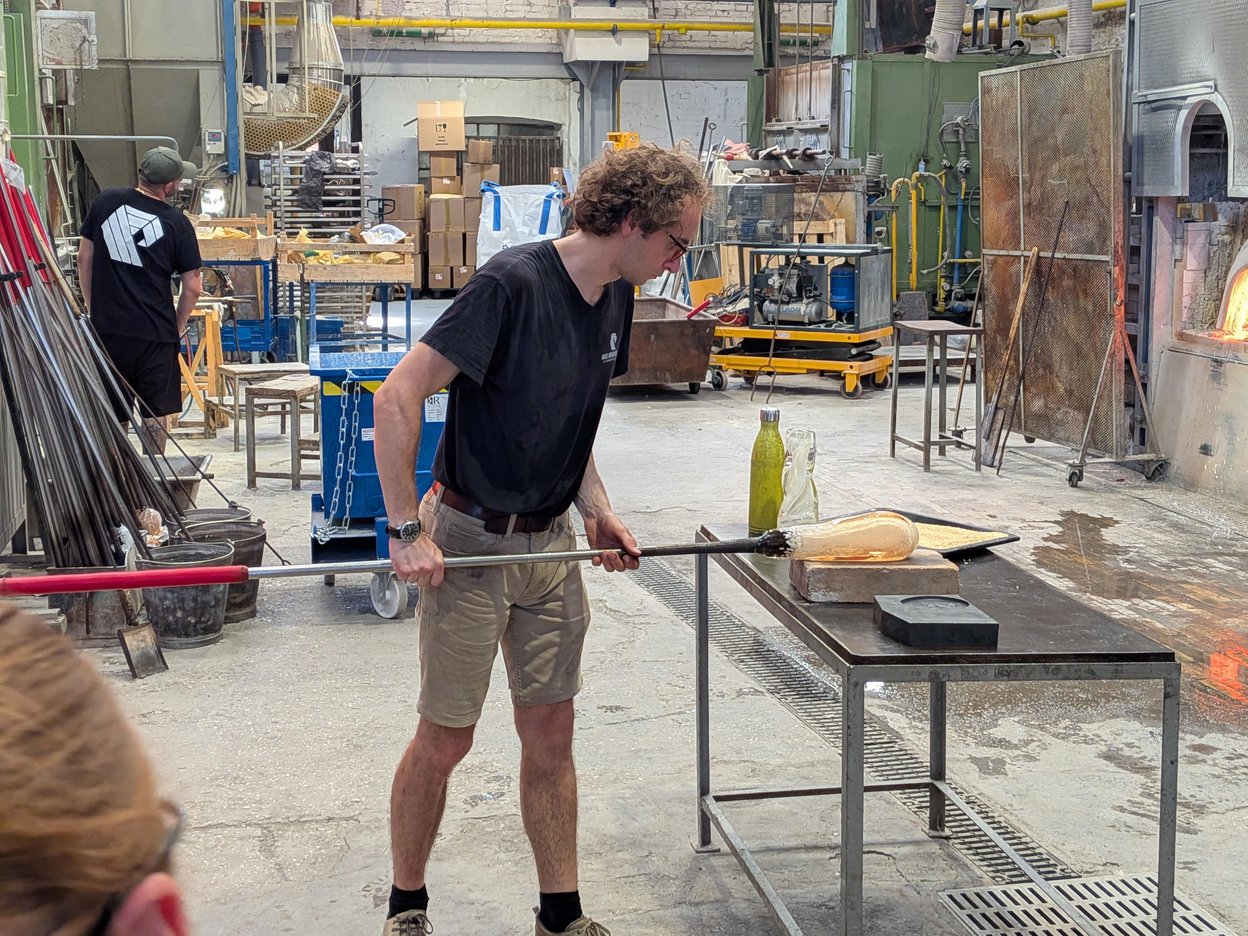
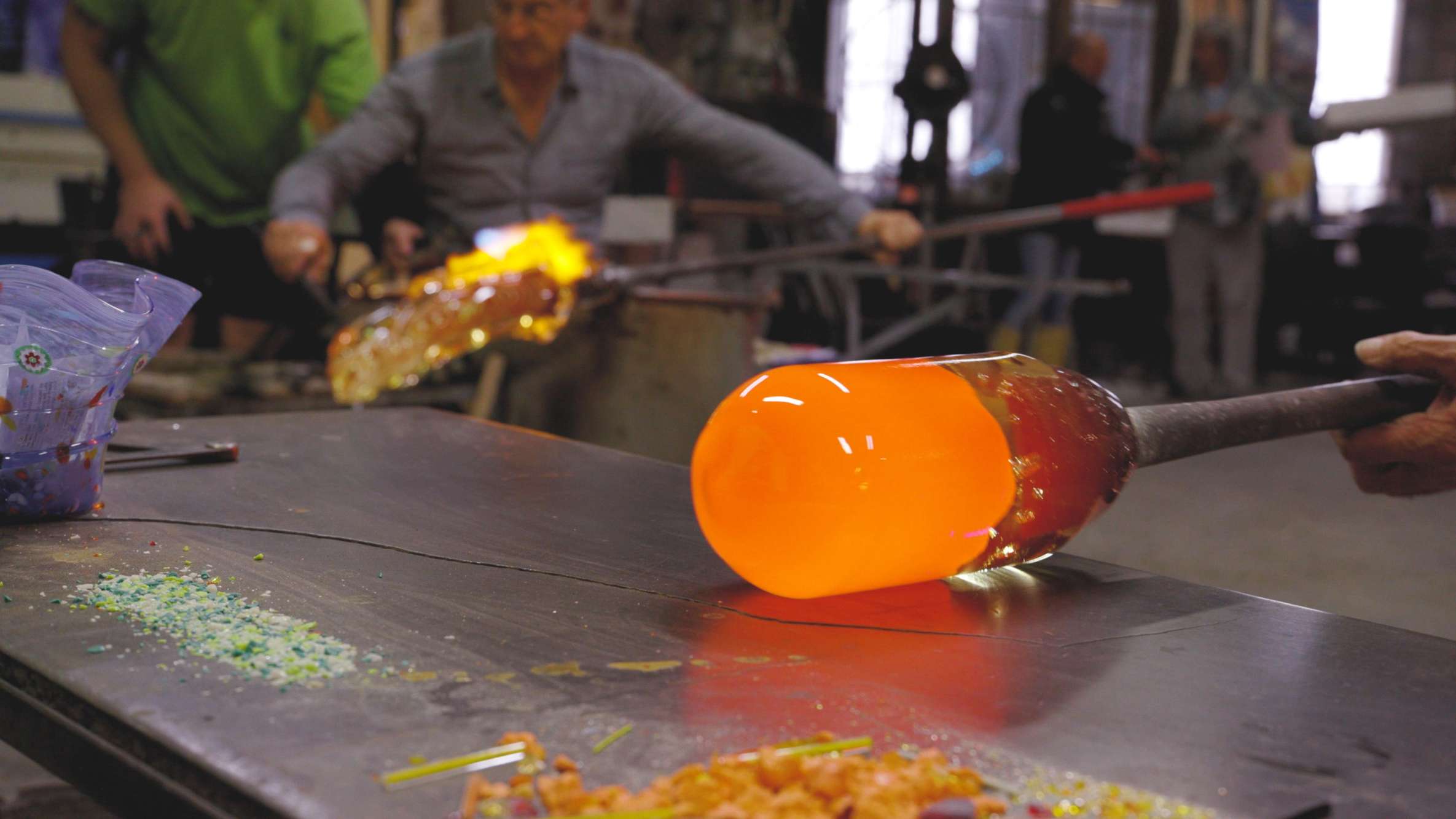
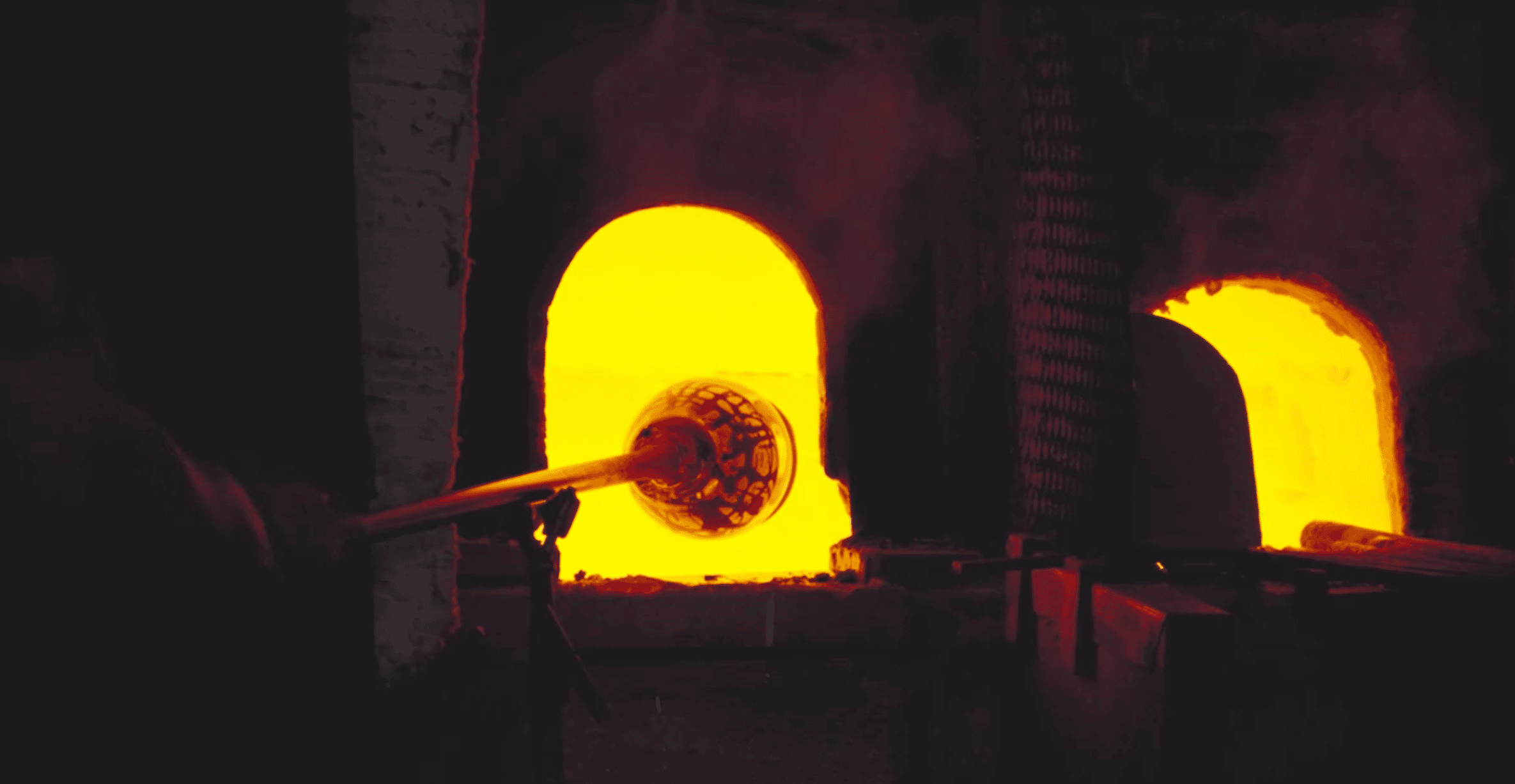
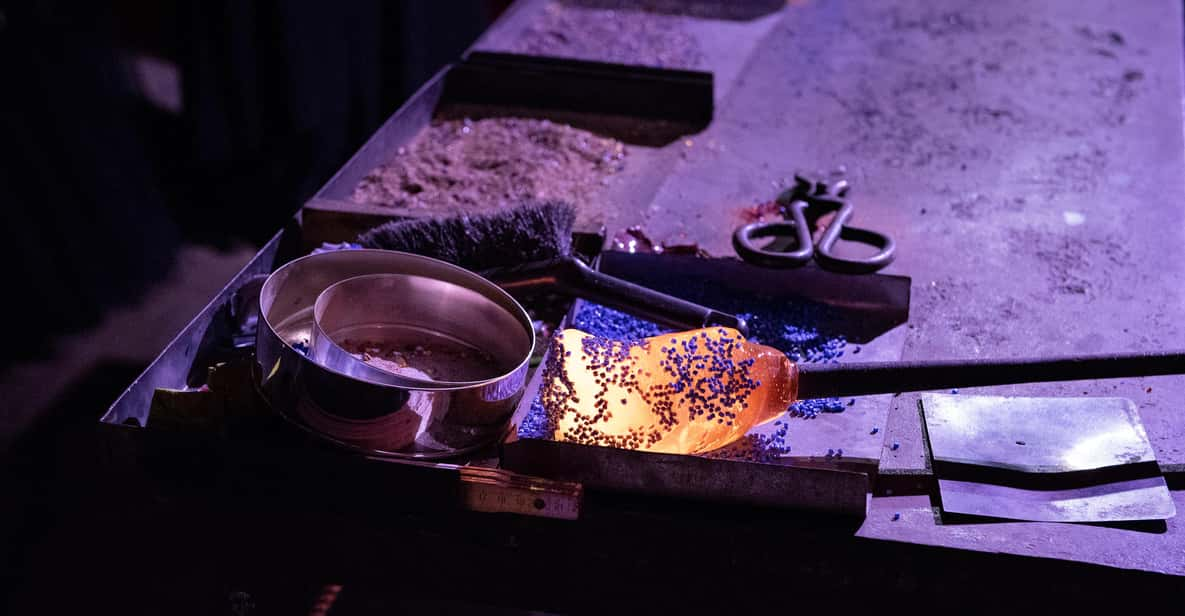
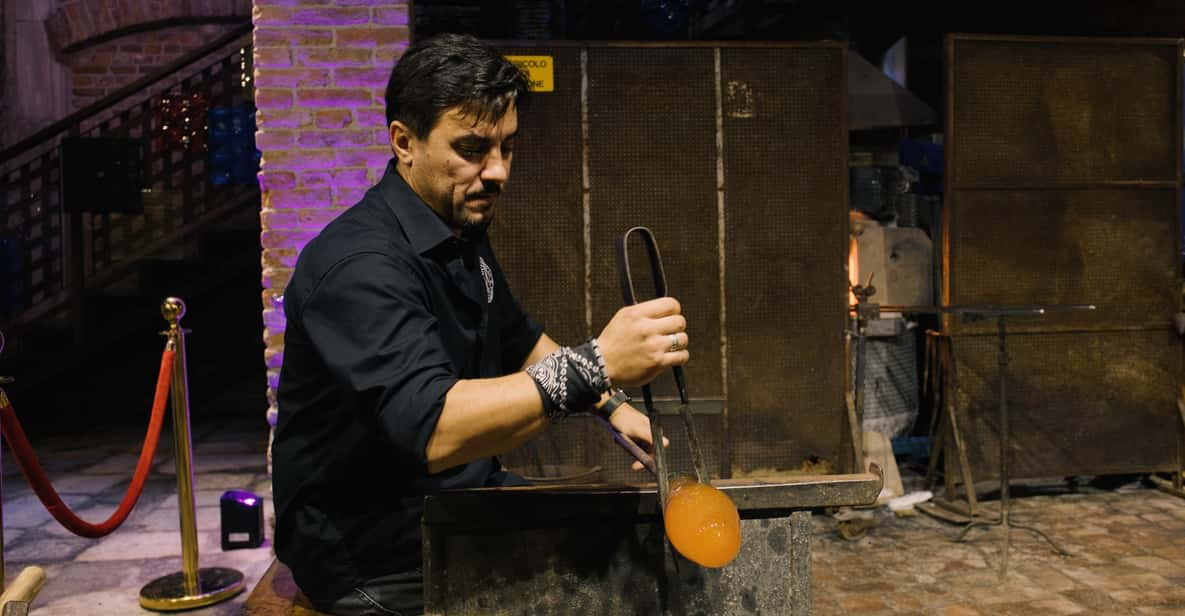
The first thing worth seeing is the furnace itself. Molten glass sits at roughly 1,200 to 1,400 degrees, and within a few minutes a master pulls a glowing gather from it and turns it into shape on the end of a pipe.
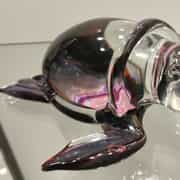
This experience runs about 20 minutes: a short guided walk through the factory, a live glassblowing demonstration, a sculpture demonstration where glass animals take form, and a finish in the showroom with a credit toward any purchase. Here is how it goes, in order.
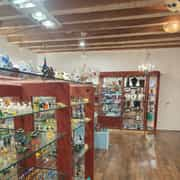
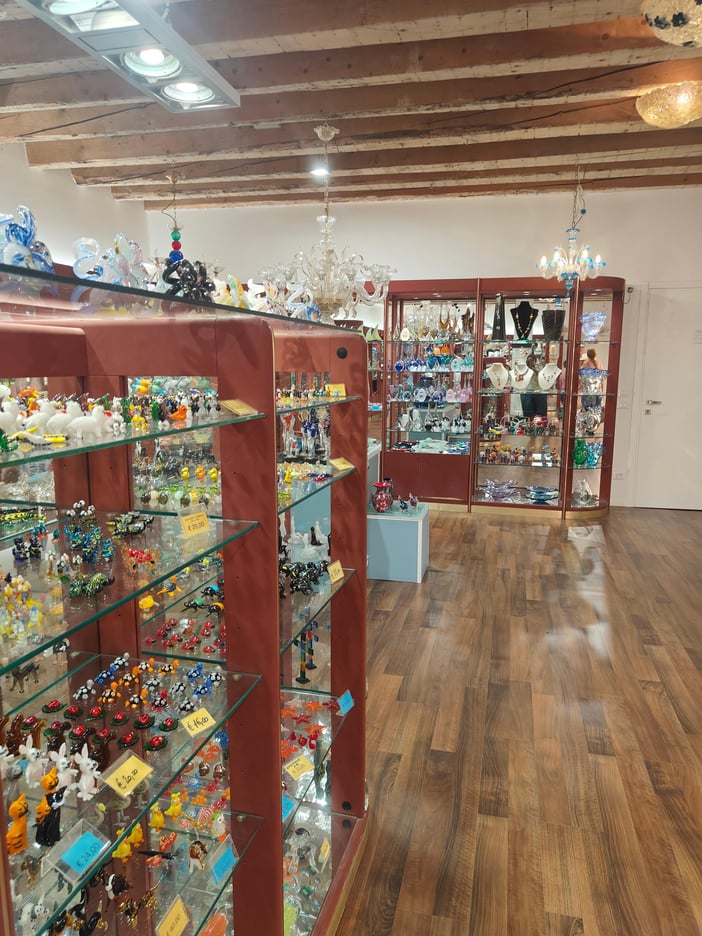
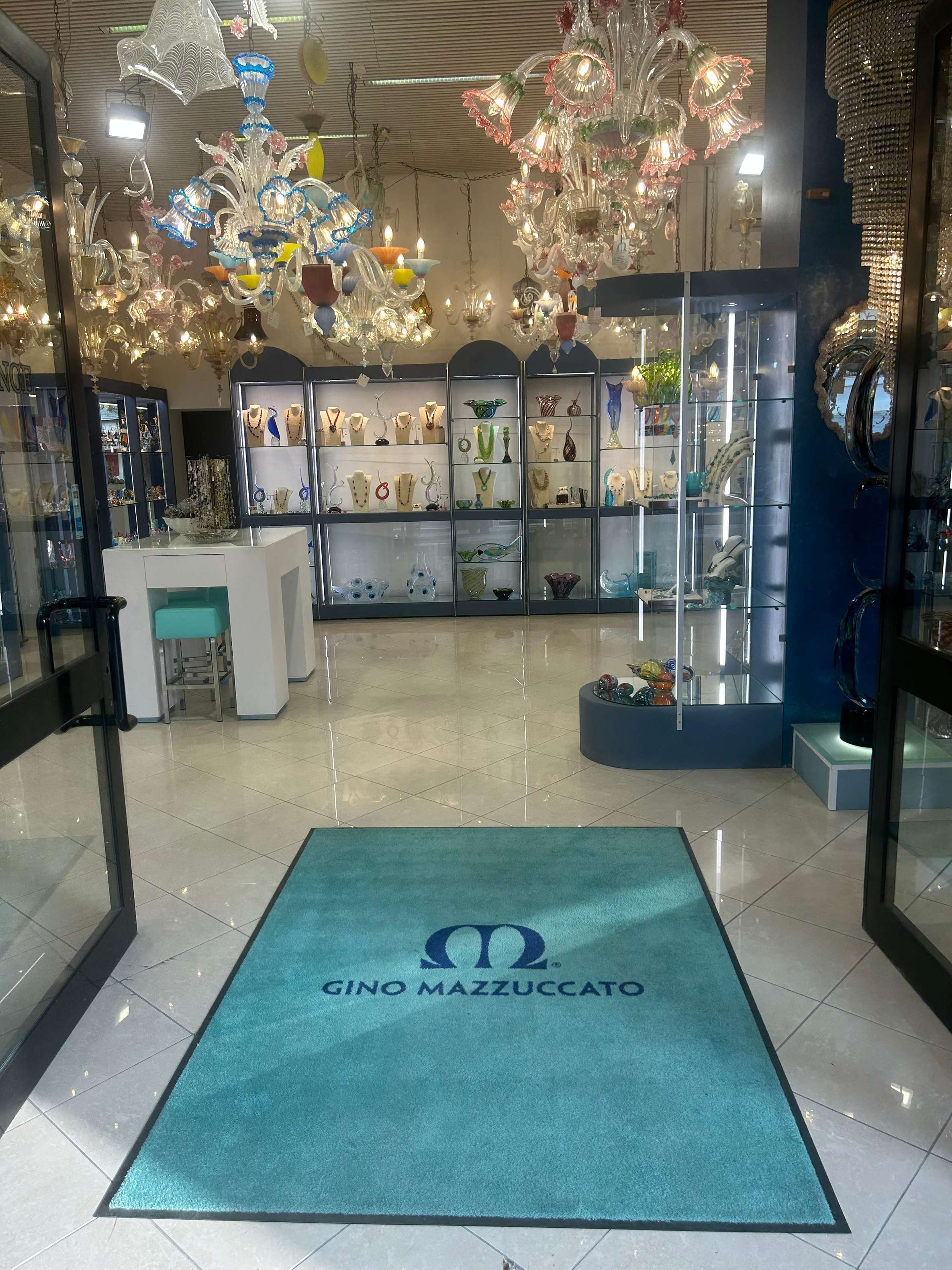
1Meet your guide at the factory· about 5 minYou arrive a few minutes early and meet your guide at the glass factory itself, no other meeting point needed.2Tour of the factory· about 5 minYour guide walks you through the factory and explains the processes behind glass production, from raw materials onward.3The master blows glass· about 8 minThe glass master creates an object using the blowing technique, right in front of you at the furnace.4Sculpture technique demonstration· about 5 minDuring the sculpture demonstration you watch how glass animals are made, shaped by hand from solid glass.5Showroom and your credit· about 7 minThe visit ends in the shop and gallery among chandeliers, sculptures and jewelry, and each adult receives a credit toward any purchase.
Where the other tours go
Murano
Venice: Murano Island and Glass Factory Private Guided Tour
Most reviewers praise the master's skill and say the glass shapes they watched take form right beside them made the whole trip.
Best surprise
Several reviewers loved the added touches they did not expect, like a glass gift to take home or a drink in hand.
Most common wish
Many reviewers wished the show ran longer, saying the minutes in front of the furnace passed far too fast.
How to book a blowing demonstration in Murano
01
Pick a date with a morning slot
Choose your day first, then aim for a morning show. Furnaces run at full energy before noon, the halls stay cooler, and masters are actively producing pieces. The factory on this page runs demos every half hour, from 9:30 am to 3:30 pm.
Pro tipA morning slot gives you the best artisan activity and leaves your whole afternoon free for the island.
Common mistakeBooking a 1 pm or 2 pm slot lands you in the lunch pause, when workshops quiet down or close between noon and 2:30 pm.
02
Choose the option that fits
Compare the two lengths: a 20-minute factory demonstration with a guided tour of the making process, or the 50-minute in-depth factory tour that walks you through the batch room, hotshop, and coldshop. The Glass Cathedral runs a 25-minute show daily, morning and afternoon, with drinks.
Pro tipThe in-depth tour is led in English only, so if your group speaks another language, pick the 20-minute demo instead.
RecommendedThe balcony option at the Glass Cathedral gives you a first-floor view and a glass of Prosecco during the show.
03
Pay and wait for confirmation
Book online and pay in advance. Your booking comes with free cancellation up to 24 hours before, so if your plans shift, you can change the date at no cost. Some Murano studios confirm within 48 hours, subject to availability, so book a day or two ahead.
Pro tipLocking a slot in advance means no walk-up queue at the furnace door and no risk of a closed private factory.
Common mistakeLeaving the booking to the same morning can leave the hour you want already sold out.
04
Get your voucher and find the pier
Your confirmation arrives as a ticket with a QR code, which you scan at the furnace for a multilingual audio guide. The factory sits on the island itself, so take the vaporetto and get off at Murano Colonna, the pier at the entrance of Rio dei Vetrai where the furnaces cluster.
Pro tipFrom Fondamente Nove, lines 4.1 and 4.2 cross in about 9 to 10 minutes; board 20 to 30 minutes before your show time.
RecommendedFrom San Zaccaria near St. Mark's, the direct seasonal line 7 takes 24 to 30 minutes, so leave 40 to 50 minutes before the demo.
05
On the day, arrive early and dressed right
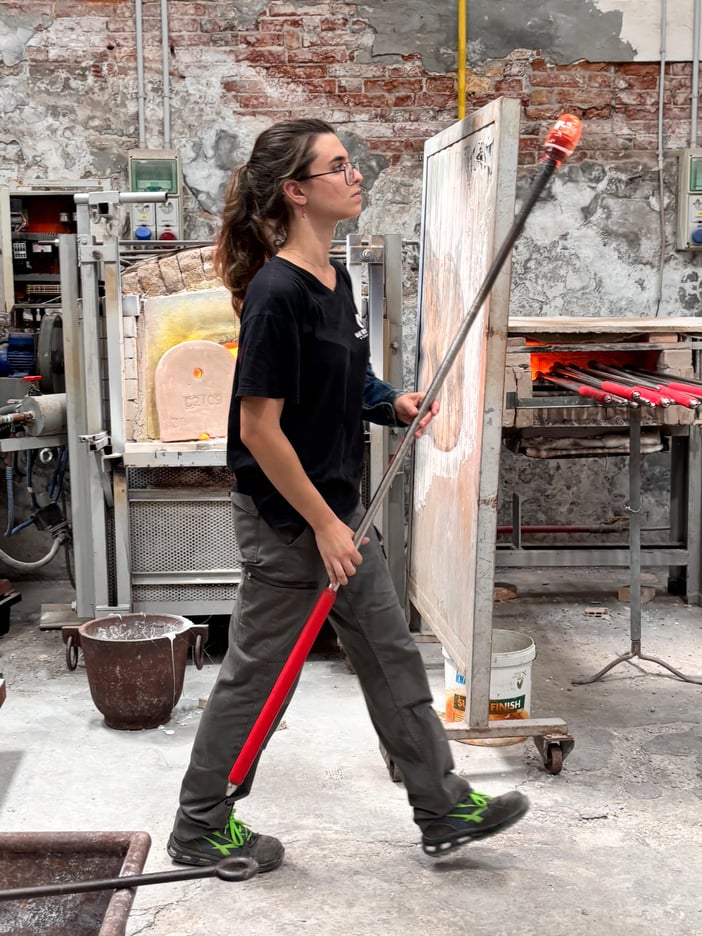
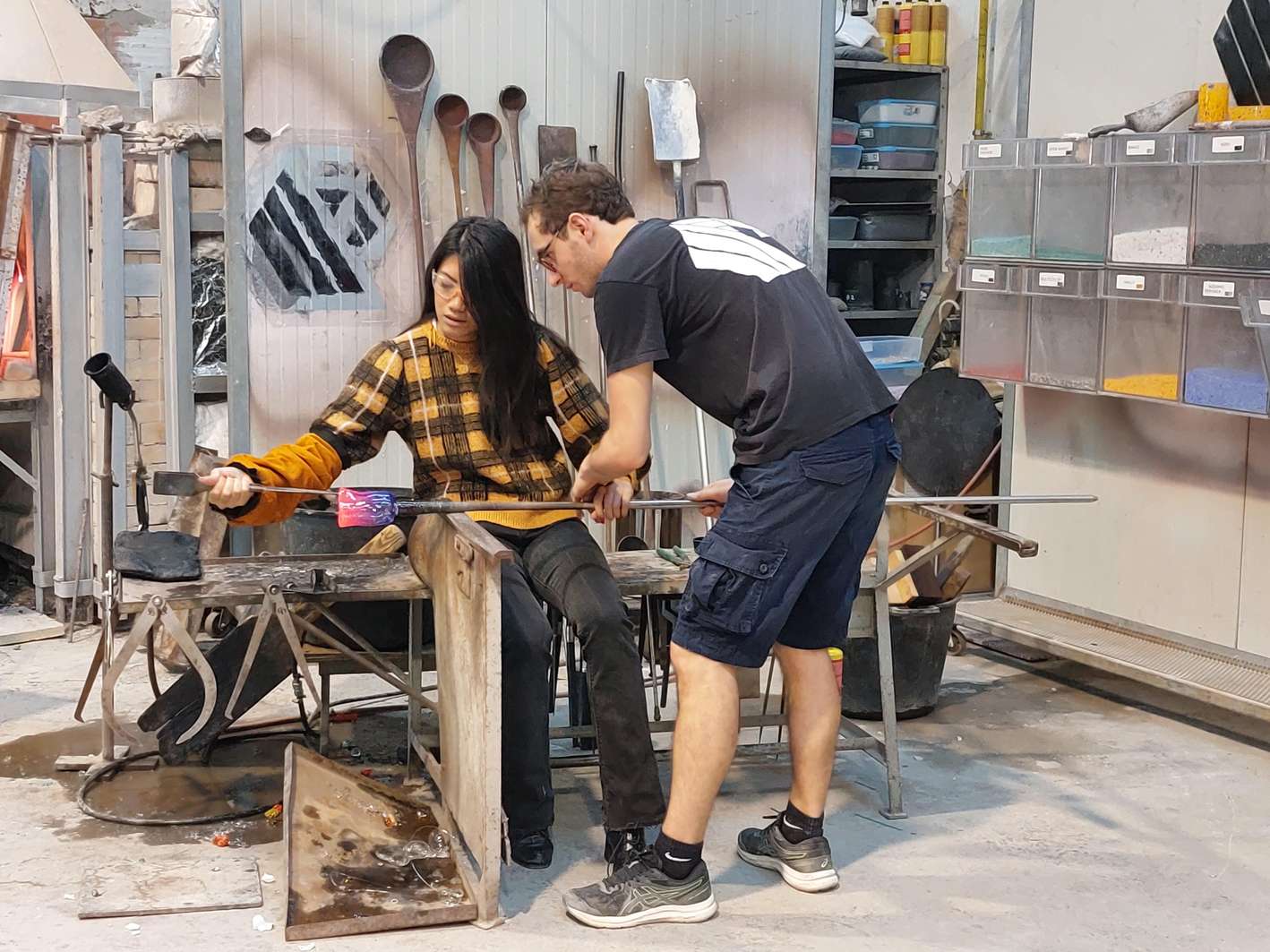
Get to the glass factory a few minutes before your start time and meet your guide at the door. Wear closed-toe shoes and long pants in natural fabrics, since sandals and synthetic clothing are not allowed near the furnace. Safety glasses are provided on the in-depth tour.
ImportantThe in-depth tour is not suitable for people with a cold, epilepsy, or wheelchair users, so check the restrictions before you book.
Pro tipAsk before you photograph or film the masters; flash is discouraged in furnaces, and many workshops restrict filming.
Know before you book a glass blowing demonstration
Can stop the dayGood to knowGood news
01
ChoosingWhat it is, who it suits, when to go
4
Show length
A standard furnace demonstration lasts around 20 minutes. If you want the full walkthrough, the in-depth factory tour runs about 50 minutes and takes you through the batch room, hotshop and coldshop.
The glass
A piece that just came out of the furnace stays dangerously hot even after it stops glowing red. It goes into an annealing oven and cools slowly over 12 to 14 hours, which keeps it from cracking. You watch it, you never touch it.
Buying
Nobody is obligated to buy anything after a demonstration. You can decline the showroom politely and walk out, and several small studios charge a small entry fee if you want to watch without any shop at all.
Timing
Morning is the best window. The masters work at full pace before noon, while workshops quiet down for lunch between 1 and 2 pm and afternoon shifts wind down.
02
BookingHow far ahead, and what happens if plans change
3
Booking
Some furnaces admit visitors only with a reservation, so walk-in luck is not a plan. One factory runs shows every half hour from 9:30 in the morning to 3:30 in the afternoon, so a booked slot keeps your day fixed.
Cancellation
You can cancel up to 24 hours in advance for a full refund. That applies whether you booked a standalone demonstration ticket or an island excursion, so a changed plan costs you nothing.
Confirmation
Book ahead rather than walking up. Some furnaces require a reservation for every guest and issue a ticket with a QR code that unlocks the audio guide. Your confirmation is what guarantees entrance to the furnace.
03
Before you goPapers, health, what to bring
3
Dress codeCan stop the day
Closed-toe shoes are required, and sandals or flip-flops get you turned away. Long pants in natural fabrics such as jeans are the safe choice, since synthetic clothing melts near the furnace.
Health limits
A cold is a reason to skip the in-depth factory tour, because the heat and the factory air are hard on it. The demonstration rooms are hot, so anyone with a respiratory condition should watch from the viewing stands.
Hot glass
The piece shaped in front of you cannot be handed over on the spot. It goes straight into an annealing oven and cools slowly for 12 to 14 hours, so it stays hot enough to burn even after it stops glowing.
04
On the dayWhere to be, when, and how you get there
1
Meeting point
You meet at the furnace itself, not at a Venice pier. The factory demonstration tickets ask you to arrive about five minutes early, and the tour leader waits inside the workshop. Plan your own boat crossing to Murano first.
05
During the tourWhat is expected of you
1
Photos
Ask before you raise a camera or start filming. Many furnaces allow photography only at certain moments, flash disturbs the glassmakers, and selfies while glass is being worked are unsafe and disrespectful.
Guide to a glass blowing demonstration in Murano - what to see, time and book
A furnace show on Murano runs about 20 minutes, and the whole trip from Venice takes a morning. Timing decides the day: arrive before noon and the masters are at full energy, arrive after 1 pm and the floor is quiet.
Venice· 45.45° N, 12.35° E
If you only remember three things
1
Go in the morning, before noon: masters work at full energy and the rooms are coolest.
2
Wear closed-toe shoes and natural-fiber pants; synthetics melt near the furnace.
3
Watch the pieces cool overnight in an annealing oven before you take anything home.
Is a glass blowing demonstration in Murano worth it?
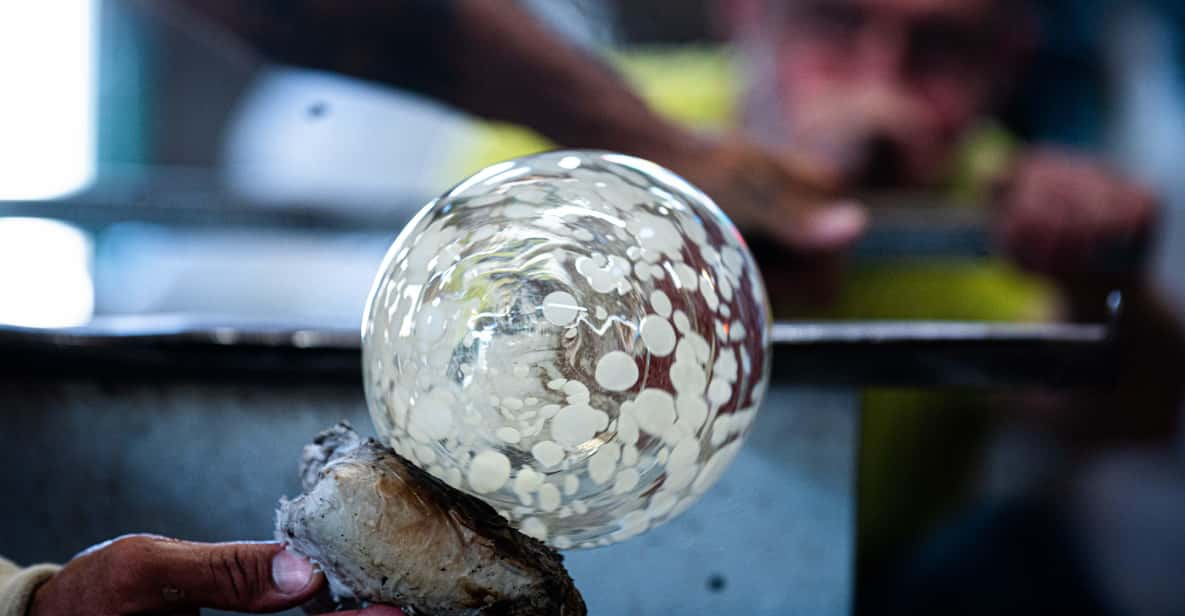
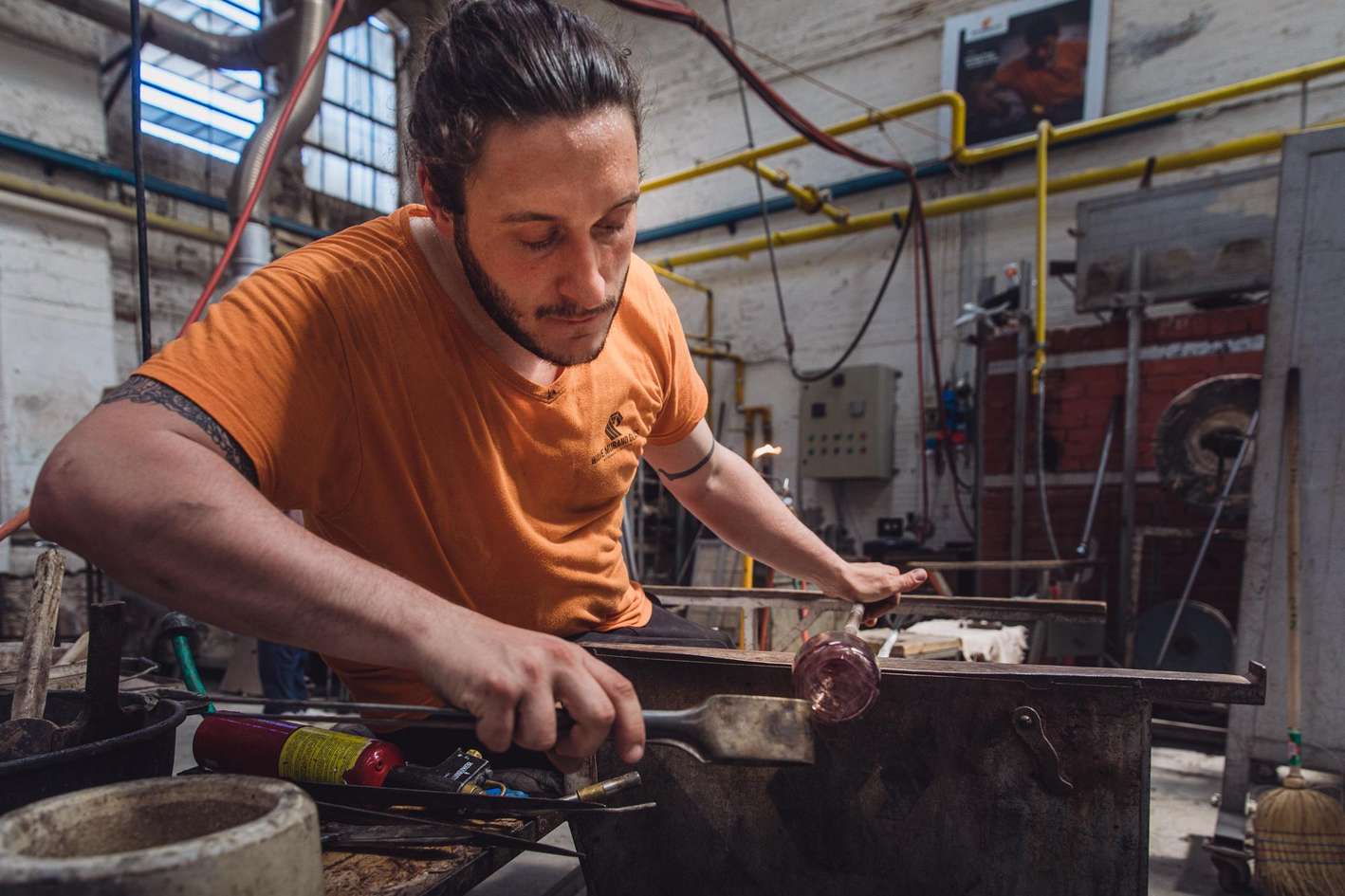
The furnace door opens and a glowing glob comes out on the pipe, and the maestro turns and breathes into it. A shape appears. That is what a glass blowing demonstration in Murano is, and first-time visitors keep saying it's the thing they did not expect to hold their attention.
No purchase is ever required. You can browse the showroom after the show and walk out without buying anything, and there is no friction about it.
The craft exists only here because Venice moved every furnace to Murano in 1291 to keep the city from burning, and by 1295 a glassworker who sold the secrets faced the death penalty.
The whole trip takes 3 to 4 hours, with 20 to 30 minutes of boat travel each way, so you can fit it in any morning.
A quick showroom show runs about 20 minutes with a team member explaining each step, and it ends with a handmade glass gift.
One tour operator runs a 25-minute show in a 12th-century former church, with music written for the demonstration and a spritz or beer, or a balcony view with Prosecco. The quick show is the shortest; the church show is the one you remember for the room.
The master gathers molten glass from the kiln, and the paste is worked at roughly 1,000 to 1,100 degrees, down from the 1,200 to 1,400 degrees that melt the raw batch.
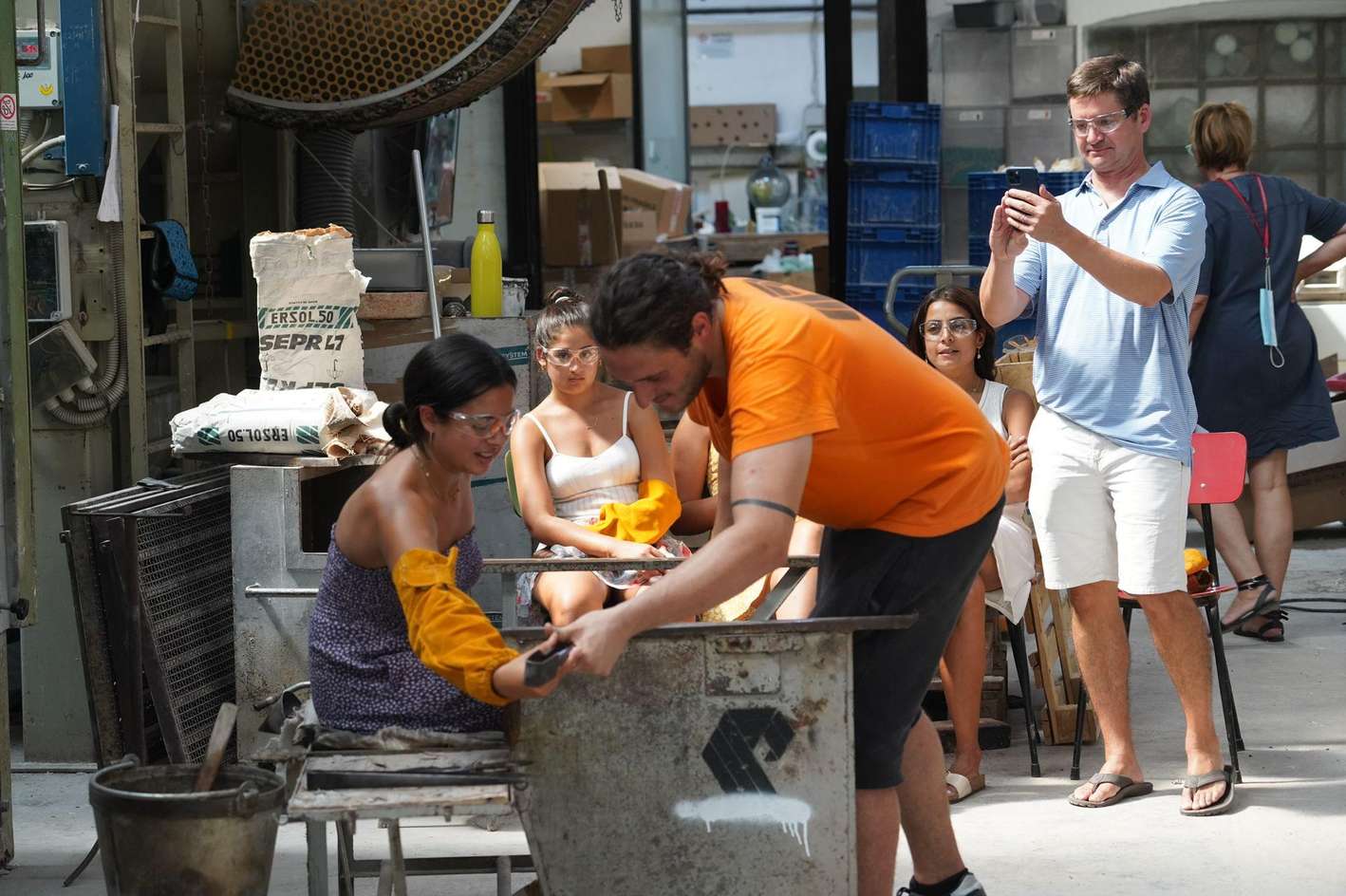
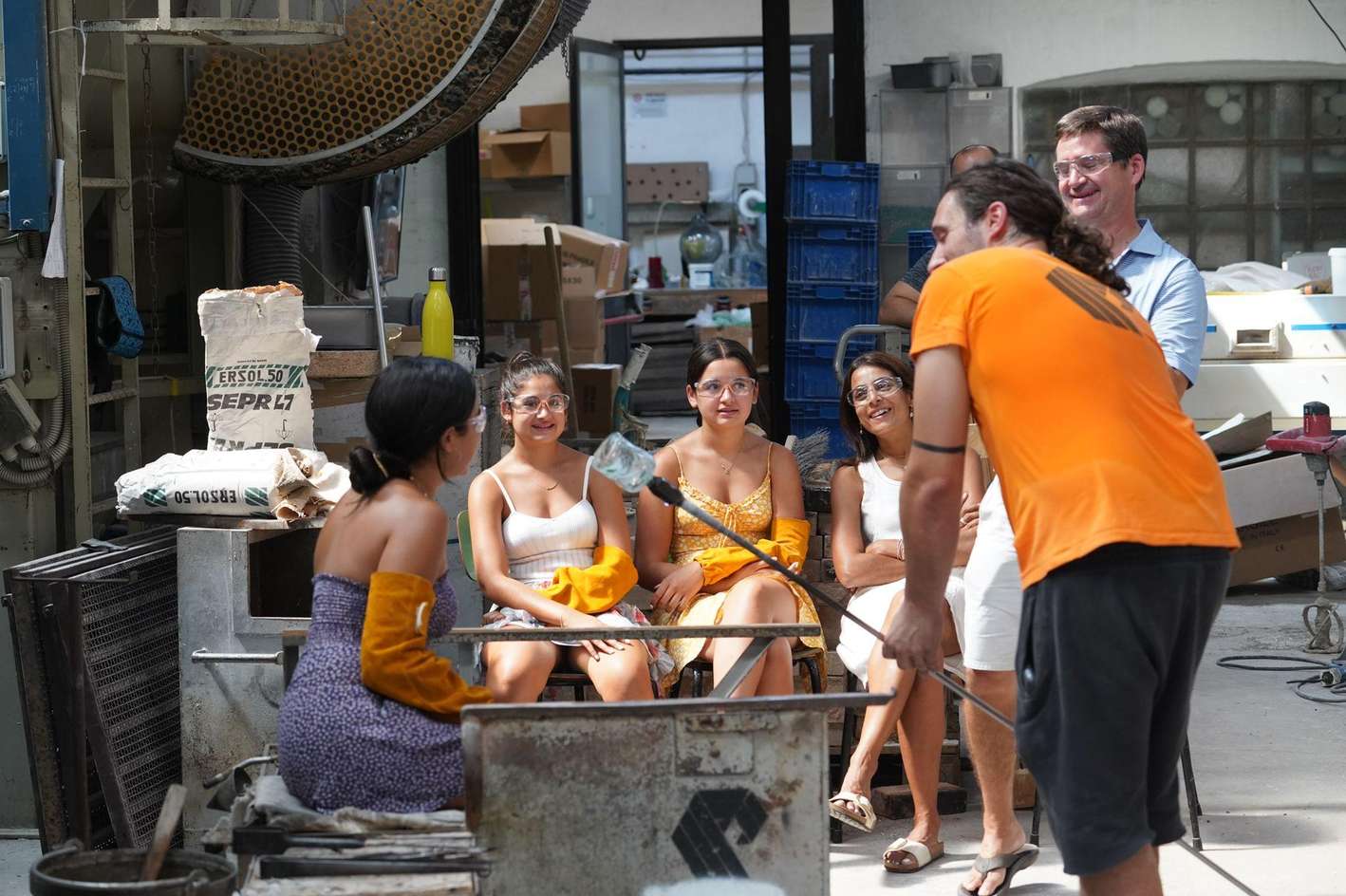
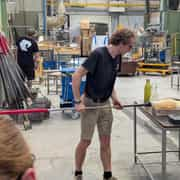
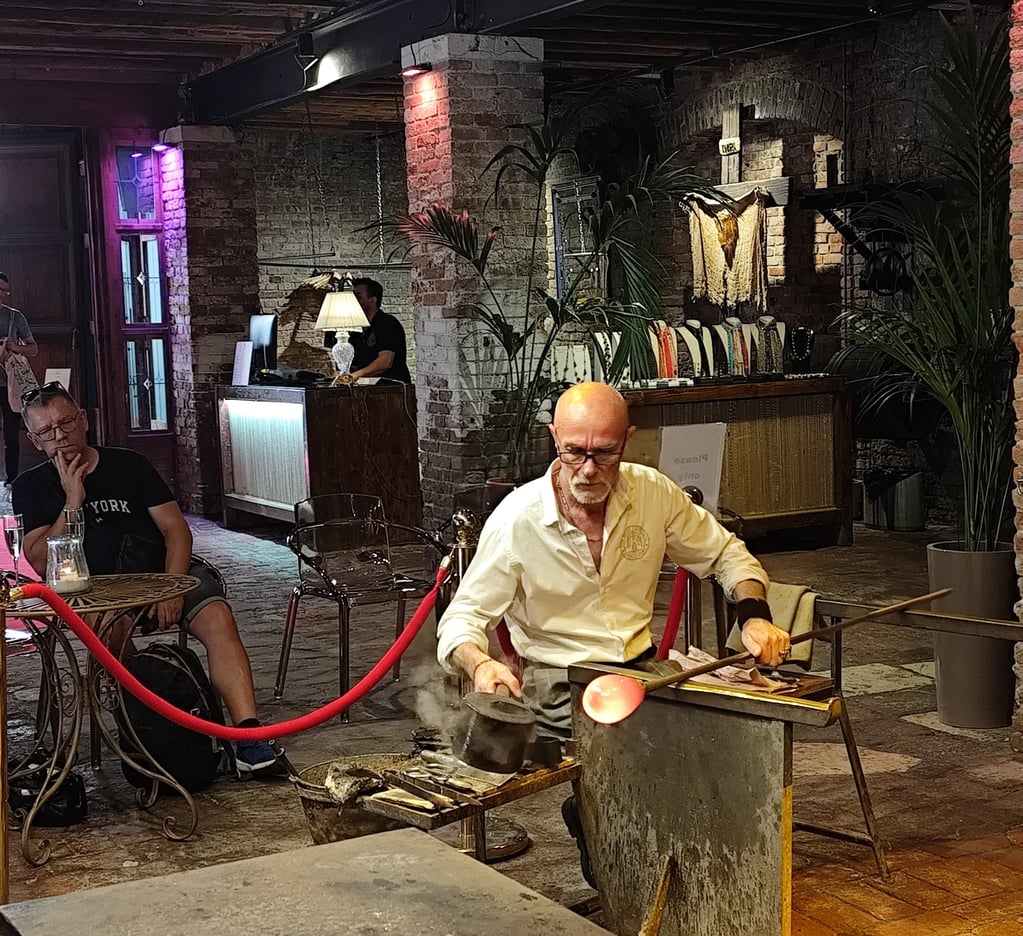
Visitors watch from a marked line on the floor, outside the paths of the maestro, the assistant and the furnace door, with room to step back from the heat.
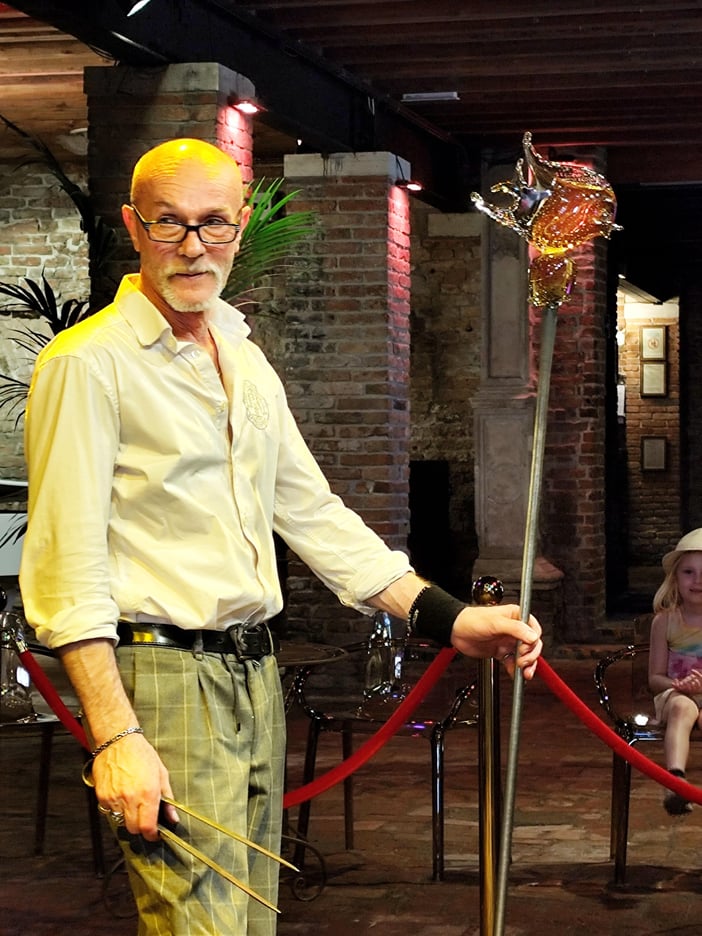
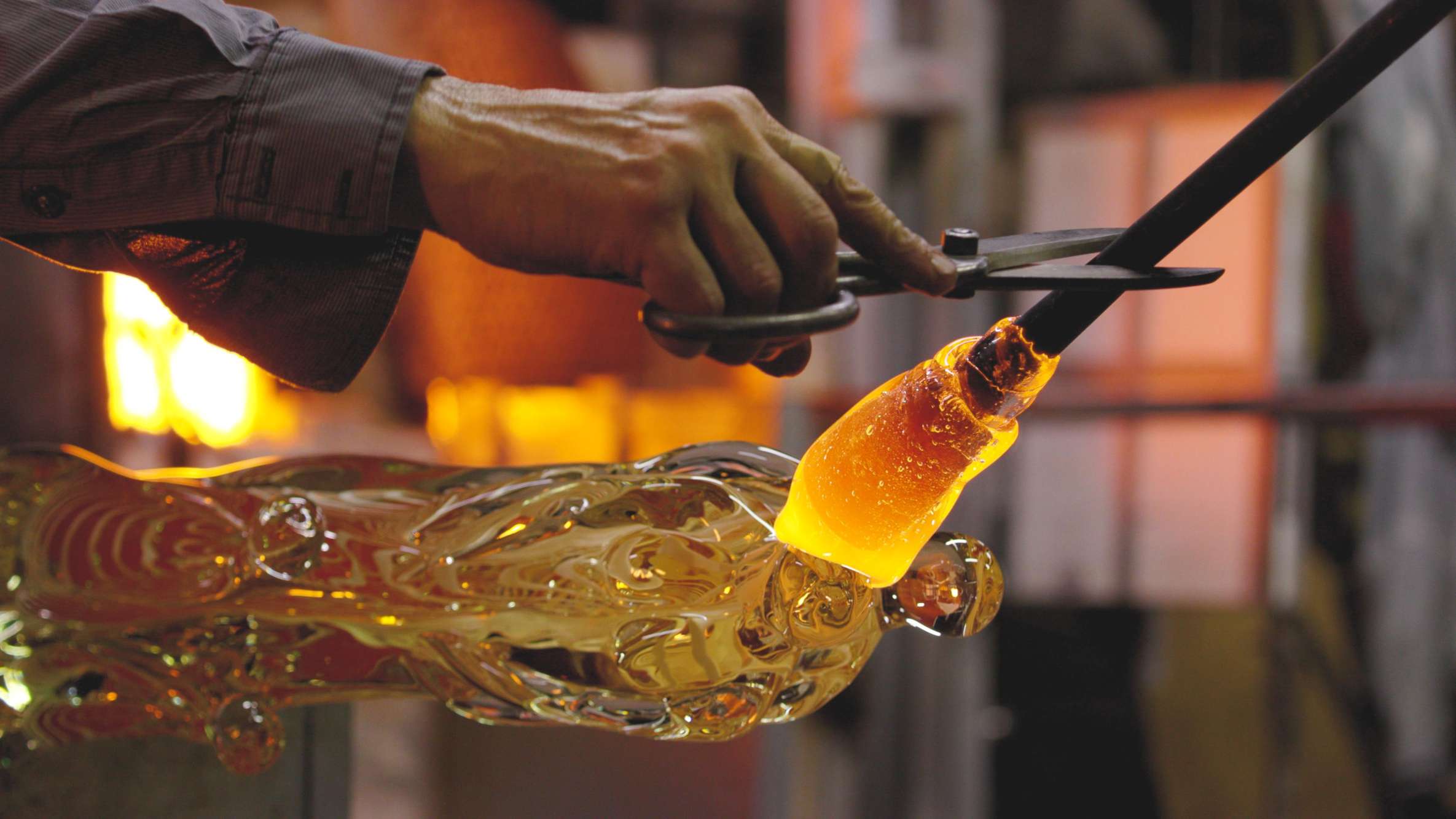
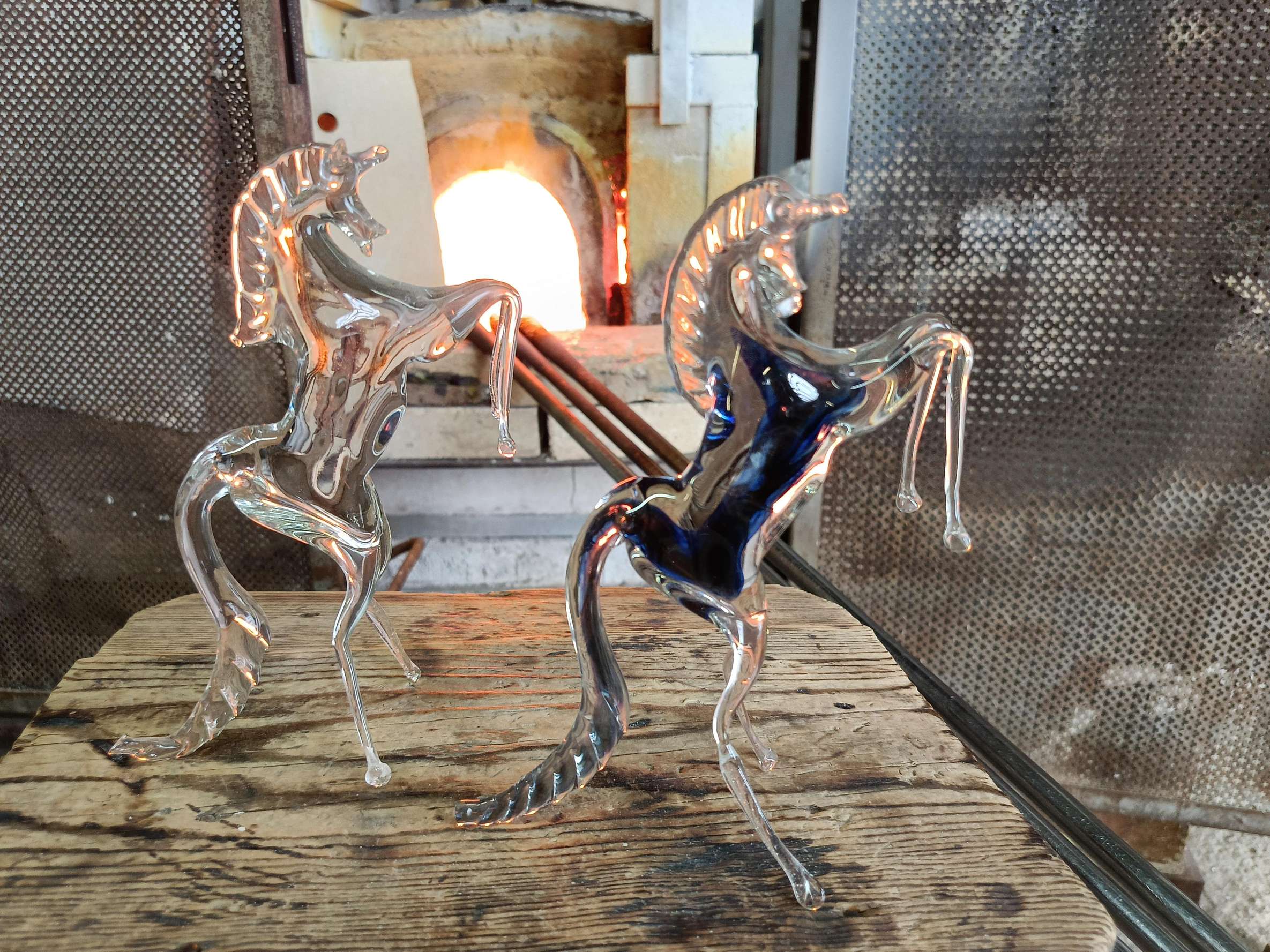
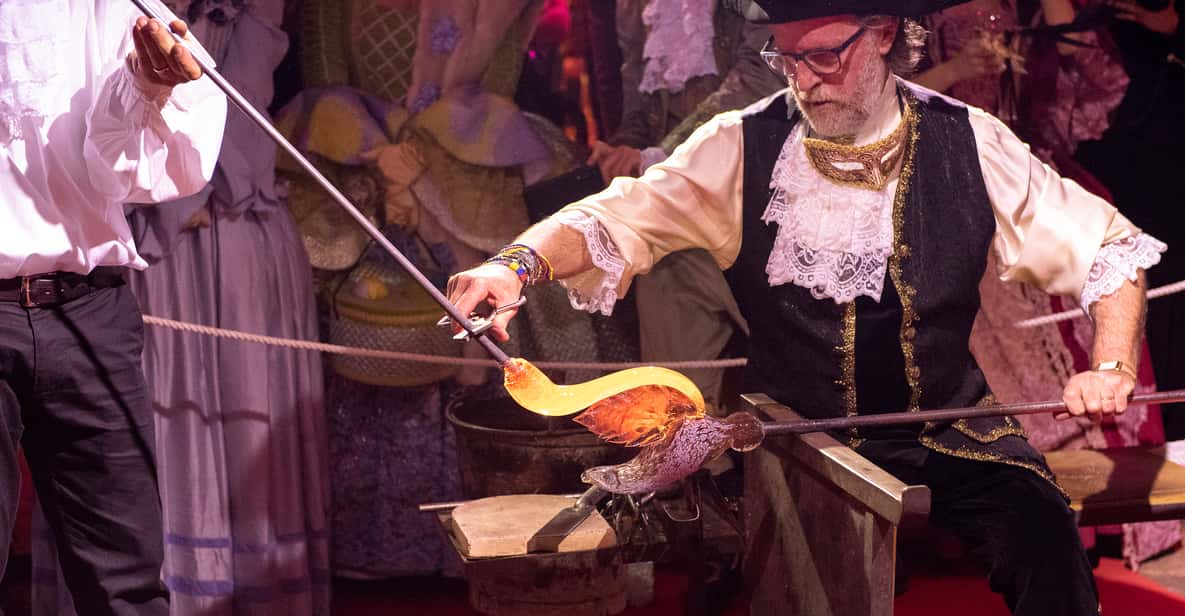
Artisans like to sculpt a horse without reheating the glass, which proves how much control they have while it is still workable. A standard show lasts about 20 minutes. An in-depth master session runs 45 to 50 minutes.
The horse you saw will not come home with you the same day. Freshly shaped glass stays dangerously hot even after it loses its glow, and it must cool slowly in an annealing oven, so it does not crack. The piece you watch stays behind, and the souvenir comes later, once it is cool.
Murano: Glass Blowing Demonstration and Artistic Glass Gift bundles a 20-minute show with a team member explaining each step, and a handmade glass piece from the factory before you leave.
Tour for this
From Venice: Murano Glass Factory Tour, Boat transfer and gift4.5★ (215) · 1 - 2 hours · Hotel pickup · Free cancellation
Morning is the time to be there. Before noon, masters are at full energy and the rooms are relatively cool, while the afternoon brings hotter rooms and winding-down furnace shifts.
Factories work from about 9 am to 5 pm, and one tour operator runs its demonstration from 9:30 am to about 4:30 pm, so a show can be booked in the afternoon.
Those two numbers count different things: the nine-to-five span is the factory's working day, and a scheduled late-afternoon show still exists, but full production and the busiest furnace floor belong to the morning.
Between roughly noon and 2:30 pm, workshops pause for a long lunch break, and several artisan furnaces only run public shows from 9 am to 1 pm. So a 1 pm arrival finds a quiet floor. The plan that holds in any month is a 9 am boat.
Weekends work too: furnaces open to the public on Saturday and Sunday, though full production shifts only run Monday to Friday, and some trade-only factories close on Sundays.
August, when it is busiest, is when the commercial kilns close for annual maintenance. The visitor-facing demonstration kilns keep running through August and across major holidays.
Tour for this
Murano: Glass Factory Experience with Tour and Demonstration4.4★ (2,675) · 20 minutes · Free cancellation
Short show, deep tour, or blowing demonstration in a church
A quick show runs 15 to 25 minutes and covers glassblowing and glass modeling, then leads straight into the attached showroom.
A comprehensive factory tour lasts about 50 minutes and includes safety equipment to walk the production areas beyond the showroom. Boat-inclusive packages run 4 to 7 hours and add Burano or Torcello, but they are a different kind of day.
One tour operator runs its demonstration in a 12th-century former church on Murano, daily, morning and afternoon, in a venue that was rebuilt from 2013 onward and holds Murano's first electric furnace, installed in 2017. A 24-armed Rezzonico chandelier hangs in the collection.
The tour to book for it is Murano: Glass Blowing Demonstration with Optional Drinks: 25 minutes, music written for the demonstration, and a spritz or beer depending on the option you pick.
Getting to Murano for your glass blowing demonstration
Fondamente Nove is the fastest start. From there, lines 4.1 and 4.2 cross in 9 to 10 minutes to Murano Colonna, and lines 12 and 13 take about 9 minutes to Faro.
Board 20 to 30 minutes before a morning show, because those 9 to 10 minutes are only the crossing itself, and you still have the walk from the pier to the furnace.
From San Zaccaria near St. Mark's, the seasonal line 7 takes about 24 to 30 minutes, and the circular lines around the historic center take just over 40; that difference is why boarding here needs a larger margin of 40 to 50 minutes. From Piazzale Roma, direct line 3 reaches Murano Colonna in 21 minutes.
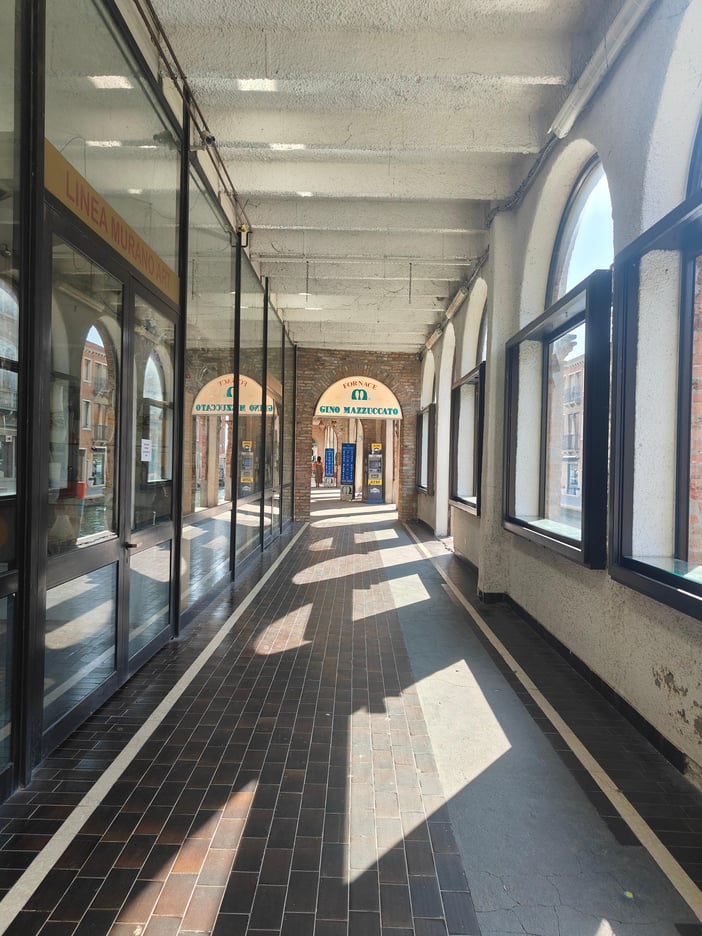
Disembark at Murano Colonna. It drops you at the entrance of Rio dei Vetrai, the Fondamenta dei Vetrai, where the working furnaces and historic studios cluster.
The public vaporetto is cheaper than an organized tour, but you plan the timetable yourself.
If you would rather skip that, the Venice: Murano Glassblowing Show - Made in Italy Art & Walk runs the whole thing as a semi-private water taxi from St. Mark's with a guided furnace demonstration and free time on the island, in about 3 hours.
Tour for this
Venice: Murano Glassblowing Show - Made in Italy Art & Walk4.1★ (84) · 3 hours · Free cancellation
What to wear near the furnace at a blowing demonstration
The rules are simple and they are enforced. Closed-toe shoes are required, and sandals and flip-flops are strictly prohibited. Long pants such as jeans made of natural fabric go on the same list.
Synthetic clothing is discouraged or banned near glass that reaches 1,000 to 1,400 degrees, because synthetic materials melt under heat. Athletic leggings are the classic mistake. The furnace rooms are hot even in winter, and they roast in summer, so layers you can peel off outdoors are worth it.
Murano furnace attire by season
Jun to AugHot outside (up to 30°C) and roasting near furnaces. Wear closed-toe shoes, breathable cotton trousers or jeans, and no synthetic tops.
Sep to OctMild outdoors (20°C to 25°C) and hot inside. Wear closed-toe shoes, natural fiber pants, and a light tee with a removable outer layer.
Nov to FebChilly outside (8°C to 13°C) but intense heat at the ovens. Wear closed shoes, jeans, and warm jackets over easily peeled cotton layers.
Mar to MayPleasant outside (14°C to 22°C) with hot furnace interiors. Wear closed-toe shoes, non-synthetic pants, and breathable cotton layers.
Workshops provide protective arm sleeves and safety glasses on site, so you do not need to buy any of that.
If you have asthma or COPD, there is still a way to see it.
Simply watching a glassblowing demonstration may be suitable for someone who cannot work near a furnace, though heat and humidity can make breathing harder, so a morning slot in the cooler months is the version to pick. In-depth factory tours are not suitable for people with a cold.
Tour for this
Murano Glass Factory and Showroom Visit with Glassblowing Show OMG4.1★ (931) · Valid 1 day · Free cancellation
Photos, purchases and pressure at the blowing demonstration
Ask before you raise a camera. Photography in many furnaces is allowed only at specific times, and flash is prohibited or strongly discouraged because it distracts the glassmakers.
A selfie while glass is being worked is unsafe and disrespectful. The same goes for video: some workshops restrict filming, and artisans do not like their techniques being recorded without permission.
Stay behind the safety line on the floor, even for a better angle. The maestro turns with the pipe and the assistant crosses the room with hot glass, and nobody can see them.
RecommendedA traveler's tip on the showroom: Buy only after the show politely decline the showroom without friction; a purchase is never required Ask before shooting ask each time, and put the camera away if anyone at the furnace says no
The free water taxi trap is the one worth knowing. If a hotel concierge or dock porter offers a free private boat to a factory, it is a sales funnel into high-priced showrooms, and you may face high-pressure sales tactics. The vaporetto you buy yourself comes with no strings attached.
Tour for this
Venice: Murano Island and Glass Factory Private Guided Tour4.4★ (469) · 3 - 4 hours · Free cancellation
How to buy real glass after a blowing demonstration
If you do want to buy, the checks are quick. The official Vetro Artistico Murano trademark sticker carries a QR code or a producer number with gold leaf, and it is the only label that certifies island origin. Legitimate workshops provide a certificate of authenticity on request, and counterfeit sellers refuse.
Turn the piece over. Authentic hand-blown glass has a ground or polished pontil scar on its base, while fakes have a raw shaved or unpolished bottom. Gold flecks and millefiori patterns prove nothing, because foreign factories replicate them.
What people wrongly assume
MythA gold 'Made in Murano' sticker proves origin
Reality
generic stickers like that, and 'following the Murano technique' labels, mark imports
MythGold flecks or millefiori mean island work
Reality
both are easy to replicate abroad, and neither proves origin
MythEvery authentic piece has a signature on the base
Reality
not every piece is signed or stamped, which is why the certification sticker exists
Prices vary a lot, since two similar-size pieces differ in value by maker, age, technique and rarity. Small beads and jewelry made from offcuts may not carry the trademark label, and boutique shops on Murano and in Venice sell the same imported glass at a fraction of the price.
If your blowing demonstration day turns foggy or flooded
Two things can stop a day on the lagoon. One is fog, one is acqua alta. Rain and ordinary weather change nothing; the boats run.
What happens if the weather turns
If this happens
What happens then
Fog cuts visibility below 150 meters
navigation is restricted and operators can suspend departures
High tide reaches about +95 cm
direct Murano express services like Line 3 halt
High tide reaches +135 cm
bridge clearances at Murano's Vivarini bridge become impassable
High tide reaches +140 cm
all lagoon transport suspends
Fog and exceptional tides trigger rerouting or cancellations, while dense fog and high water are what the Harbour Office rules govern. Before you go, check the tide forecast for the morning.
The safety net covers both kinds of ticket. Independent factory admission tickets and organized Venice lagoon excursions both allow full refunds when canceled up to 24 hours in advance, so booking a day ahead still leaves you the escape hatch.
Watching is easier than making. Hands-on furnace glassblowing is generally not permitted for young children because of the heat and workshop safety risks, and some glassblowing demonstrations do not permit children aged 12 and younger. Some studios require hands-on furnace work to start at 12, others at 14.
The age lines sit elsewhere too. Glass mosaic activities welcome children from 5 years old or have no age restriction, and torch bead-making classes require participants to be 10 to 14. Children must be accompanied by an adult on the boat ride and inside the factory tour.
On the boats, the rules differ. Baby strollers are not allowed on one tour, and water taxis can be difficult too: depending on the tide, boarding can require a long step up or down.
Only a limited number of water taxis in Venice feature a lifting platform, and these need advance booking, since not all water taxis accommodate wheelchairs.
The piece you watched being made may anneal overnight. When that happens, studios can arrange to pick it up the next day or ship it worldwide for an extra fee. If you cannot take it with you, workshops can arrange to ship your creation to your home.
For larger purchases, reputable factories and showrooms handle international delivery with insurance. Legitimate factories supply replacement spare parts in shipments, while disreputable vendors may charge hundreds of dollars for replacement components.
Shipping from Murano can incur courier clearance fees, unexpected customs duties and strict no-return policies, so photograph and inspect the delivery immediately on arrival to secure a free replacement.
A traveler's note
The gift was special. If buying from the shop, avoid horses, they're the usual gift (I have two now, love them anyway). Luca was good, Favio's demo was great. Great value for money.
Airlines advise carrying breakable items in carry-on luggage or a personal item rather than checked luggage, and glass is permitted in carry-on bags.
Wrap each item individually, shield projections, and pack it in a rigid inner box with cushioning away from the outer walls. The screening officer makes the final call, so leave room for an inspection.
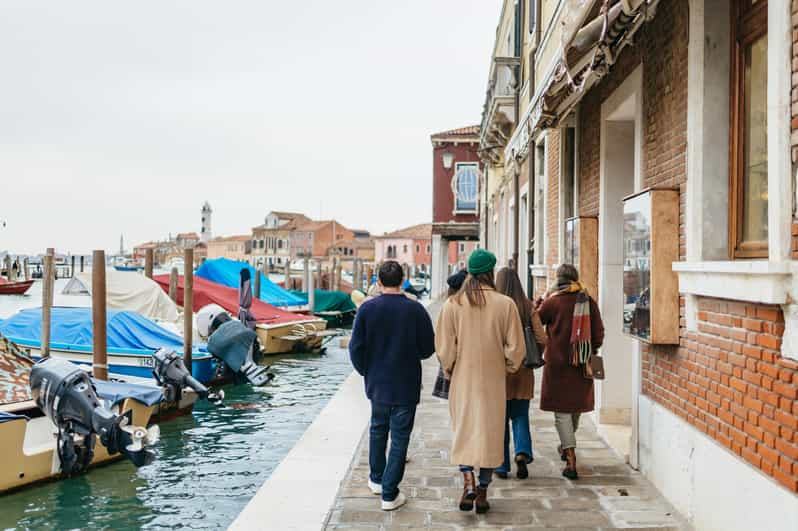
With the show done by early afternoon, the island is on foot. Walk the Fondamenta dei Vetrai past the furnaces and the studios, and the sightseeing starts within a few minutes of the waterbus.
The Museo del Vetro occupies the 17th-century Palazzo Giustinian and holds the world's largest historical collection of Murano glass, from Roman archaeological glassware of the 1st to 4th centuries to Renaissance cristallo and modern creations.
The Basilica dei Santi Maria e Donato has a mosaic pavement completed in September 1141, a Byzantine golden apse mosaic of the Madonna, and relics of Saint Donatus with bones behind the altar.
If you add Burano, the transfer is a separate hop. ACTV Line 12 does not serve Murano Colonna, so walk to the Faro stop and take Line 12 from there, a 30-minute crossing.
A class or workshop visitor should plan for a full day, 6 to 8 hours, and travelers who combine Murano and Burano in one trip usually start early so the morning show is done before the islands get going.
A morning at a real Murano furnace is one of the things a first Venice trip should not miss, and it needs no purchase and no class.
The 20-minute standard show is the shortest, the 50-minute factory tour is the fullest, and the church show is the one that stays with you. Book the morning, wear closed shoes and natural-fiber pants, and leave the showroom free to buy or not.
Go ifYou have never watched glass being made at a working furnaceYou can get to a morning slot before 1 pmYou want a live show that fits in a few hours without committing to a class
Skip ifYou want to make your own glass piece, which is a different experienceYou cannot manage a hot, enclosed room and a morning scheduleYou are arriving after 1 pm, when the floor is quiet
Our pick to book
Murano: Glass Factory Experience with Tour and Demonstration4.4★ (2,675) · 20 minutes · Free cancellation
Glass blowing demonstration in Murano - your questions answered
Quick answers on shows, tickets, timing and shopping, before you book.
Venice2026
The furnace glows at 1,200 degrees and the maestro pulls a vase from the pipe in 20 minutes. Book a morning slot, the furnaces run at full energy before the heat.
Can I see a glass blowing demonstration in Murano without booking a tour?
Yes. Several workshops invite visitors straight in and run shows on their own schedule, so you can walk into a furnace demonstration without an organized tour or a guide.
How long does a standard Murano glass blowing demonstration last?
A standard factory demonstration runs about 20 minutes. In-depth guided factory tours or private master demonstrations run 45 to 50 minutes.
Where is the best glass blowing demo in Murano?
All the furnaces on the island hold a reputation for skill, and several are among the most popular places to watch a master at work. The former Church of Santa Chiara hosts daily demonstrations in a restored 12th-century setting, and some glassworks dating to the 1800s still open their doors to visitors.
How close do I get to the furnace, and is it safe?
Furnaces have a marked safety line on the floor and stands for spectators. The line sits outside the paths the maestro and his assistants use, and the viewing area gives you space to step back from the heat.
Will I feel pressured to buy glass after the show?
No. You are under no obligation to buy anything after a demonstration, and you can decline a showroom purchase without friction. Some visitors simply browse the shop and leave.
Are free hotel water taxi rides to Murano a good deal?
A free ride from a hotel concierge or dock porter is a sales funnel that leads you into high-priced factory showrooms. If you take one, you can still walk out without buying, and you can always pay for your own vaporetto instead.
How do I spot fake imported glass in the shops near the furnaces?
Look for the official Vetro Artistico Murano trademark sticker with a producer code or QR code, and check for a polished pontil scar on the base. Gold stickers marked Made in Murano, deep discounts, and glassware stacked in open window displays all point to imports.
Can I watch a glass blowing demonstration in Venice itself?
No. Fire laws moved all glass furnaces out of Venice's historic center to Murano back in 1291, so every live furnace demonstration happens on the island. A boat ride of 20 to 30 minutes gets you there.
What else can I see on Murano around my demonstration?
The Basilica dei Santi Maria e Donato, with its mosaic pavement and golden apse, sits just along the canal. The Museo del Vetro in Palazzo Giustinian holds the largest historical collection of Murano glass, from Roman glassware to Renaissance cristallo.
What can I do if a glass piece is still cooling in the annealing oven?
Pieces that cool slowly overnight in the annealing oven can be picked up the next day or shipped worldwide for an extra fee. Workshops can arrange delivery to your home if you cannot take the piece with you.
Is a glass blowing demonstration worth it if I never plan to buy?
Yes. Watching a master shape molten glass in a working furnace is an engaging experience on a first visit, and there is no obligation to purchase anything afterward.
Can I bring children to a glass blowing demonstration?
Many demonstrations welcome children, but some do not admit children aged 12 and younger, and a few require an adult to accompany them. The hands-on furnace workshops are a different matter, since they are not suitable for children under 12.