- 1
Go in the morning: furnaces run at full heat and workshops are coolest before noon.
- 2
Buy only pieces with the Vetro Artistico Murano sticker and its QR code; labels reading 'Murano technique' mean nothing.
- 3
A piece made by hand can never leave the same day; it cools overnight in the annealing oven, so plan pickup or shipping.
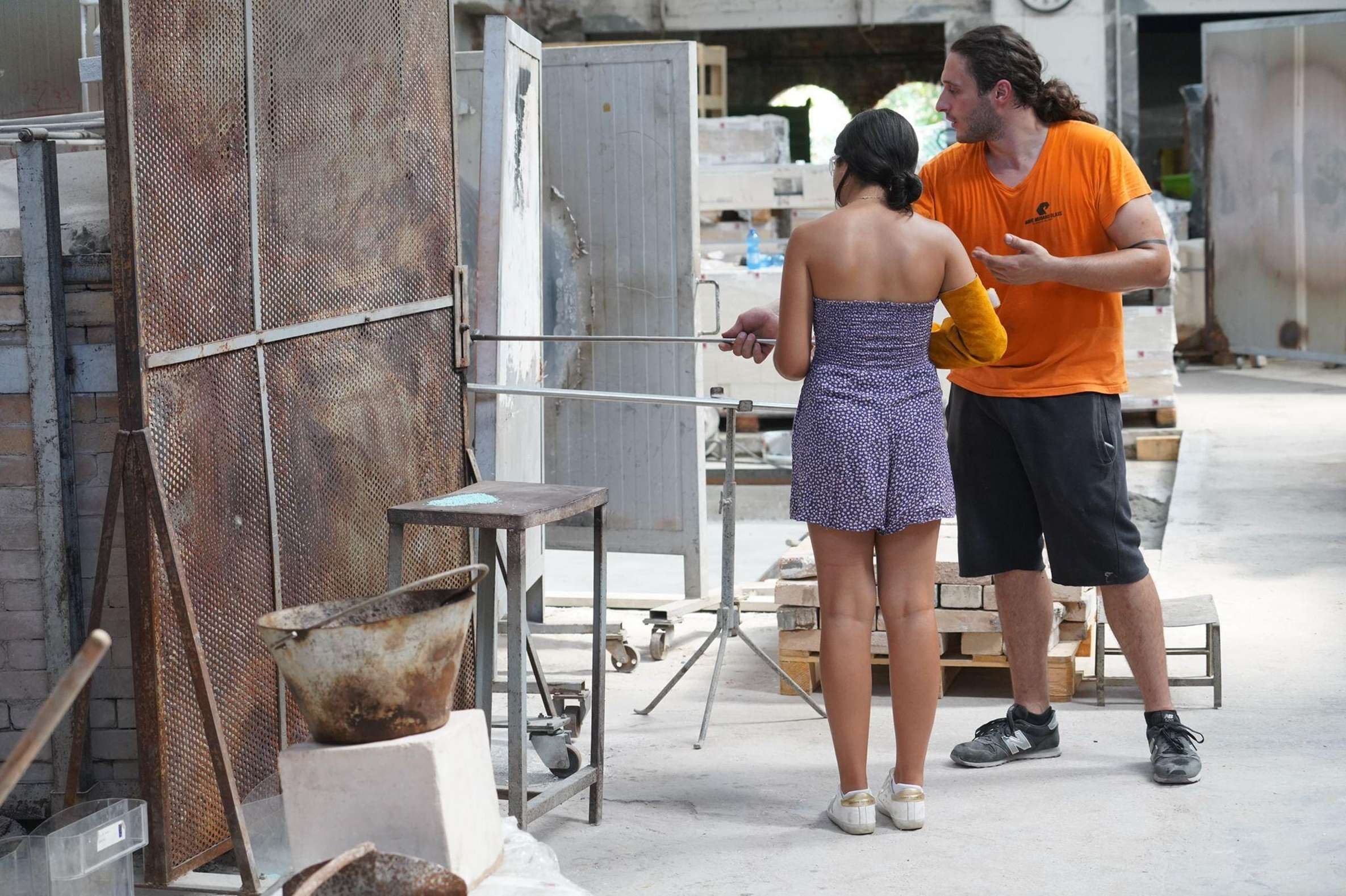
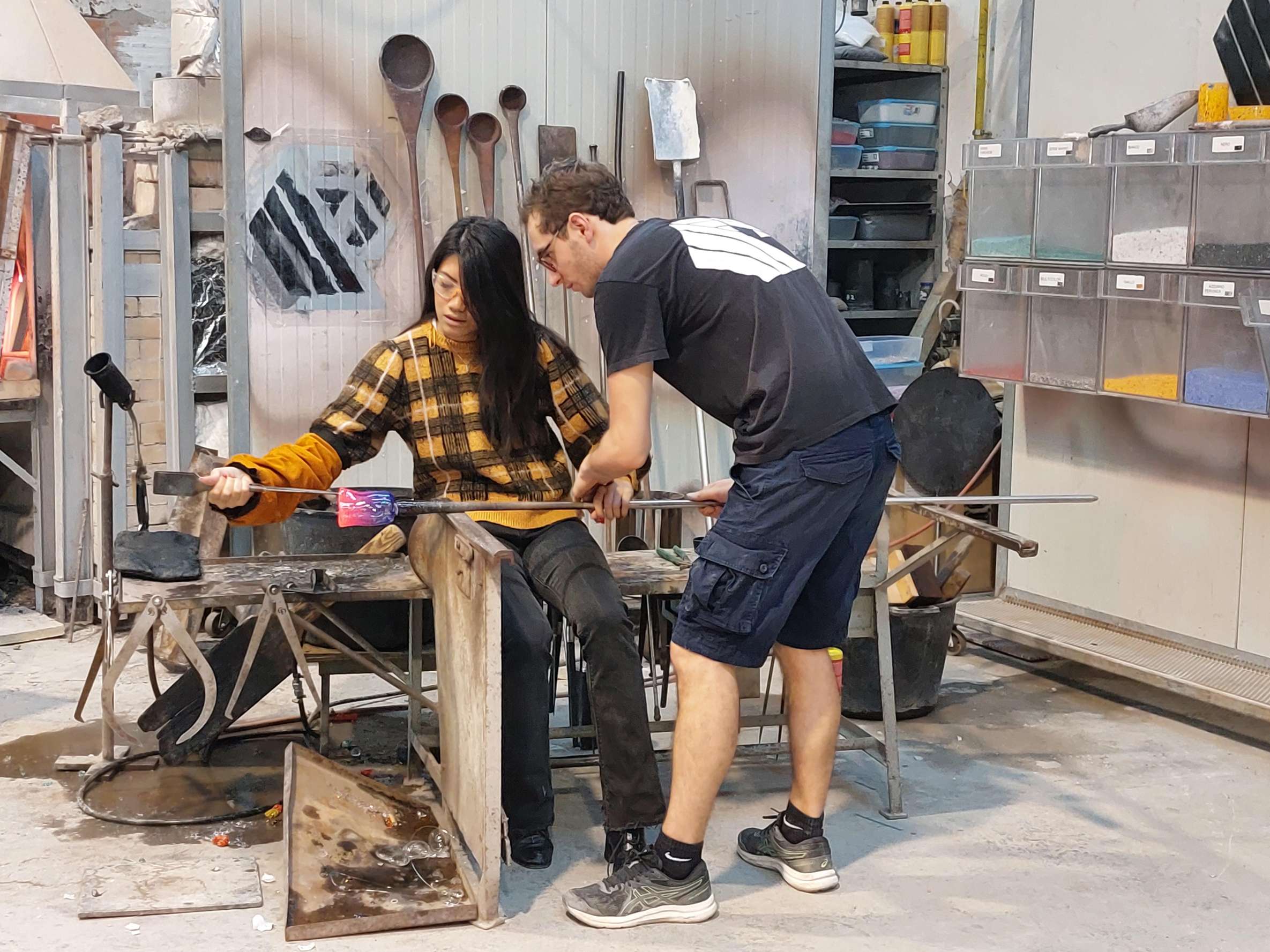
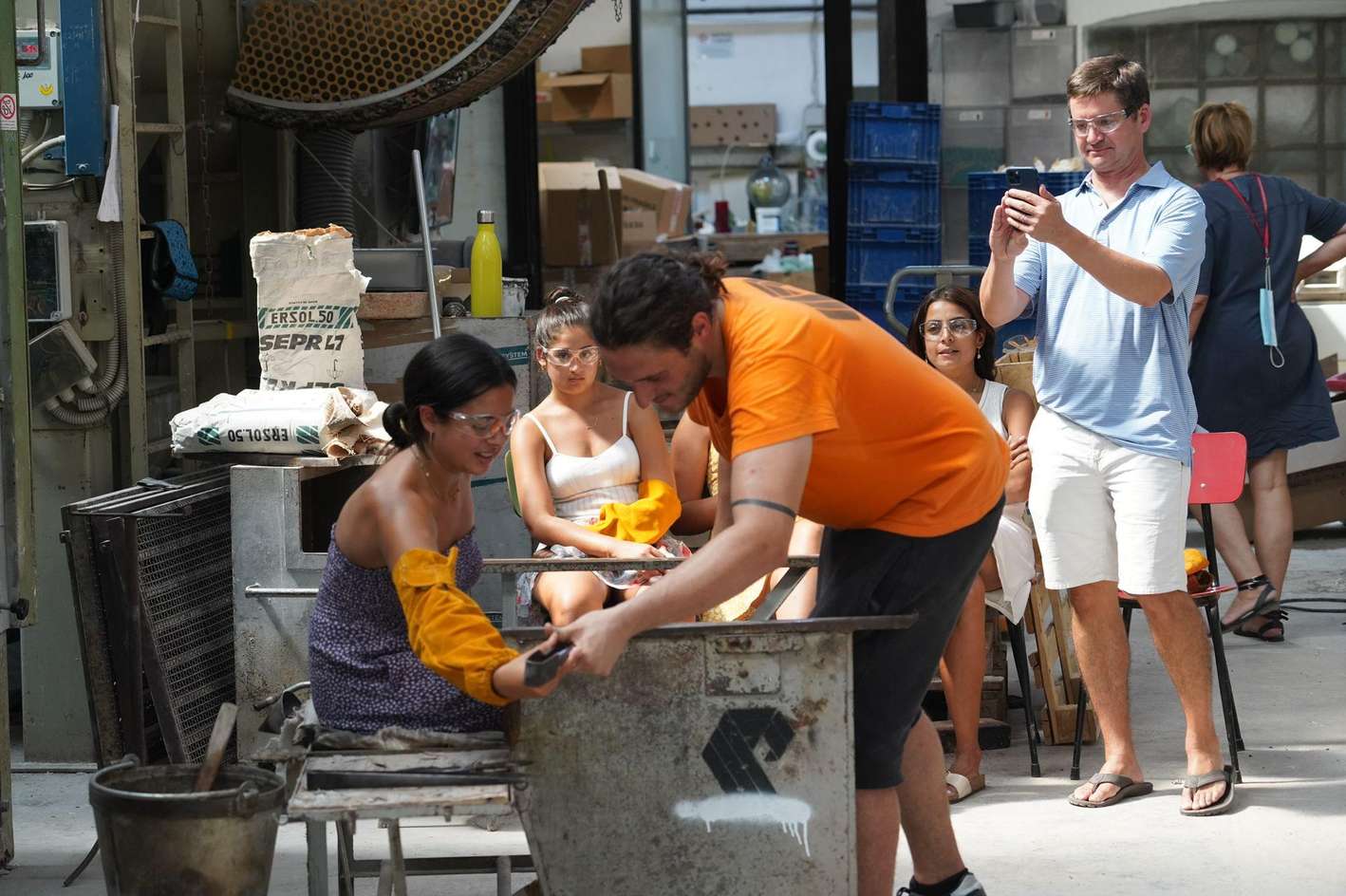
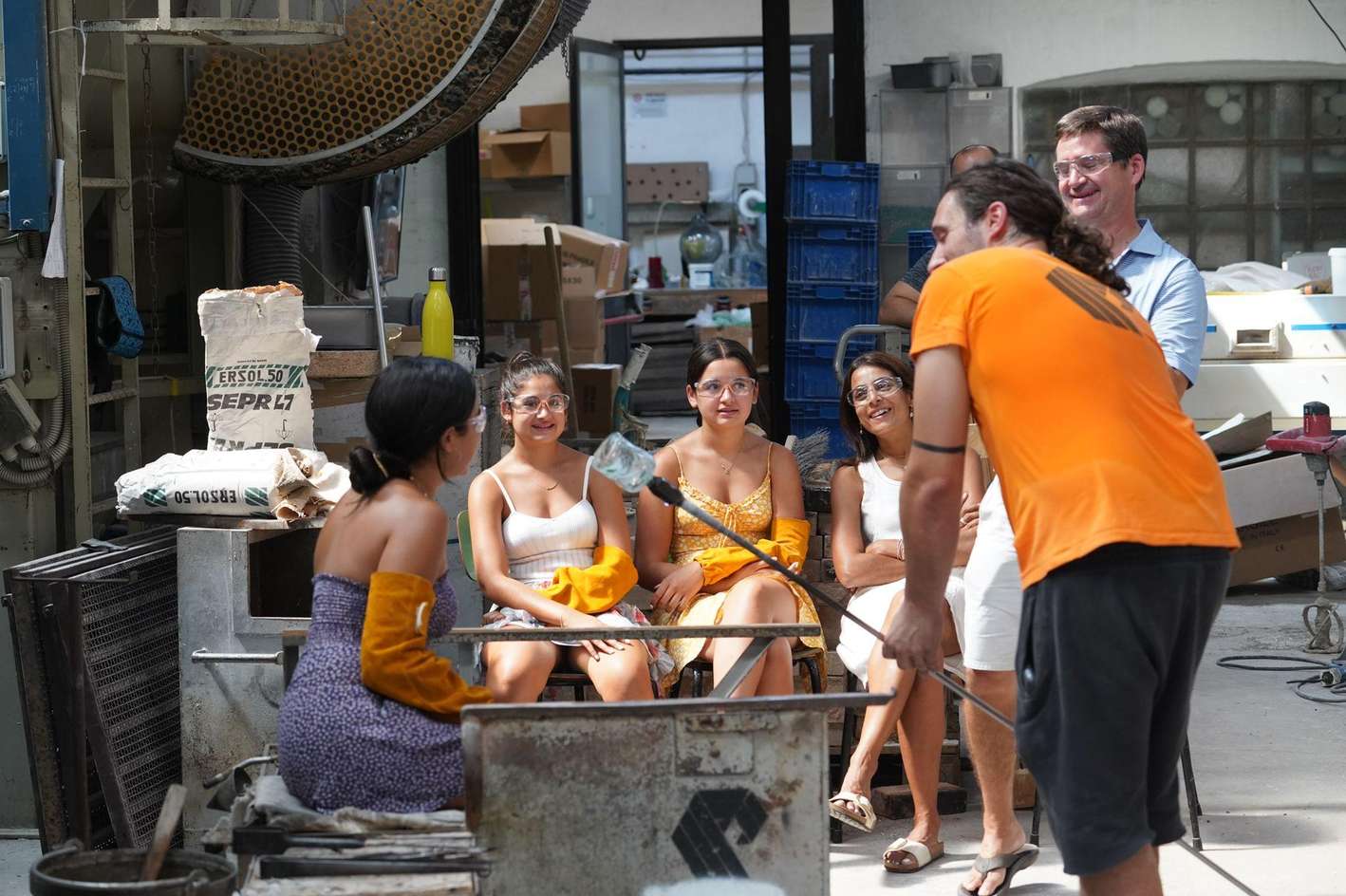
Murano furnace visits require closed-toe shoes and long natural-fabric trousers; open footwear and synthetic clothing are banned near the 1400°C furnaces. Wear sneakers or closed leather shoes with jeans or other cotton trousers. Workshops hand out safety glasses and protective arm sleeves at the furnace, so the dress code covers the rest. Step-in sandals mean no entry.
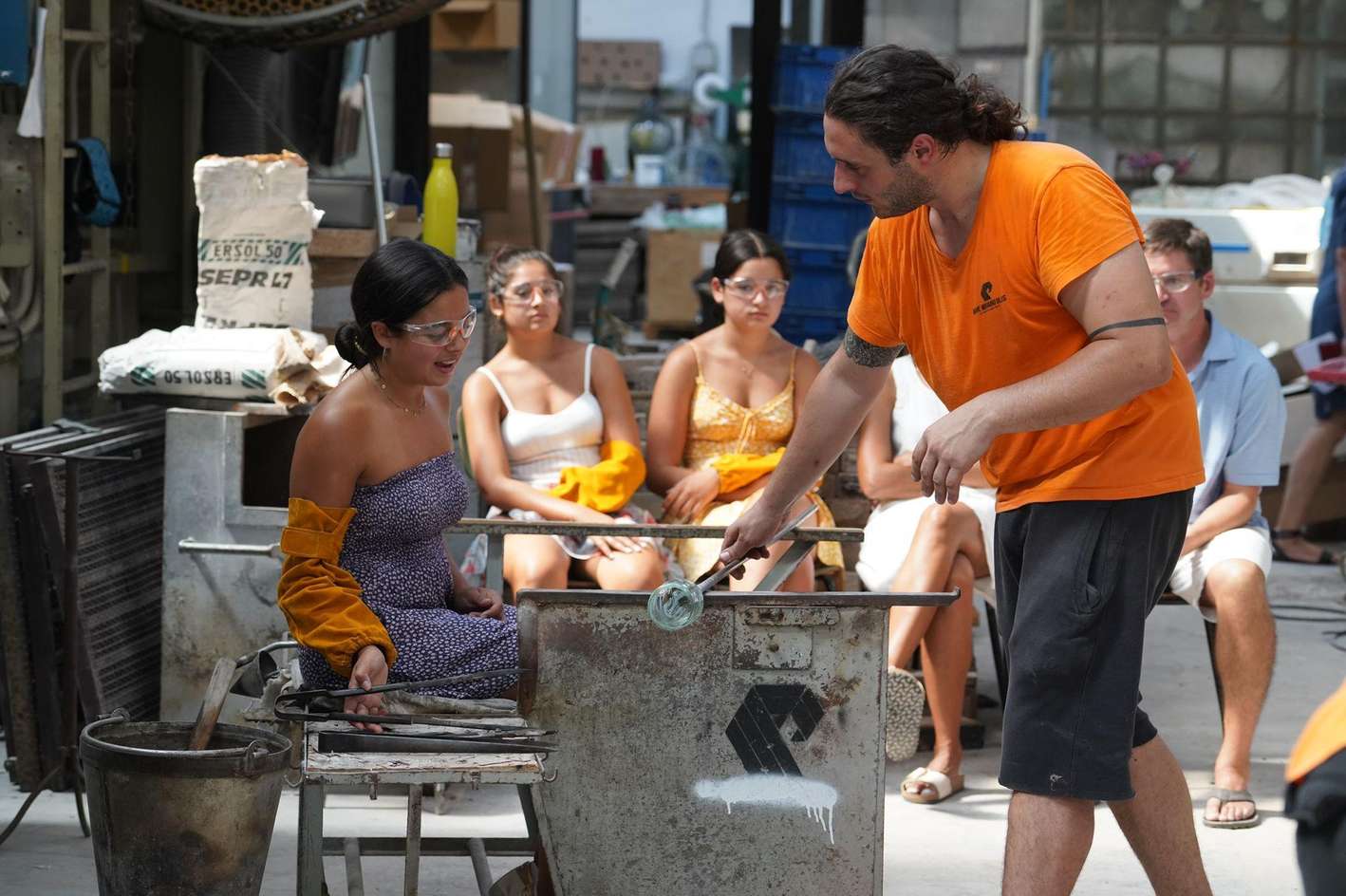
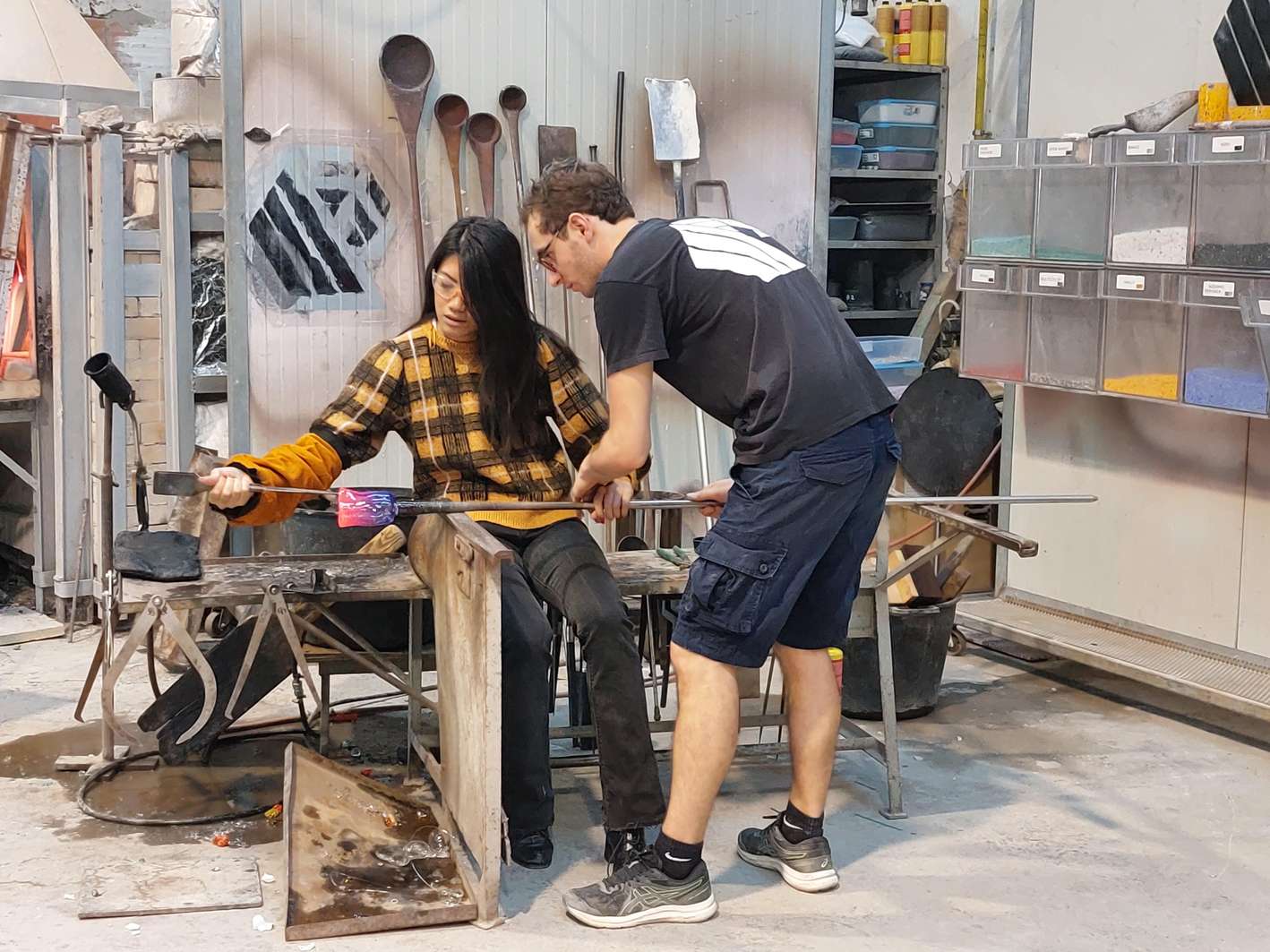
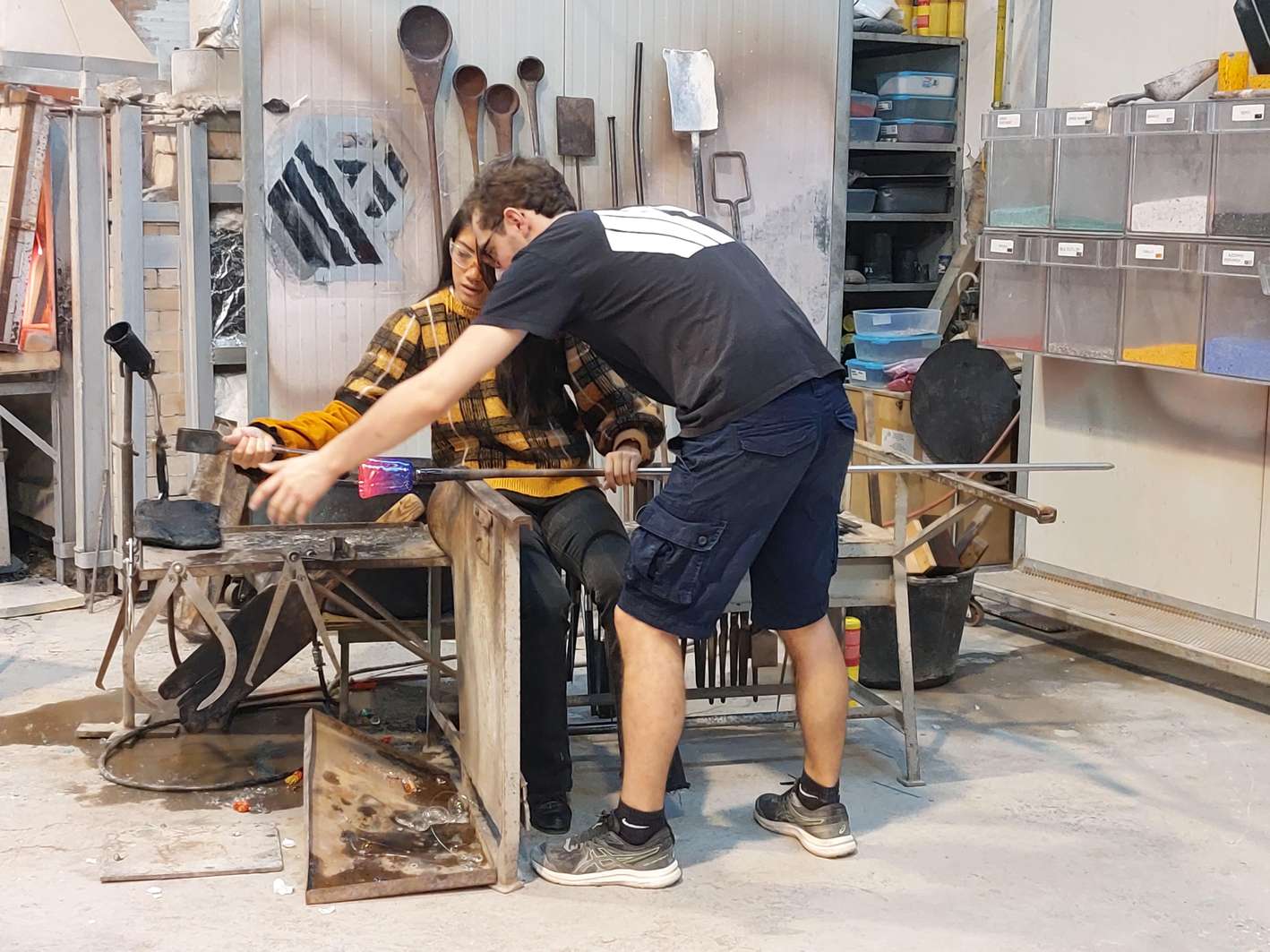
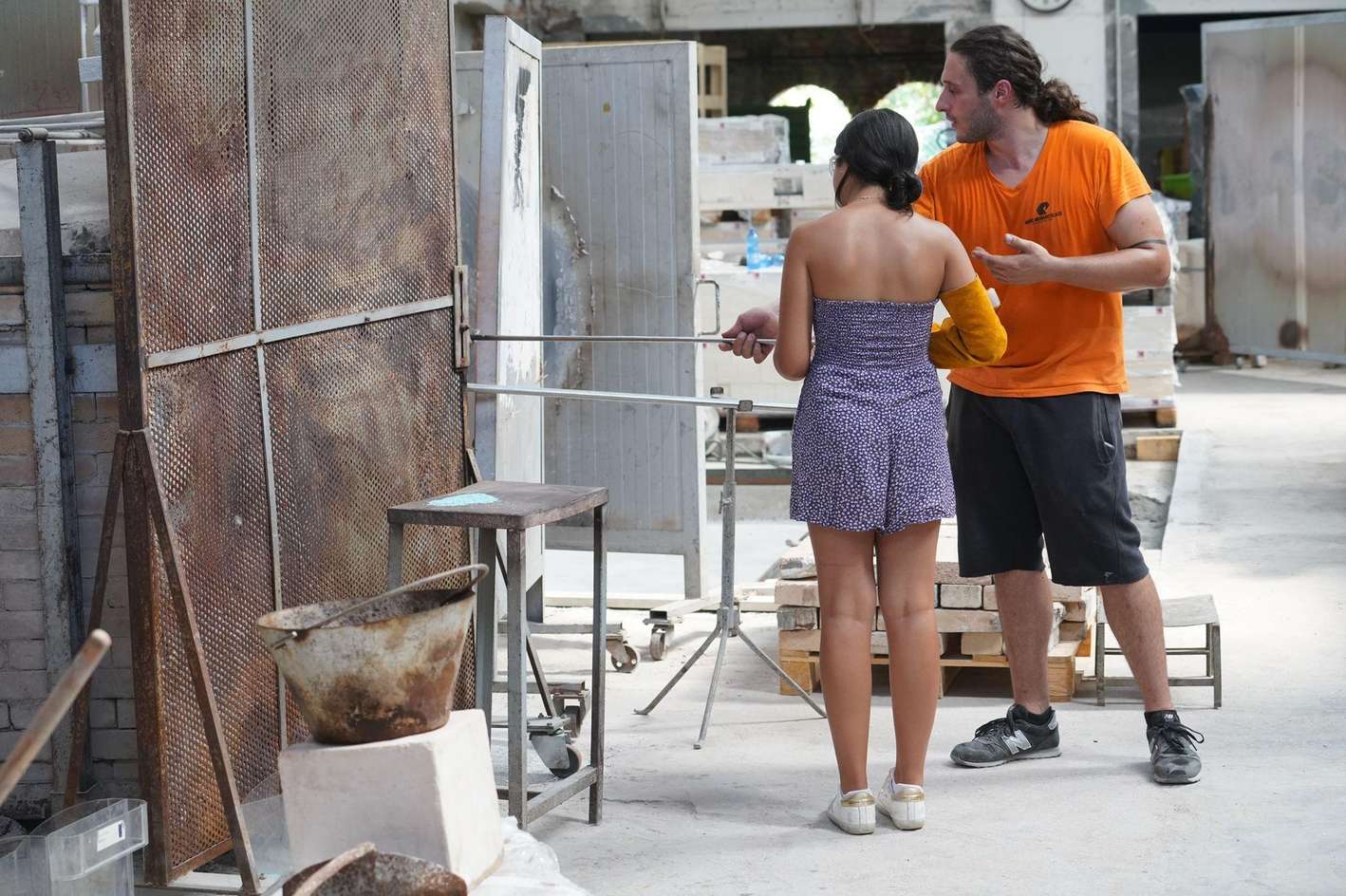
Special Murano Glass - masters at work in photos


Why Murano became the world capital of glassmaking
In 1291, Venice's government ordered every glass furnace out of the city. The official reason was fire: the historic center was timber and tile, and molten glass needed temperatures no neighborhood could risk.
But the move did something else too. Gathering the glassmakers on one island let the Republic control them, their workshops and their methods, and by 1295 a glassworker who revealed the trade's secrets could face the death penalty.
That control produced the thing people still cross the lagoon for. In the mid-1400s, Angelo Barovier invented cristallo, the first fully clear glass, made by purifying plant ash and melting quartz pebbles from the Ticino River.
European glass of the time came out brownish or greenish; his came out clear as rock crystal. Doges, ruling families and the pope wanted it, and Venice guarded the formula by restricting who could buy the ash.
So the prestige has a legal spine behind it, seven centuries old, and the law still works the same way: glass made anywhere else, even by a Muranese master who has moved away, cannot legally be called Murano glass. The name names an island and nothing else.
That legal spine is exactly where most buyers go wrong, because the words on souvenir labels sound convincing. Here is what people believe, and what the law and the furnaces actually say.
Gold flecks and millefiori patterns are copied by foreign factories; the effects prove nothing on their own
The price reflects hand labor, furnace fuel and expensive minerals; the craft itself is slow and costly
Labels like that have no legal standing and often mark industrial pieces made far from the lagoon
Read that table before you shop and the whole island gets easier to navigate: one official sticker separates the real trade from the imitation, and the price question has a physical answer waiting in the next chapter.

Is Murano glass still hand blown today?
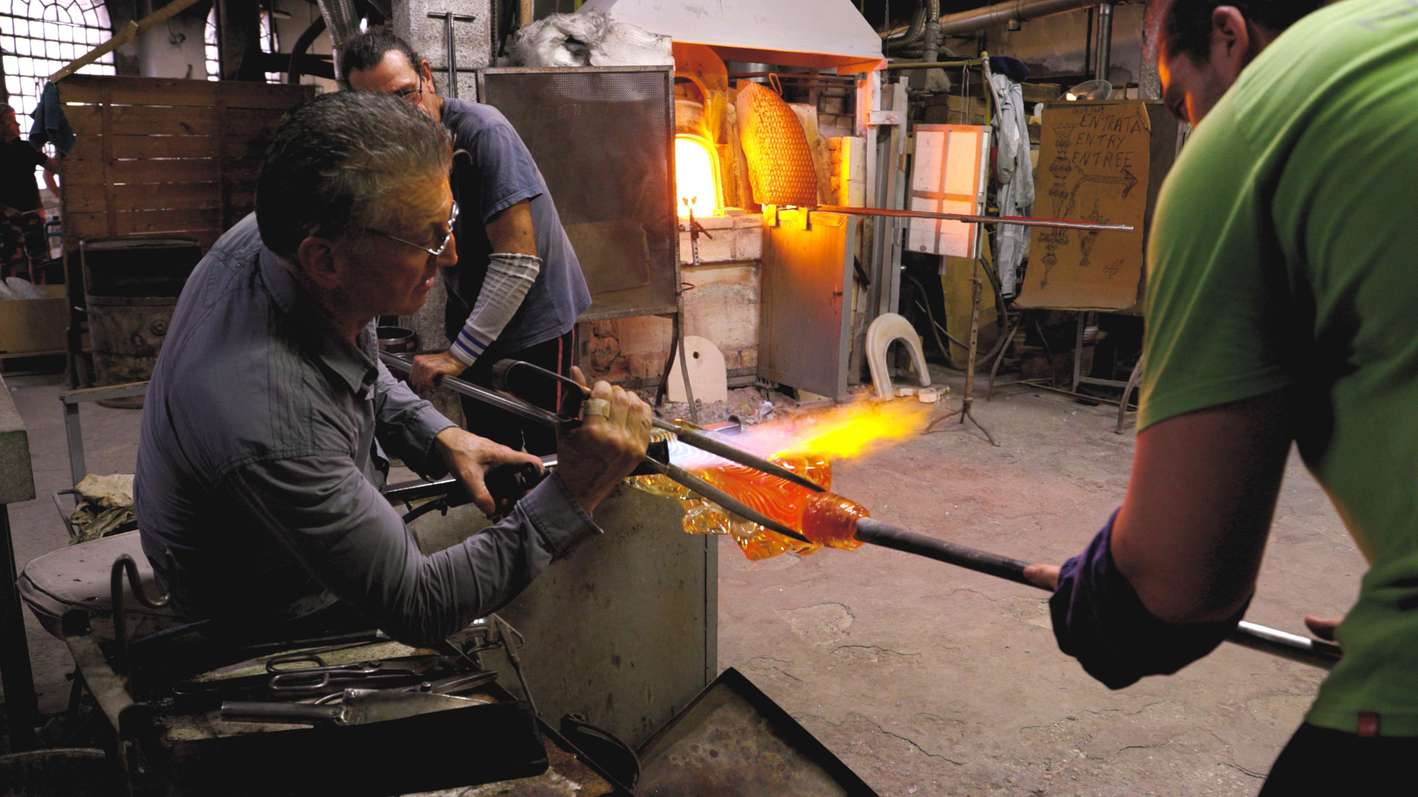
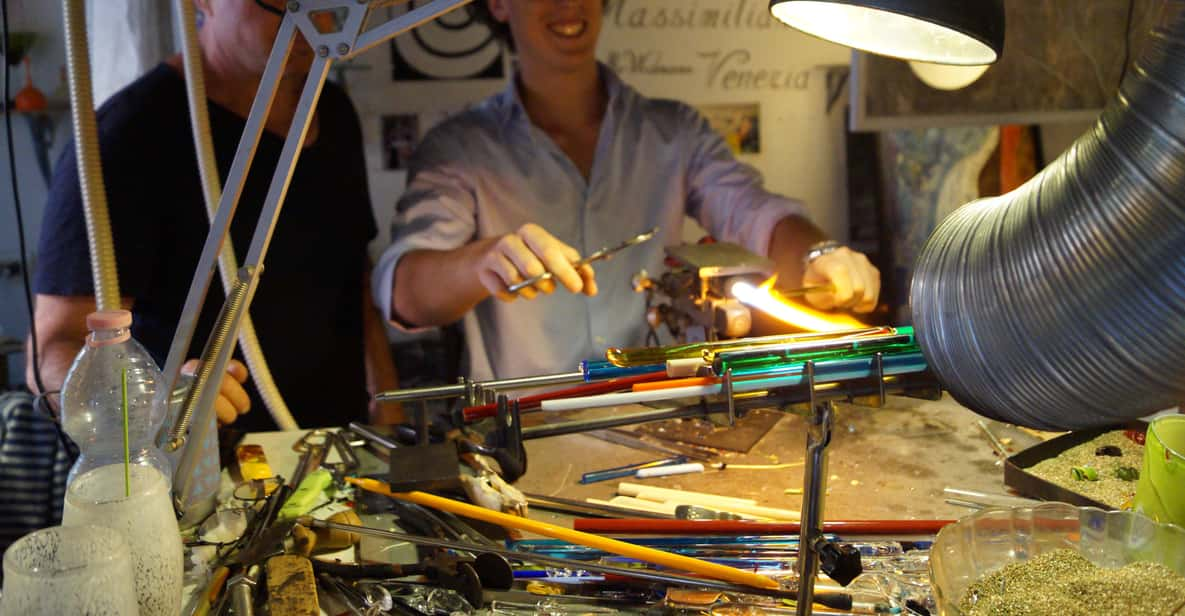
Yes, and the proof is right in front of you at the furnace. Masters shape molten glass with breath, pincers and shears, and a horse or a figurine comes out of a single session at the pipe with no reheating.
The island still blows glass by hand, at traditional furnaces, and has left serial production behind; at historic glassworks, glass is still blown into moulds by hand instead of being machine-pressed. Machines cannot substitute for a master's timing, and that is the whole answer to why the work is special.
You can read the handwork in the object itself. Turn a piece over: genuine hand-blown glass carries a ground or polished pontil scar on its base, the mark left where the pontil rod was broken away. A raw, shaved or completely flat featureless base points to a machine.
Look for mold seams on the body; machine work has them, handmade work does not. Handles, stems and applied decorations show small tool marks where they were attached while hot, and rims sit a little uneven.
One caution before you shop: a gold fleck proves nothing. Foreign factories copy both gold flecks and millefiori patterns, and glass made off the island by a native Muranese artisan cannot legally carry the name.
These traps catch first-timers every single day, and regulars have a few things they wish someone had told them before their first shop.
What nobody tells you
Only the official Vetro Artistico Murano trademark certifies island origin, under Veneto law
Foreign factories replicate both effects, so they say nothing about where a piece was made
The words designate a place of origin fixed by Veneto regional law; style and technique are separate questions
Hold those three points together and the shopping rules almost write themselves, which is exactly what the identification chapter sets out.
What drives the high price of Murano glass
Even a plain tumbler from Murano costs real money, and the reasons are physical. The furnaces burn at 1000 to 1400 degrees, and the fuel alone is a running cost.
The melt takes premium minerals: cobalt and copper for blues, chromium for green, and pure gold for ruby red. Then there is the labor. A master's timing and skill are the production method, built over years at the bench, and no machine does that work.
What the price does not promise is resale value. Murano covers everything from everyday items to complex masterworks, and most ordinary pieces will not appreciate.
Basic vintage Murano-style glass sometimes resells at estate sales for pocket money, while signed masterworks by known makers can gain several thousand dollars over decades. The maker, the age, the technique, the condition and the rarity decide what a piece is worth; the sticker on the box decides nothing.
Small jewelry needs a separate look. Beads and lampwork pieces made at a tabletop blowtorch by a solo artisan are a different craft from furnace-blown glass, in scale, technique and value, and many are made from workshop offcuts.
Two pieces of similar size can differ hugely in value. If price is the concern, independent workshops along the quieter canals ask much less than the waterfront showrooms for comparable work.
How to identify authentic Murano glass and avoid fakes
The one check that matters is the official Vetro Artistico Murano trademark sticker, fixed under Veneto Regional Law no. 70/1994. It shows a traditional tool called a borsella, printed in gold leaf on a red or blue background, with a producer code.
Since 2016 it also carries a serial number and a datamatrix code you can scan with a phone or check on the trademark's website. The label is tamper-evident; peel it and it breaks into fragments.
An authorized seller notice in the shop window points you to stores that carry the real thing.
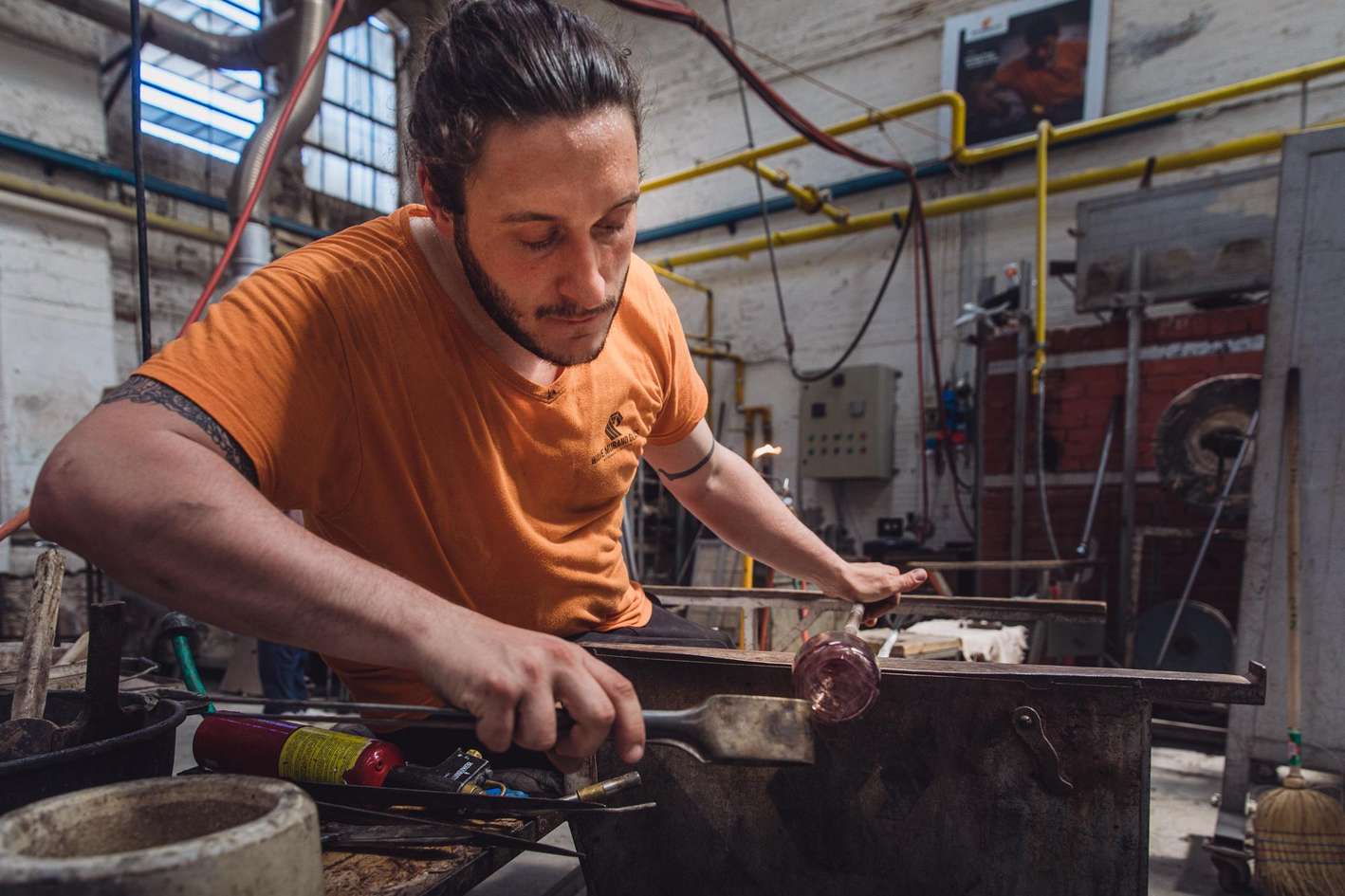
Then use your hands and eyes. The base should show a ground or polished pontil scar, never a raw shaved bottom, and the body should have no mold seams.
Ask for a certificate of authenticity: legitimate workshops produce one, counterfeit sellers refuse. If a piece is signed, compare the signature against documented examples of that artist's work.
Walk past the shops that fail the smell test: glassware stacked casually in open windows, deep discount signs, mixed shelves where carnival masks sit beside the glass.
A specialized shop that sells only glass is a far better bet than a general souvenir store, and the owner of a genuine family studio will happily talk you through their process. Rialto street stalls are the worst place to look.
One note on vintage: old pieces rarely keep their stickers, so an antique without a label is not automatically a fake.

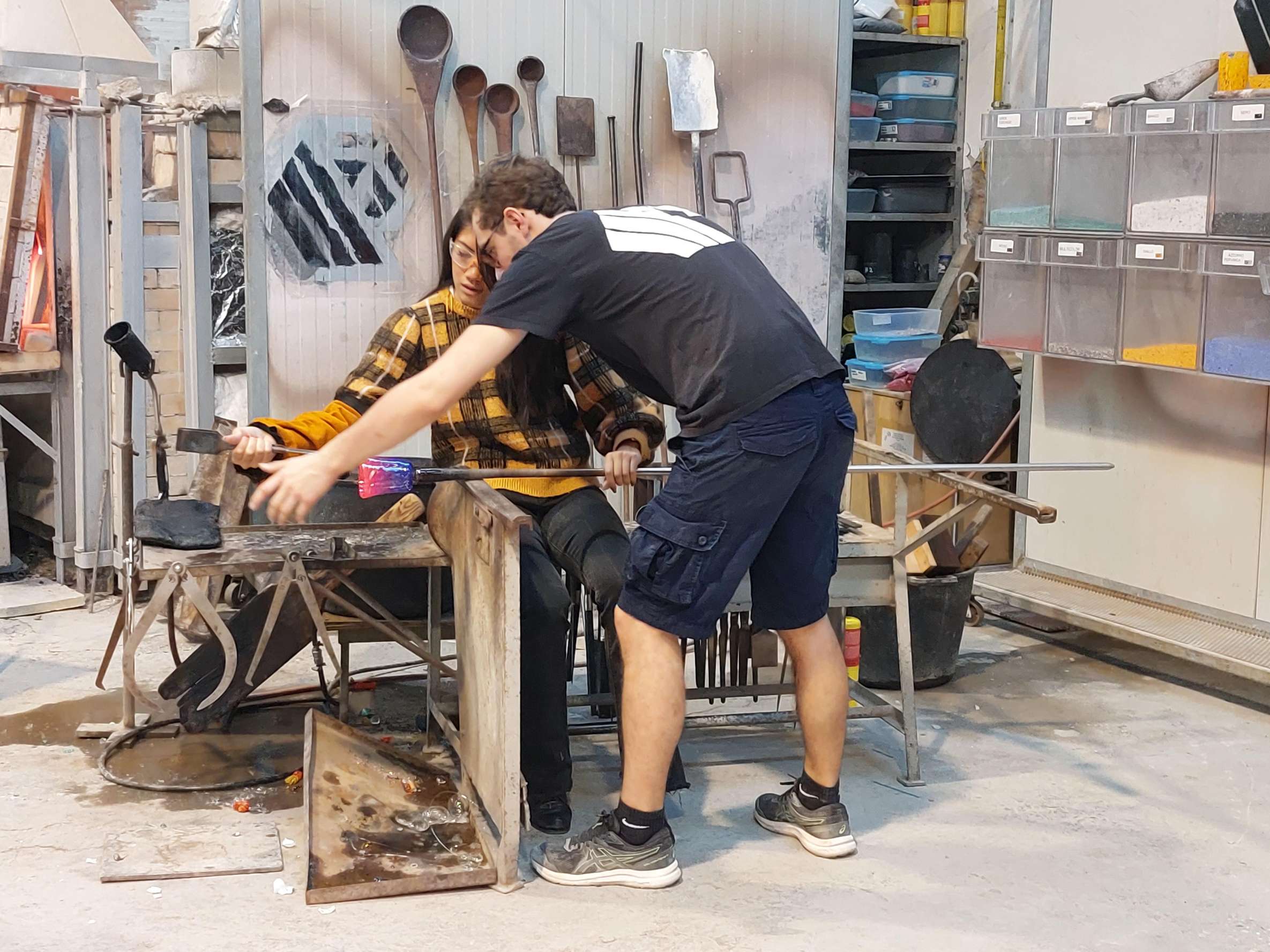
Watching Murano glass being made in a real furnace, not a tourist showroom
There are two versions of a Murano factory visit, and you should know the difference before you accept anything free. The first starts with an offer many hotel concierges and dock porters make: a free private water taxi to a glass factory.
It is a sponsored sales funnel. The boat delivers you to a high-priced showroom, the demonstration runs short, and touts may try to control your return transport.
The genuine version looks different. A working furnace gives you about 20 minutes of real demonstration, and an in-depth guided session runs 45 to 50 minutes, walking you through the batch room where the minerals are mixed, the hotshop where the masters work, and the coldshop where pieces are cut and polished.
Watching glassblowers actively shape molten glass at an operating furnace is also the surest guarantee that what you buy came from island artisans.
Pressure at the counter is the tell either way. A push right after the show, aimed at a purchase, happens in factory showrooms; a genuine workshop makes clear that buying is optional, and you can decline a showroom purchase without friction.
Some organized guides also steer groups to factories where they collect a commission on sales, which is worth knowing when you pick a tour.
Favorite tour of my trip so far! Learned the whole glassmaking process, watched artisans up close, great well-informed guide, friendly staff. Awesome experience.
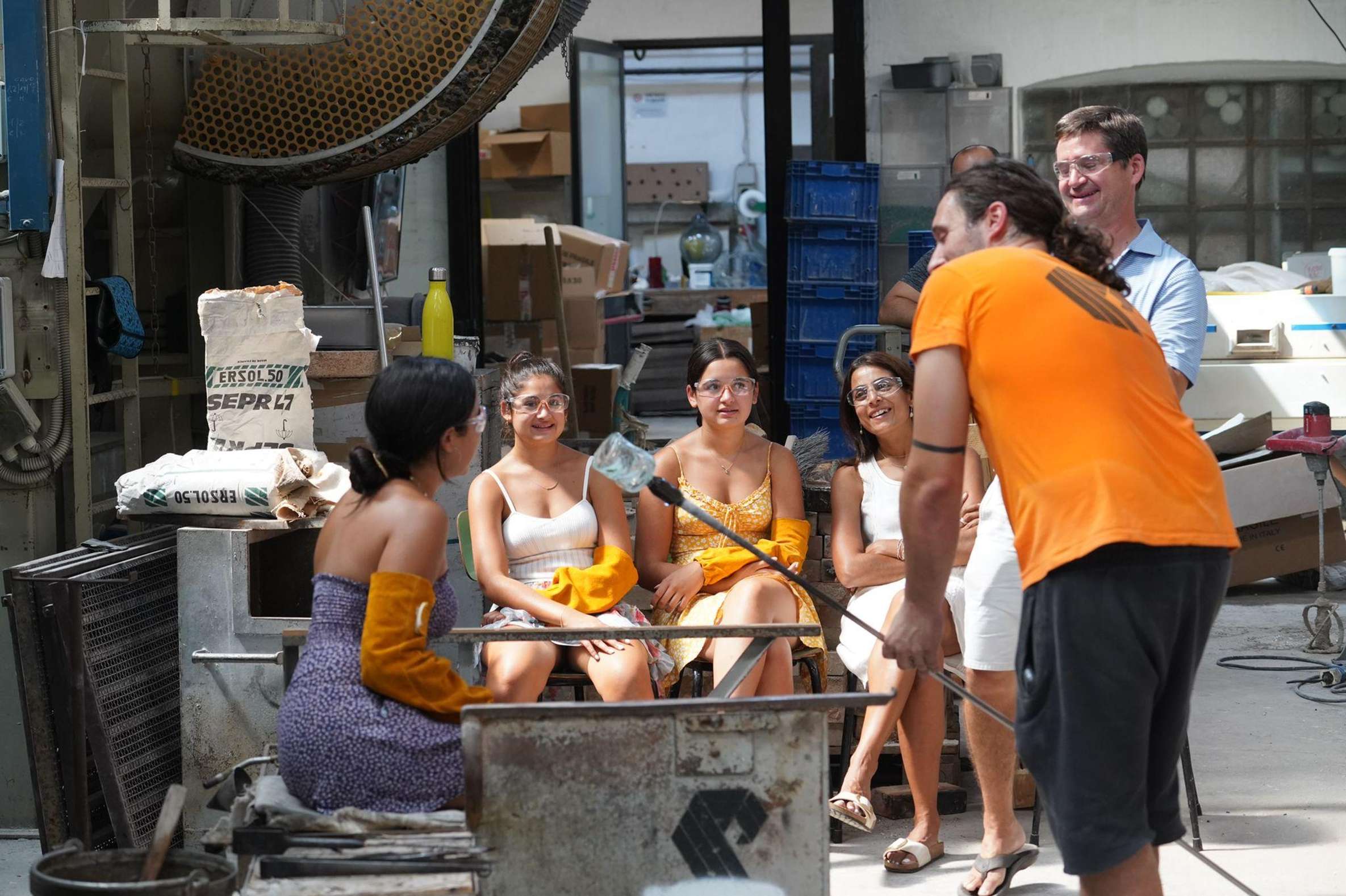
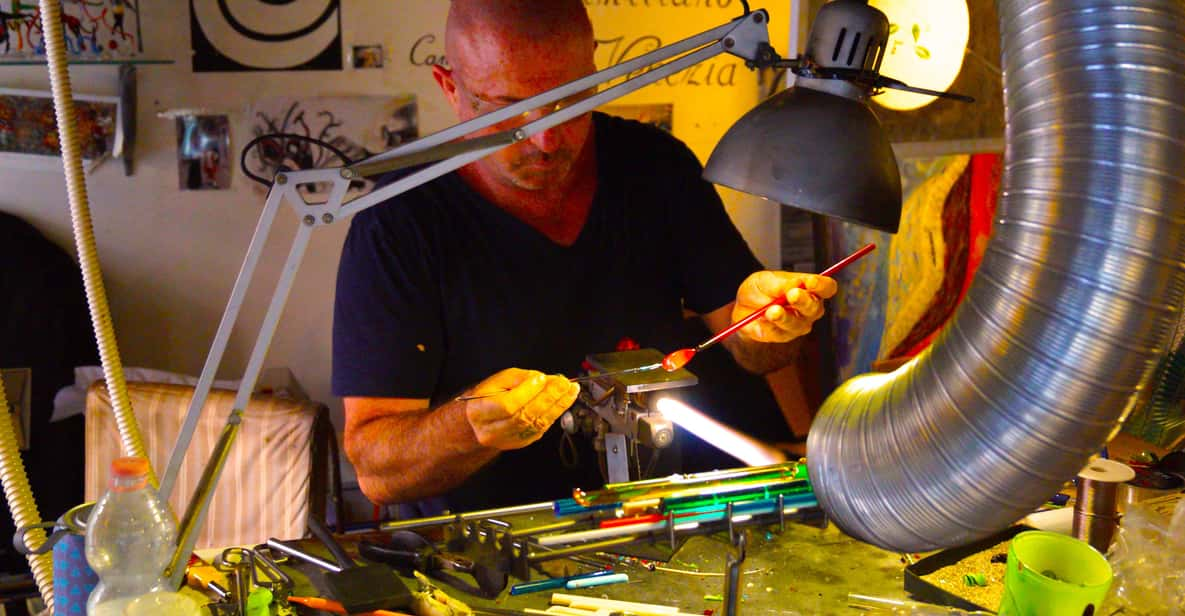
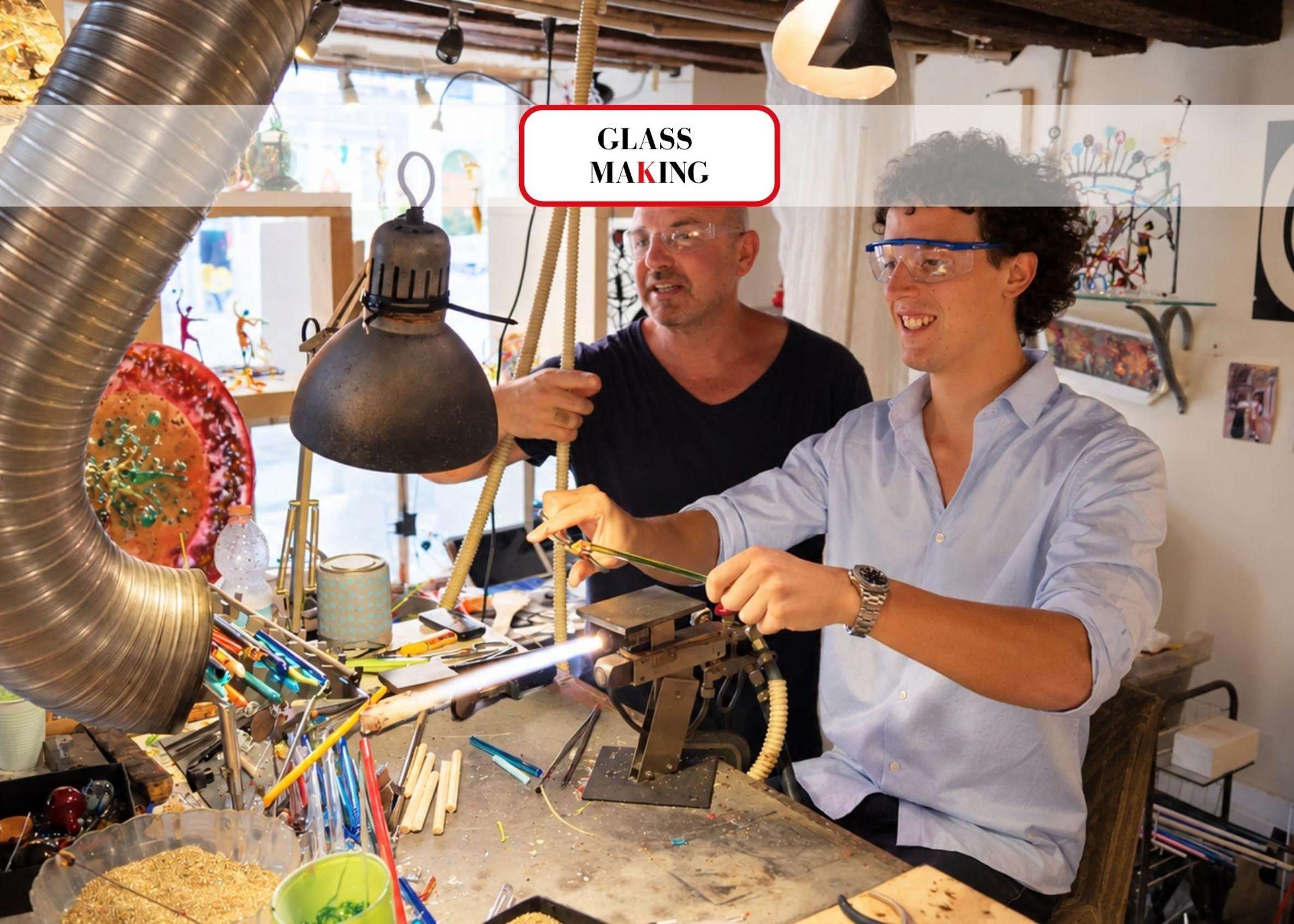
One operator runs exactly the visit worth copying: the Murano: In Depth Glass Factory Guided Tour spends 50 minutes in a working factory, walks you from the batch room to the hotshop to the coldshop, and states plainly that there is no obligation to buy. Safety glasses are provided for everyone.
How to get to Murano from Venice
Public waterboats and organized tours both work; the choice is between planning and convenience.
Line 3 runs direct from Piazzale Roma to Murano Colonna in 21 minutes, and it lands you at the best possible stop: Colonna sits right at the entrance of Rio dei Vetrai, the street where the working furnaces cluster.
From San Zaccaria near St. Mark's, the direct Line 7 takes 24 to 30 minutes but runs seasonally, from spring until early November. From Fondamente Nove in the north, lines 4.1 and 4.2 cross in about 9 to 10 minutes.
The slow option is a circular line such as 4.2, which can take 45 minutes or more looping around the historic center. The vaporetto is cheaper than any tour, but you plan it yourself.
If you take a tour, departures cluster along Riva degli Schiavoni near St. Mark's, at Campo San Bartolomeo by the Rialto Bridge, or outside Santa Lucia station, and you should arrive 15 to 20 minutes before departure to clear boarding.
Either way, the day works best decided the night before: the vaporetto for freedom, the tour for a demonstration already arranged.

Best time of day and year to visit the furnaces
Go before noon. The furnaces run at full energy in the morning, masters are actively producing, and the workshops are at their coolest before the lagoon heat builds.
Most factories open to visitors between 9:00 and 9:30 am and run until about 4:00 to 4:30 pm, but the middle of the day belongs to the glassmakers: between roughly 1:00 and 2 pm workshops close for lunch, and several artisan furnaces only hold demonstrations in the morning. Afternoon brings hotter rooms and winding-down shifts.
Weekends are open but different. Full production happens Monday to Friday; on Saturday and Sunday the furnaces generally run scheduled demonstrations and workshops only, and trade-only factories close on Sundays.
April is the peak tour month on Murano, bringing heavy crowds to glassmaking demonstrations in mild spring weather.
Tap a month to read it.
January: 5 out of 5 for kiln demonstrations. Production kilns and public demonstrations operate normally.
Tap a month to read it.
Through the year the story is simple: dedicated visitor demonstrations keep running in every month, including August, when production kilns shut for maintenance and relining. The trade-off there is crowds, which peak in April and May.
Clothing matters more than most people expect near molten glass. Closed-toe shoes are required at working furnaces, sandals and flip-flops are barred outright, and long pants of natural, non-synthetic fabric are the rule because synthetics can melt; workshops hand out arm sleeves and safety glasses on site.
Ask before you photograph anything, skip the flash, and stay behind the safety lines even for a better angle. And yes, you can simply walk into a furnace demonstration on the island without booking anything at all.

Glassblowing workshops and lessons where you make your own
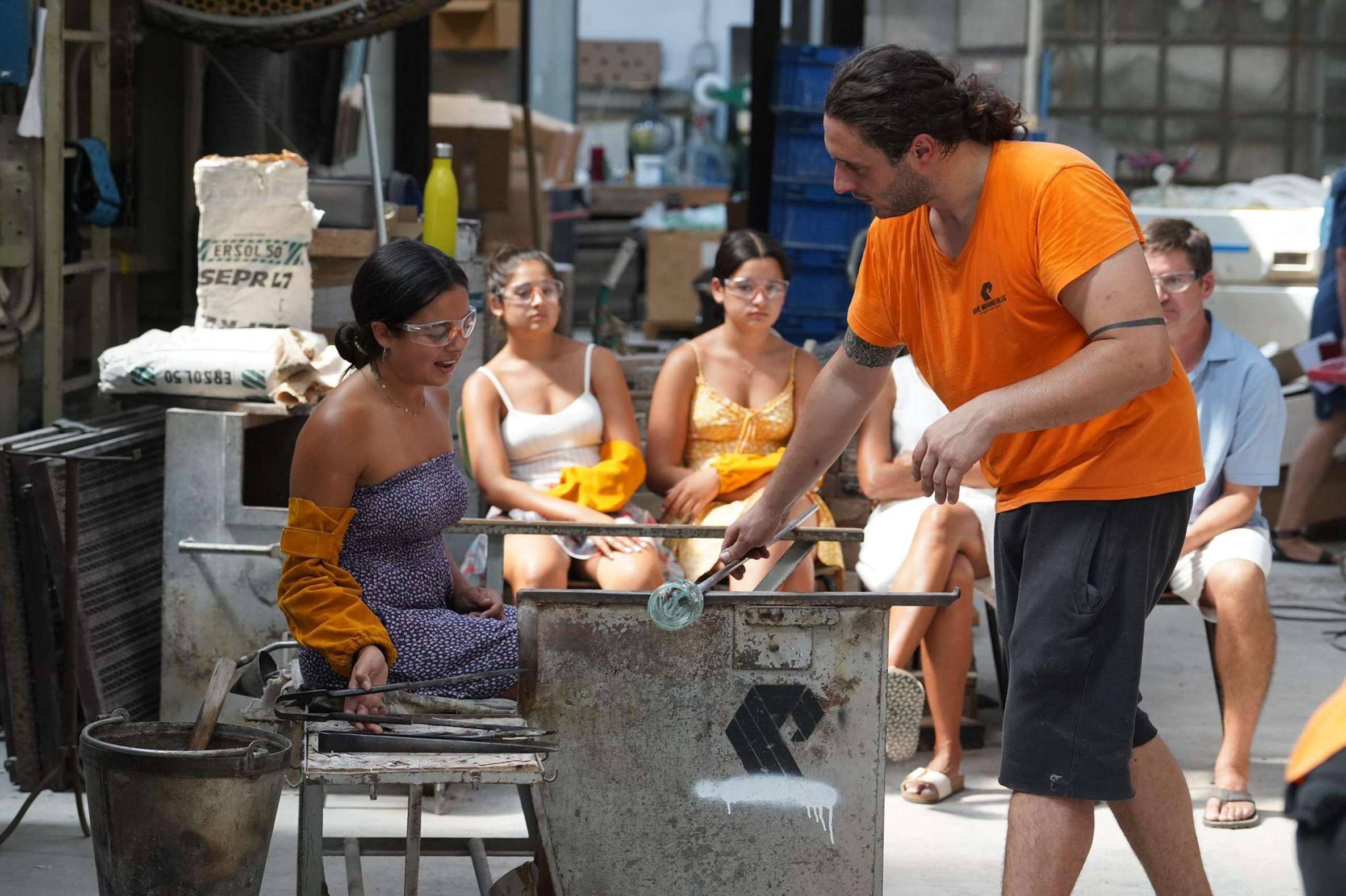
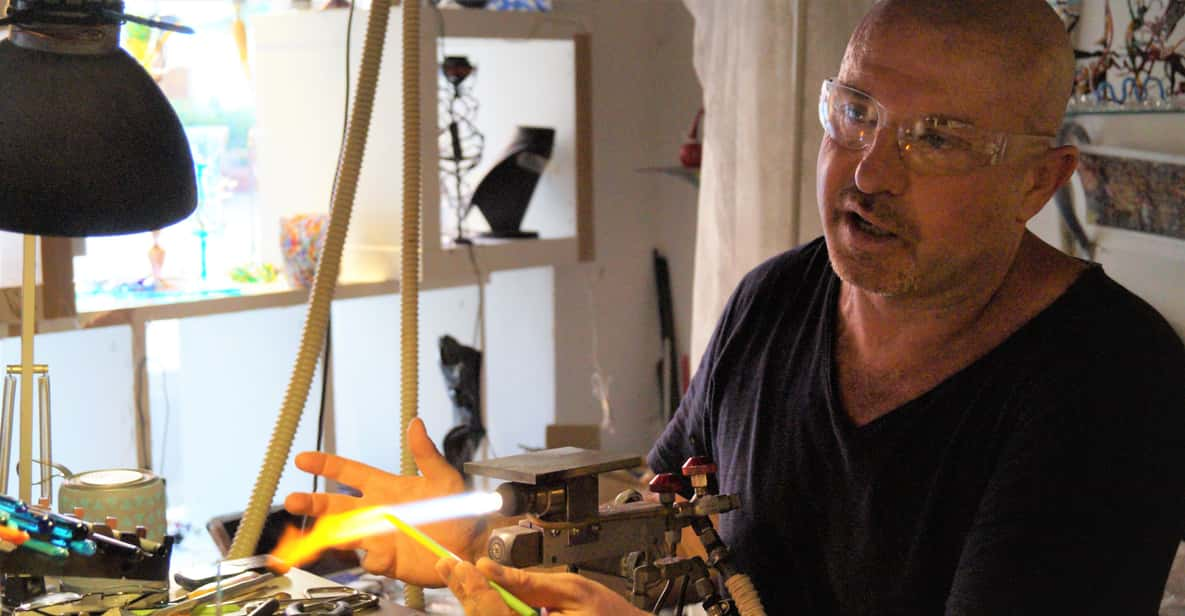
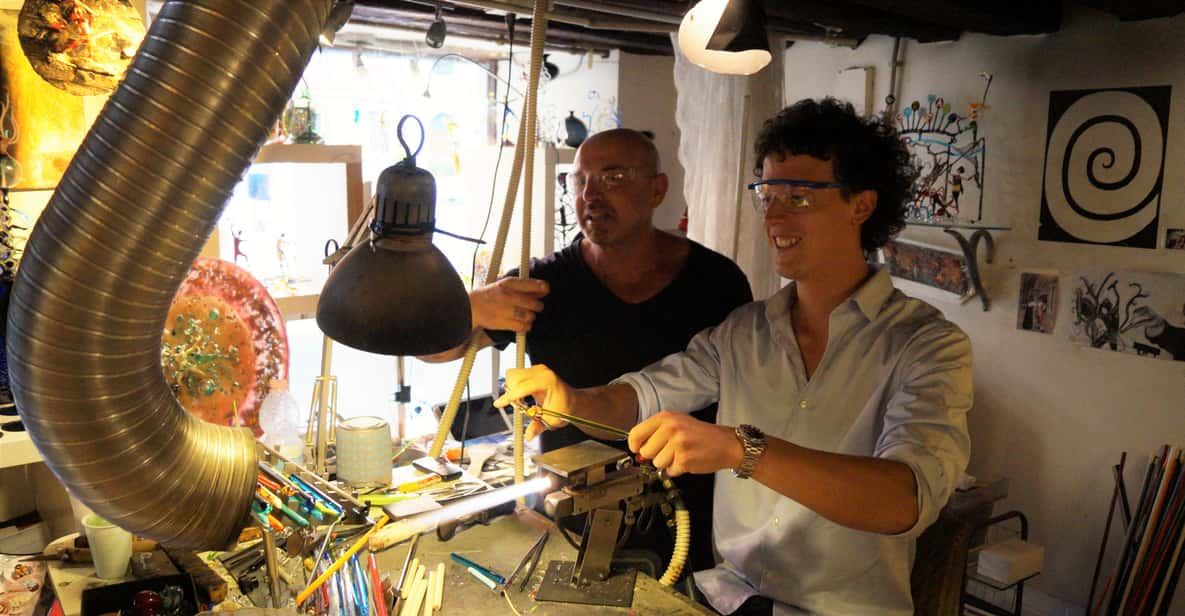
Watching is one thing; sitting at the bench is another. Beginner glassblowing workshops put you hands-on with molten glass under a master craftsman, and the beginner class runs 2 hours, long enough to shape your own piece and watch a live demonstration as well.
Softer entry points exist too: glass mosaic sessions welcome children from 5 years old or have no age limit, and torch bead-making classes take participants from around 10 to 14 and up.
Furnace work has harder edges. Hands-on glassblowing is not for children under 12, and some studios draw the line at 14, which rules out the youngest members of most families.
People with respiratory conditions should think carefully, because heat and humidity near a furnace make breathing harder, and beginner workshops are not suitable for anyone with respiratory issues.
Hands-on furnace workshops bar children under 12 (some studios under 14) and are unsuitable for people with respiratory conditions Choose a glass mosaic or bead-making class instead, or watch a demonstration from a safe distance
Whatever you make stays in the oven. Freshly shaped glass stays dangerously hot even after the red glow fades, and it must cool slowly in an annealing oven or it cracks from thermal stress. So no piece leaves the same day.
You collect it the next day, or the studio ships it anywhere in the world for an extra fee. A class plus Murano and Burano fills a 6 to 8 hour day comfortably, so give the trip its full measure.
For the fullest version of this, one operator runs the Murano: Glassblowing Workshop for Beginners, a 2-hour shared class where you shape molten glass yourself and take the piece home once it has cooled.
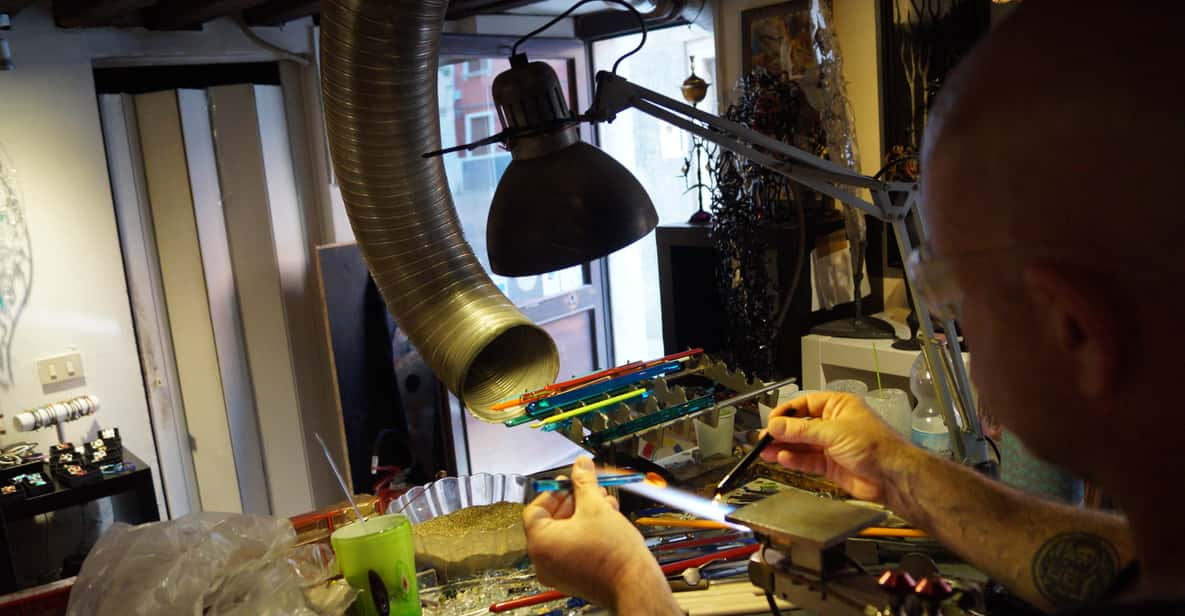
Museo del Vetro and what it adds to a furnace visit
A furnace shows you the craft as an industry, alive and burning. The Glass Museum shows you how it got there.
The Museo del Vetro lays out seven centuries of technique in chronological order, from the earliest pieces to the modern masters, and it holds the most extensive collection of Murano glass anywhere. A live demonstration lasts twenty minutes; the museum explains what those twenty minutes belong to.
That background changes the furnace visit itself. Once you know how the recipes, the tools and the shapes evolved, watching a master at the pipe stops being a spectacle and becomes a trade you can read, and the museum's masterworks sharpen your eye for the fakes in the shop windows afterwards.
Be honest about its limits, though. Some visitors find the official museum a little dry compared with the masterworks displayed in private island showrooms, and it is a quieter experience by design. The furnace gives you the fire, the museum gives you the memory.
If you have time for one, watch the glass being made; if you have time for both, do the museum first and then see the living version of what you just studied.
The Murano: Glass Museum Entry Ticket covers admission to the Museo del Vetro, valid for a day, with an option that bundles a 1-day public transport ticket if you want the crossing included. Check the museum's own site for opening days before you go.
Buying Murano glass and getting it home safely
Here is the counterintuitive part: buying inside a factory showroom on Murano does not guarantee the best price. Authentic glass carries similar prices in island showrooms and certified shops in central Venice, and buying on the island without comparing can cost up to three times more than a reputable shop back in Venice would ask.
Browse several showrooms before you commit to anything large, and know roughly what the piece sells for at home so you recognize genuine quality.
For big or fragile purchases, the factory does the work. Reputable factories and showrooms arrange international delivery with insurance included for fragile or bulky glass; legitimate ones supply replacement spare parts in the shipment, while disreputable vendors may charge heavily for them.
If a delivery arrives damaged, photograph it immediately, which secures a free replacement quickly. Watch for the fine print: courier clearance fees, customs duties and strict no-return policies can apply.
For pieces in your own luggage, carry-on beats the hold every time. Wrap each item individually, shield any projections, and pack it in a rigid inner box with cushioning away from the suitcase walls. Screening officers make the final call at security, but glass is permitted.
If you only want beads or small jewelry, you may not need the boat at all: certified shops near Piazza San Marco and in Dorsoduro carry genuine items, though the island offers more variety at lower prices.
Beyond the furnaces - Burano and what else to do around Murano
A morning at the furnaces leaves you half a day, and the obvious next move is Burano.
The transfer is easy if you know one detail: Line 12 to Burano leaves from Murano's Faro stop, not Colonna, so from the furnace district you first take line 4.1 or 4.2 one stop to Faro. From there the crossing is 30 minutes straight to Burano's colored houses.
Time the day around the glass. Start early with a class or the first demonstrations, eat lunch on Murano, and cross to Burano by midday. Families planning a workshop should give the whole day 6 to 8 hours instead of squeezing it into a half-day circuit.
Murano itself rewards the extra hour. The waterfront factories near the main landing are the crowded ones; walk along the quieter canals and you find independent artist studios making contemporary glass art of a different order.
And when hunger arrives, the island eats well: a trattoria near the canals serves the kind of local meal most day-trippers miss because they rush back to the boat.
That is the shape of the day that works: furnaces before noon, a real lunch, Burano's colors in the afternoon light, and a piece of glass cooling in an annealing oven somewhere behind you, waiting for tomorrow's pickup.
Worth the trip, if you read it right
Murano glass is special for reasons a factory floor proves better than any shop: masters still shape every piece by hand at furnaces running since 1291, and the law fixes the name to the island itself. Go in the morning, buy only what carries the Vetro Artistico trademark, and never take the free hotel boat.
What to know before you book special Murano glass experiences
Closed-toe shoes and long pants in natural fabrics are required near the furnaces, where molten glass reaches 1000 to 1400 degrees Celsius. Sandals and flip-flops are not allowed in. Workshops provide protective arm sleeves and safety glasses on site.
Hands-on furnace glassblowing is generally not open to young children, and beginner workshops take participants from 12 years old, with some studios asking for 14. Bead-making studio tours start at 14. A private lesson with an artisan is for adults over 18 only.
Beginner glassblowing workshops are not suitable for people with respiratory issues, and in-depth factory tours are not suitable for anyone with a cold. Heat and humidity make breathing harder for people with asthma or COPD. Simply watching a demonstration is usually the safer choice.
Morning before noon is when the furnaces run at full energy and the workshops stay cooler. Many factories pause for lunch between 1 and 2 pm, and demonstrations generally wrap up between 4 and 4:30 pm. Plan your furnace visit for the first half of the day.
Furnaces open to visitors do fire on weekends, so a Saturday or Sunday trip still works. Full production shifts run Monday to Friday only, and Saturdays and Sundays are mostly limited to scheduled demonstrations. Trade-only factories close on Sundays.
The factory demonstrations, in-depth tours and private lessons let you cancel up to 24 hours in advance for a full refund. That makes it easy to lock in a morning slot early and shift it if your Venice plans move.
A piece shaped in front of you cannot be touched or taken home right away, even after the red glow fades. It cools slowly in an annealing oven to keep it from cracking. Some pieces stay overnight, so you may need to pick them up the next day or have them shipped.
Genuine island glass carries the Vetro Artistico Murano trademark sticker with a QR code, and a hand-blown piece shows a polished pontil scar on its base. Ask for a certificate of authenticity: legitimate workshops provide one, sellers of imports refuse.
“Massimiliano blew us away! Not just a demo, hands-on basics, then you make your own.”
What makes Murano Glass special? visitor questions
What is so special about Murano glass?
Skilled masters shape each piece by hand at island furnaces, and every authentic work carries the Vetro Artistico Murano trademark with a code you can verify. The range runs from traditional multicolored chandeliers to clean modern designs, and the craft has been passed down on the same island for centuries.
Is Murano glass still made by hand?
Yes. Masters blow and sculpt molten glass by hand in working furnaces, and you can watch it during live demonstrations. Artisans shape figures such as horses straight from hot glass with no reheating.
Machines cannot replace the timing and skill involved, so the island has shifted toward limited series and one-off pieces built on high craftsmanship.
Why is Murano glass so expensive?
The price reflects manual labor, furnace fuel, and costly mineral ingredients. Hand techniques take years to master, and running specialized furnaces adds overhead. Two similar-sized pieces can differ greatly in value depending on the maker, technique, age, and rarity.
What is the difference between Venetian glass and Murano glass?
Murano glass is a legal mark of origin, controlled by Veneto regional law since 1994. Glass made outside the island by a Muranese artisan cannot be sold as authentic Murano glass. The phrase describes where the piece was made, and only pieces made on the island qualify.
How can I tell real Murano glass from imported copies?
Look for the official trademark sticker, printed with gold leaf on a red or blue background, carrying a QR code or producer number you can check online. Ask for a certificate of authenticity; genuine workshops provide one.
A polished pontil scar on the base and small tool marks on handles point to handwork, while mold seams and a flat featureless base point to a machine. Steep discounts and glass stacked in open tourist windows are a giveaway for imports.
Are gold flecks and millefiori patterns a sign of authenticity?
On their own, no. Foreign factories replicate both effects easily. The official trademark sticker and the certificate of authenticity carry the legal weight, so rely on those first and treat the decorative effects as a matter of taste.
Is Murano glass jewelry valuable?
It depends on how it was made. Small souvenir beads worked over tabletop blowtorches differ from furnace-blown art glass in technique and value, and small pieces often come from offcuts without an official trademark label. Independent workshops along the quieter canals sell custom jewelry at better rates than the waterfront showrooms.
How long does a glassblowing demonstration last?
A standard factory demonstration runs about 20 minutes. An in-depth guided factory tour or a private master session runs 45 to 50 minutes and explains each area of the workshop, from the batch room where sand and minerals are mixed to the hotshop and the polishing area.
Can I walk into a furnace demonstration without booking anything?
Yes. Several workshops on the island welcome visitors inside for live demonstrations with no organized tour and no hired guide. Some run shows every half hour, so you can drop in between other stops. Booking an in-depth tour still earns you the fuller explanation of the process.
Do I get anything when I visit a factory demonstration?
Some demonstrations include a small handmade glass piece to take home, and others come with showroom credit toward a purchase. A few also offer international shipping with insurance, so anything you buy travels home safely without you.