Murano Glass Blowing Class Courses and Lessons in Venice
Step up to the furnace and shape molten glass with your own hands. Book a hands-on Murano glass blowing class taught by local masters, where beginners get patient, step-by-step guidance, safety gear, and a piece of glass they made themselves to take home.
"Amazing, wonderful experience! Our guide walked us through every step. We saw, touched, felt the process and got a memorable keepsake. Others just watch glassmaking, we loved doing it firsthand."
4.7★average rating1,807traveler reviews100%free cancellation32countries travelers came from
Glass blowing class choices, start here
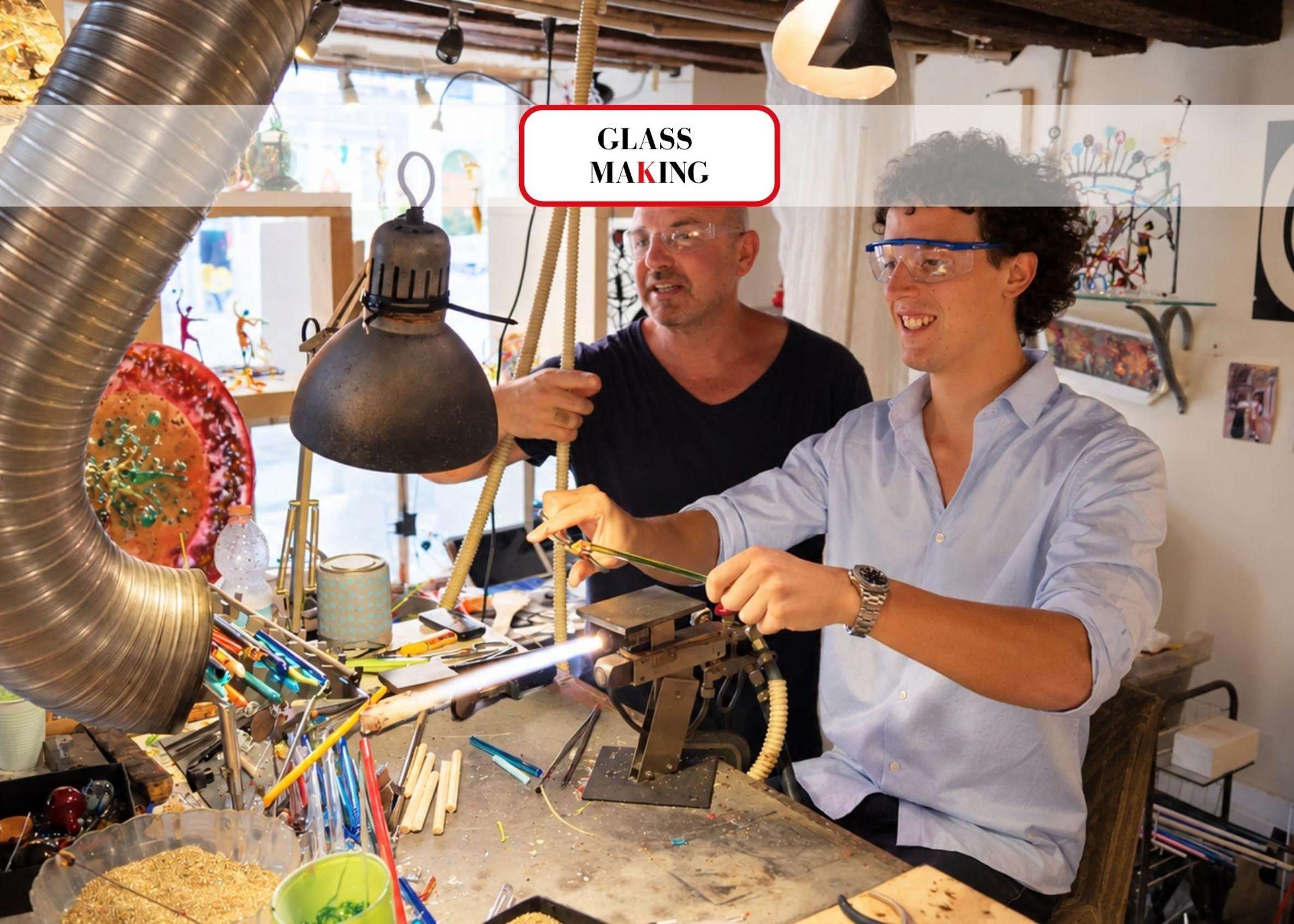
Two ways to work the glass: a furnace lesson where you blow your own piece under a master's hands, or a bench workshop where a torch, rods and colors turn into beads and jewelry. Some sessions run two hours at a furnace on Murano. Others stay shorter, closer to Venice, and end with something you made yourself.
FootwearWorking furnaces require closed-toe shoes and long pants in natural fabrics like jeans; sandals and flip-flops are turned away, and synthetic fabrics are banned near molten glass.
Age limitsFurnace glassblowing classes take children from 12 years old, some studios require 14, the private artisan lesson is adults only from 18, and torch bead-making classes start at 10 to 14.
Taking it homeA blown piece must cool slowly in an annealing oven overnight, so pickup is the next day or worldwide shipping can be arranged for a fee; beads from the torch workshop go home with you the same day.
HealthBeginner furnace workshops are not suitable for people with respiratory issues, and the heat and humidity indoors make breathing harder for anyone with asthma or a chronic lung condition.
Getting thereDirect ACTV vaporetto Line 3 reaches Murano Colonna from Piazzale Roma in 21 minutes, the stop at the entrance of the canal where the historic furnaces cluster.
SeasonVisitor-facing demonstration kilns stay open all year, including August and major holidays, even while production kilns close for maintenance.
importantHands-on furnace glass blowing classes in Murano require participants to be at least 12 years old, and some studios set the minimum at 14.
Book a glass blowing class only if everyone in your group meets the age limit; younger children can join glass mosaic workshops instead, and bead-making sessions on the torch usually accept ages 10 and up.
Which glass blowing class fits you? four ways to make your own
Private lesson
75 minutes·Spanish, English
4.9(646)
Create Your Glass Artwork: Private Lesson With Local Artisan
A master artisan guides your hands one on one for 75 minutes, and you leave with the glass piece you shaped. Rated 4.9 by past students.
Enjoy a private lesson with a glass masterBring your artwork home as a special souvenir
Children under about 12 cannot handle molten glass, but several studios on Murano still welcome young makers. Some let kids join a furnace glassblowing session for free and watch from a safe spot, while mosaic and bead activities let them glue, arrange and torch under an artist's eye from as young as 5.
Families who want a shared craft hour rather than a furnace session will find the friendliest options there.
The furnace is the draw, and this class puts you next to it.
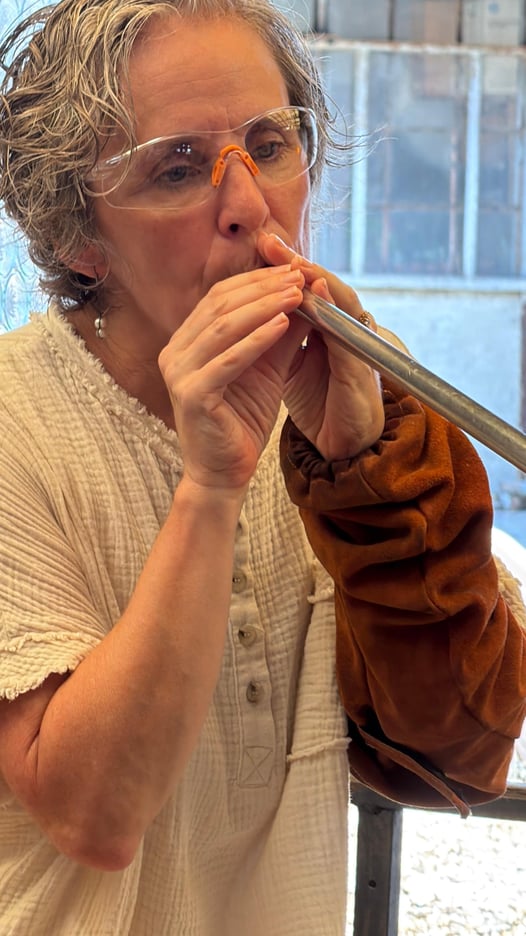
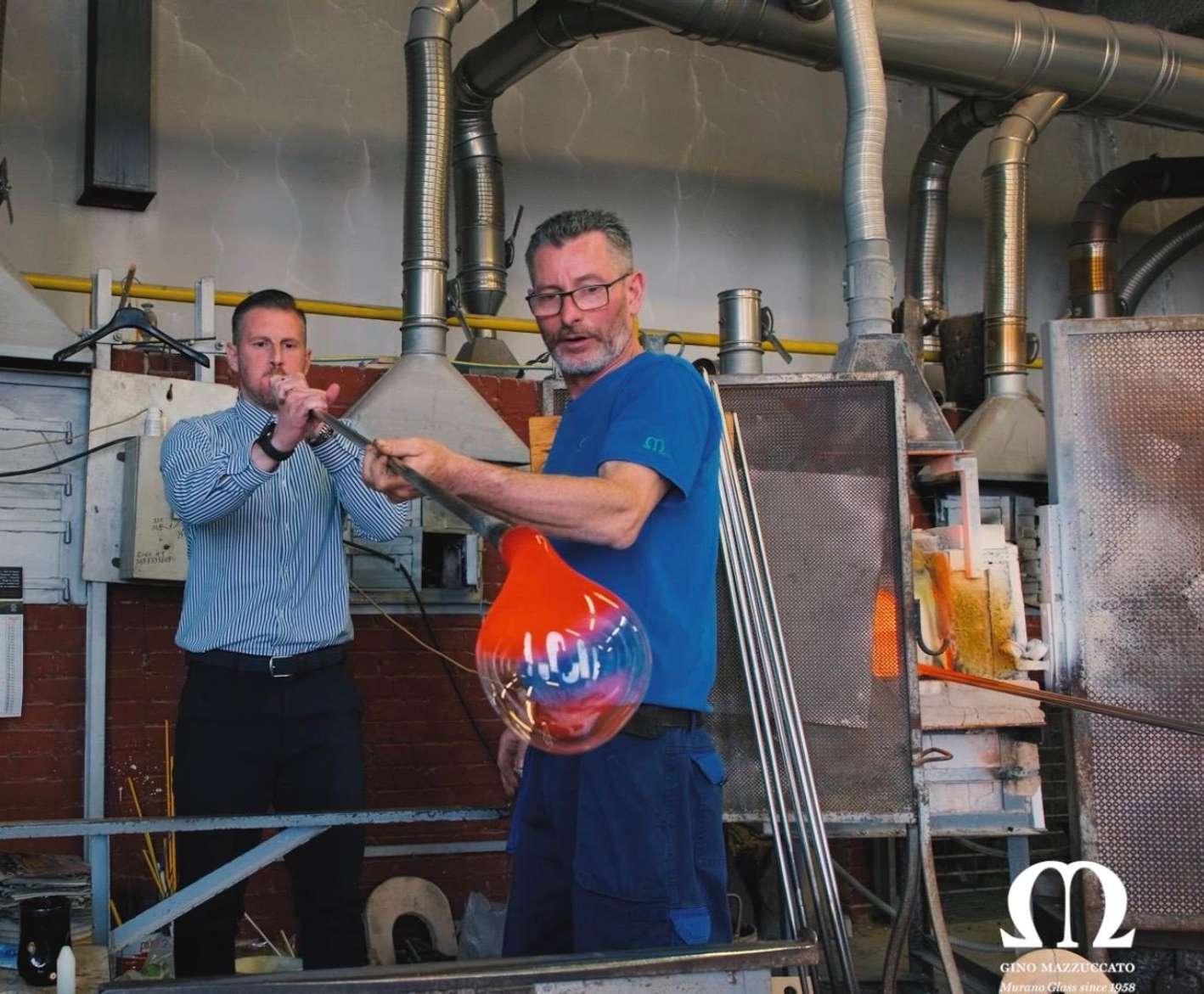
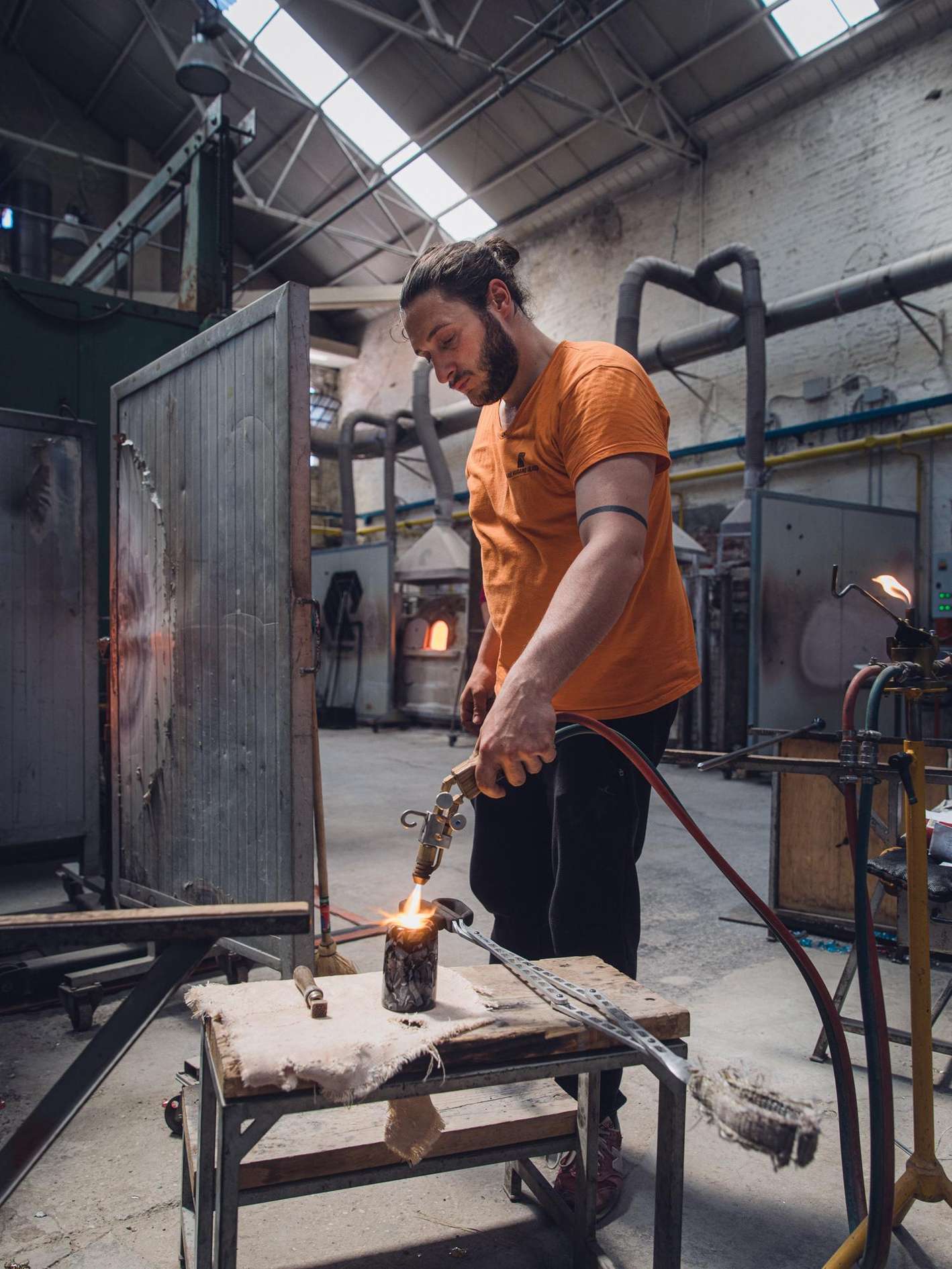
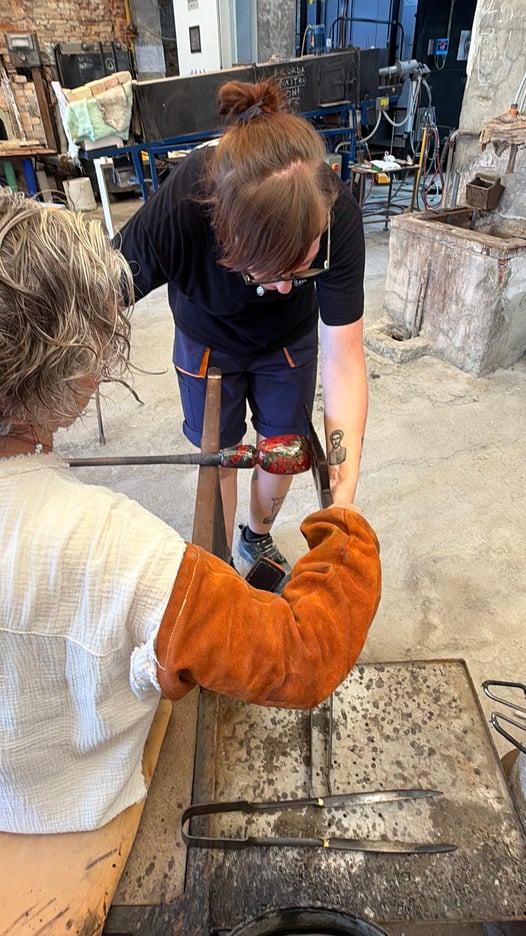
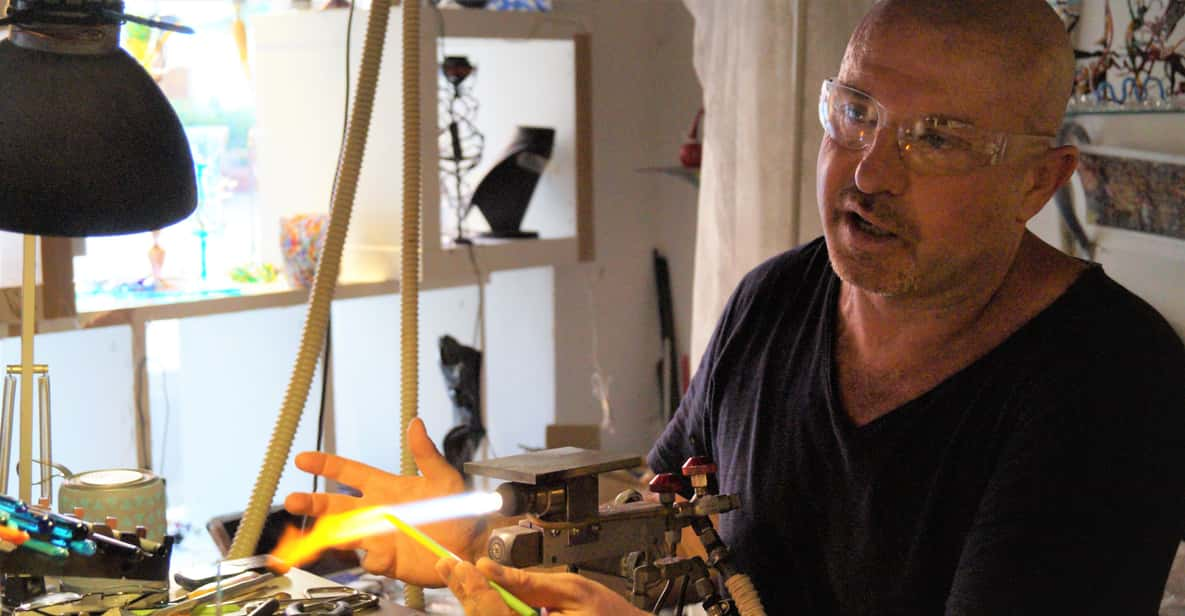
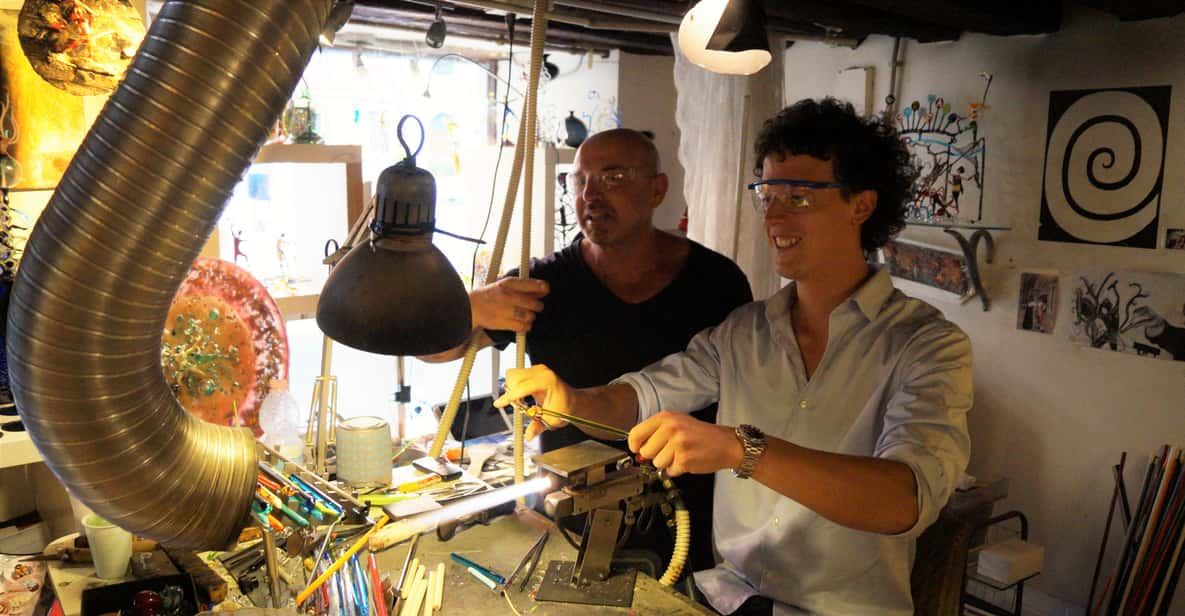
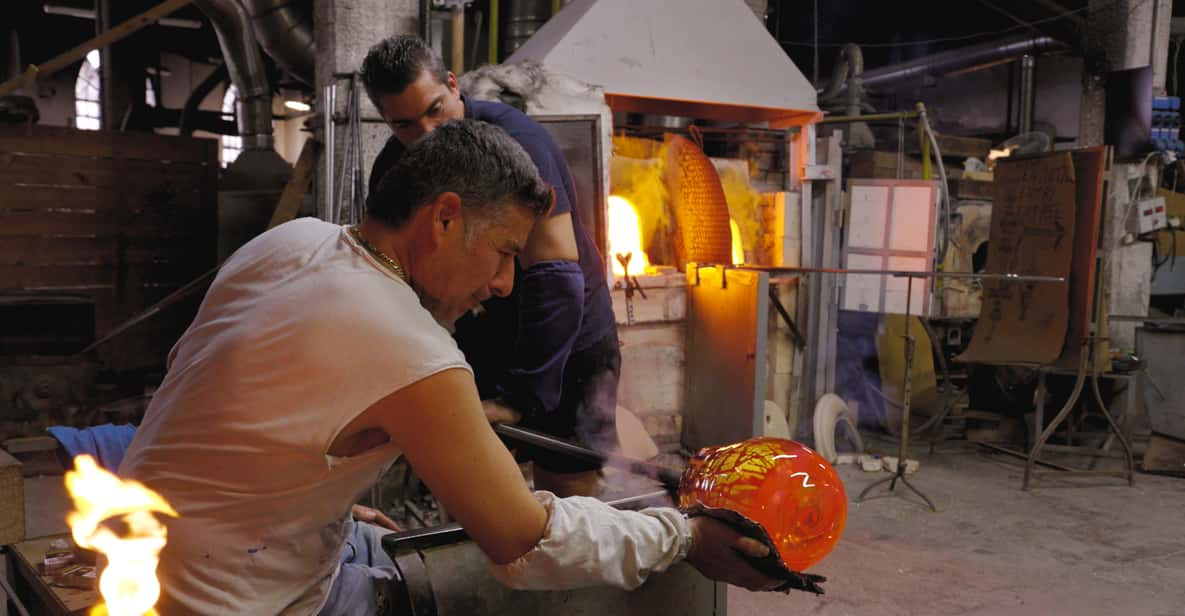
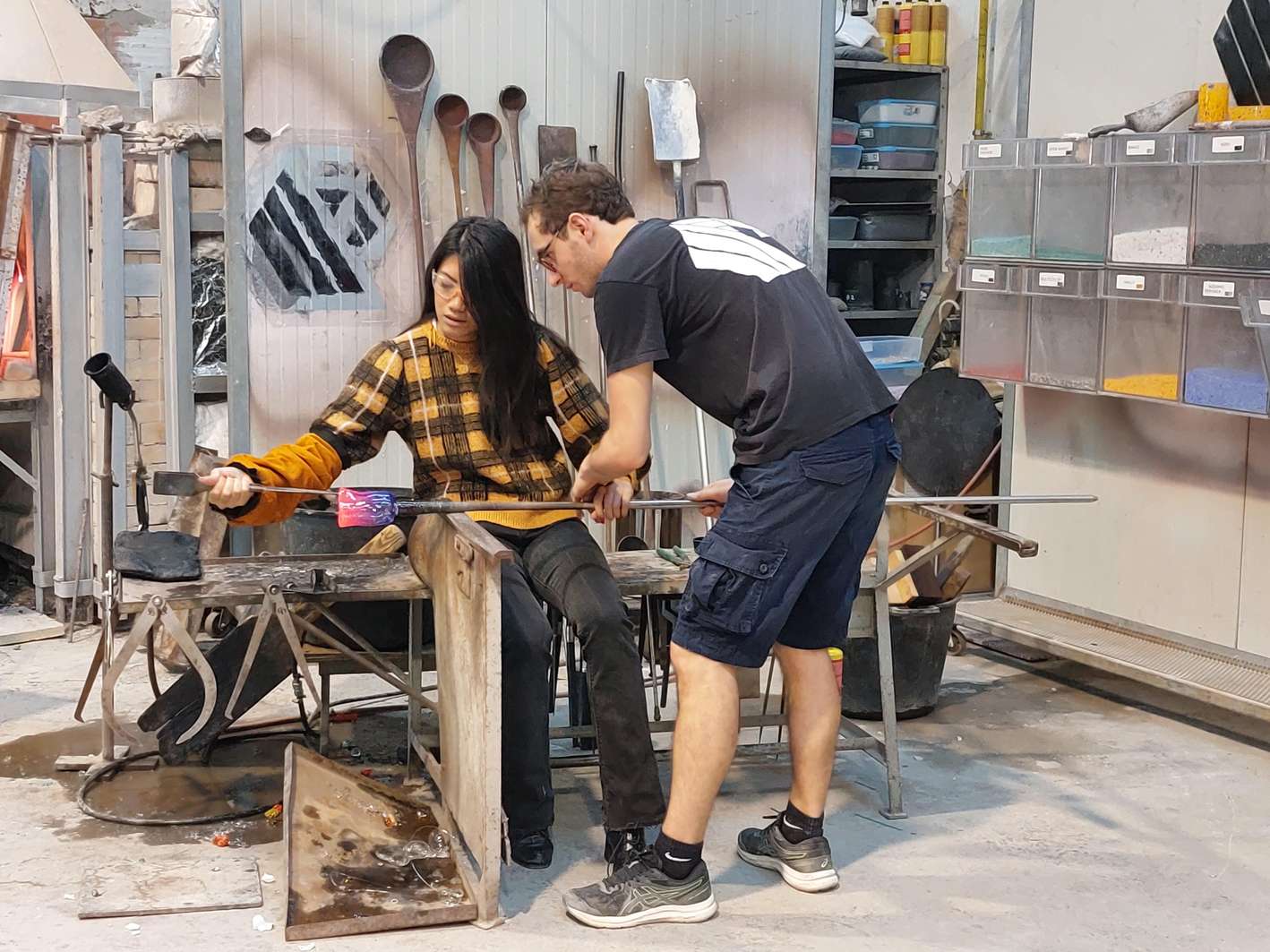
Over two hours on Murano, a glass master first shows you how the work is done, then hands the tools over: you practice the basic movements, work with glass heated past 1000°C, and finally blow your own piece, a drinking cup or a small vase, with the master's hands guiding yours.
No experience is needed. The group stays small, the studio supplies safety glasses and a padded sleeve for your arm near the furnace, and the piece you make is yours to keep. The class runs as a shared session, and you can cancel up to 24 hours ahead for a full refund.
1Meet the master, watch the demo· about 20 minA master craftsman demonstrates live at the furnace while you learn the steps of the craft and put on your safety glasses and arm sleeve.2Practice the basic movements· about 25 minYou start with exercises that build hand-eye coordination and a feel for the tools, no hot glass yet, before anything touches the furnace.3Hands on with hot glass· about 35 minYou move to 1000°C molten glass, rolling and shaping it on the bench while the master guides your hands directly at every step.4Blow your own piece· about 40 minYou blow air into the pipe on the master's cue and shape a drinking cup or small glass vase, the artifact you take home as your souvenir.5Annealing and pickup· next dayYour piece cools slowly in the annealing oven overnight so it does not crack. Collect it the next day or arrange worldwide shipping for a fee.
Included
GuideGlassmaking demoThe glass item that you craftWaterSafety glassesSleeve to protect your arm from the heat of the furnace
Not included
TransportationShipping the final product (available for a fee)
Choosing your blowing class - furnace work, beads or boat trip
Green marks the lowest price. Each price says whether it is per person or per group.
Tour
Price
Duration
Pickup
Languages
Best for
Our pick
Murano: Glassblowing Workshop for Beginners
5.0★ (151)
from $274per person
2 hours
no
English
beginners who want to blow their own cup or vase at a real furnace and take it home
Most reviewers praise the instructors, calling their guides patient, funny, and welcoming from the moment they arrived.
Best surprise
Many couples expected to botch their piece and were delighted at how well their cups, pendants, and beads turned out.
Most common wish
Several reviewers wished the session ran longer, saying it felt short for what they paid.
How to book a Murano glass blowing class
01
Pick your date and time
Choose a date first, then a morning slot. Furnaces run at full energy before noon and the workshop stays cooler, while studios often pause for lunch between 1 and 2:30 pm.
RecommendedBook a morning class. You get the masters at their busiest and spare yourself the afternoon heat.
Pro tipMorning classes on Murano sometimes let you collect your piece the same day; afternoon work is ready the next day.
02
Choose the option that fits
Compare the formats: a 2-hour beginners furnace workshop in a small group, a 75-minute private lesson with one artisan, a bead-making session at a studio, or a shorter blow-and-watch experience with boat transfer.
ImportantAge limits differ by format. The beginners workshop takes children from 12, the bead studio from 14, and the private lesson is for adults over 18 only.
Common mistakeAssuming every hands-on session ends with a piece you keep. One blow-your-own experience with water taxi pickup works on the master's glass, not your own.
03
Book and pay online
Reserve your place and pay through the booking page. Most classes on this page let you cancel up to 24 hours in advance for a full refund, so an early booking costs you nothing if plans shift.
Pro tipBook several days ahead in season. Small-group furnace classes fill fast because the master can only supervise a few students at once.
Common mistakeLeaving the booking until you reach Venice. Weekend furnace time goes to scheduled demos and workshops, so hands-on slots are scarcer then.
04
Check the confirmation details
Read the voucher that arrives by email. It states your meeting point: some classes meet at a fixed spot such as Campo San Bartolomeo near the Rialto Bridge, while boat-instruction options pick you up at your hotel dock.
Pro tipIf your hotel sits on a narrow inner canal, the water taxi may not reach the door at low or high tide. Ask where the closest landing is before the day.
ImportantBring photo ID if the booking asks for age checks, especially for the private lesson restricted to adults.
05
Prepare for the day itself
Wear closed-toe shoes and long trousers in a natural fabric, since synthetics are banned near the furnace and sandals turn you away at the door. Arrive 15 to 20 minutes early to find the studio.
ImportantThe workshop provides safety glasses and a protective sleeve for your arm. You cannot enter without the right footwear, so this rule is not negotiable.
Common mistakePlanning to fly home the same evening. Your piece cools overnight in the annealing oven, so collect it the next day or ask about shipping to your address.
What to know before you book a glass blowing class
Can stop the dayGood to knowGood news
01
ChoosingWhat it is, who it suits, when to go
8
Your piece
Furnace-blown glass has to cool slowly in an annealing oven overnight, so the piece you make in most classes is ready the next day. Studios can ship it to your home for an extra fee if you fly out sooner.
Beads
In the bead-making workshop you take your beads home the same day, since a tabletop torch cools small pieces far faster than a furnace. That makes it the class to pick when your trip ends tomorrow.
What you do
In a beginner furnace class you blow into the pipe when the master tells you to, roll it along the bench, and tap the piece free. The gather, the punty transfer and trimming the rim stay with the master.
Age limitsCan stop the day
Furnace glassblowing classes are not suitable for children under 12, and some studios set the bar at 14. The bead workshop asks for 14 or older. The private lesson with the artisan is strictly for participants over 18.
Health limits
Furnace heat and humidity can make breathing harder for people with asthma or other respiratory conditions, and hands-on workshops are not suitable for them. If you only want to watch a demonstration, that is generally fine.
Best time
Morning before noon is the sweet spot: furnaces run at full energy, the masters are actively producing, and the workshop stays relatively cool. Between roughly noon and 2:30 pm many studios pause for lunch.
Weather on arrival
Classes come with the safety gear done for you. Workshops hand out safety glasses and a protective sleeve for your arm, and you get water during the session in the beginner furnace class.
Getting there
The beginner workshop, the private lesson and the bead studio meet on Murano itself, so you arrange your own crossing. One class option instead includes a private water taxi from your Venice hotel, with round-trip versions available.
02
BookingHow far ahead, and what happens if plans change
2
Booking
Arriving with a pre-booked class lowers the showroom sales pressure compared with walking into a factory free of charge. A pre-booked lesson also points you to a working studio instead of a retail floor.
Cancellation
Cancel up to 24 hours in advance for a full refund on the classes listed here. That flexibility lets you book early and still move your lesson if rain or a flight change reshuffles the day.
03
Before you goPapers, health, what to bring
1
ClothesCan stop the day
Wear closed-toe shoes and long pants in a natural fabric such as jeans. Synthetic clothing is discouraged or banned near molten glass, and open sandals or flip flops will keep you out of the furnace room.
04
During the tourWhat is expected of you
1
Supervision
The maestro guides your hands directly while you work the hot glass, so you are never left alone at the bench. Beginners with no craft background finish a simple piece, and forgiving shapes like cups or pumpkins tolerate small mistakes.
A blowing class in Murano - how to book it, dress for it, and get your glass home
The first beginner glass blowing class in Murano starts when the furnaces do, around 9 am. A furnace class asks a little planning: a morning slot, closed shoes, and a night's patience while your glass cools.
Venice· 45.44° N, 12.32° E
If you only remember three things
1
Book a morning slot: furnaces run at full energy and the hot shop is coolest before noon.
2
Wear closed-toe shoes and long pants of natural fabric, or the studio turns you away at the door.
3
Your blown piece cools overnight in the annealer, so plan pickup the next day or have it shipped.
Is a blowing class in Murano worth it for a total beginner
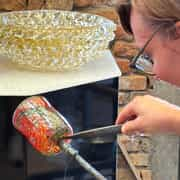
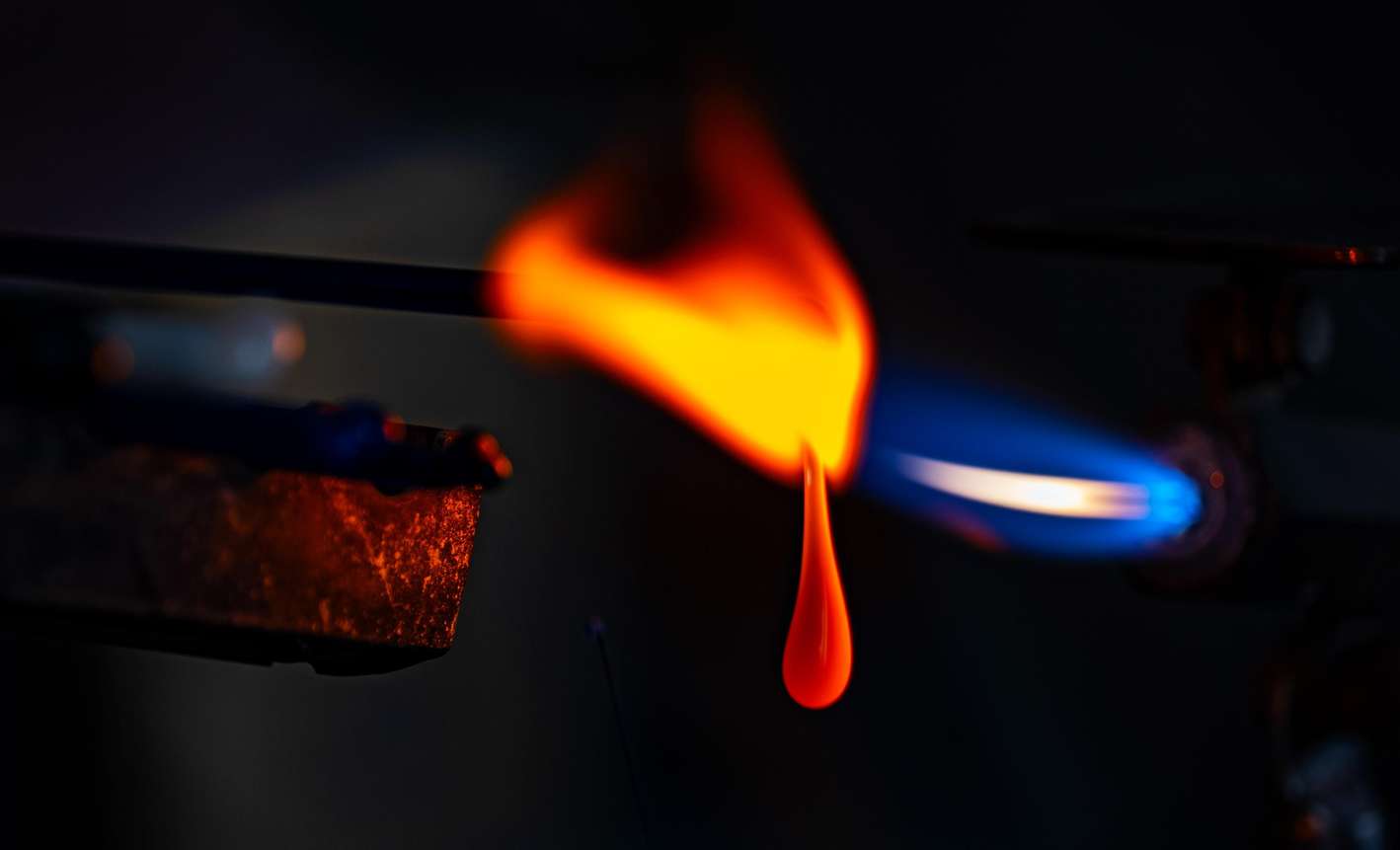
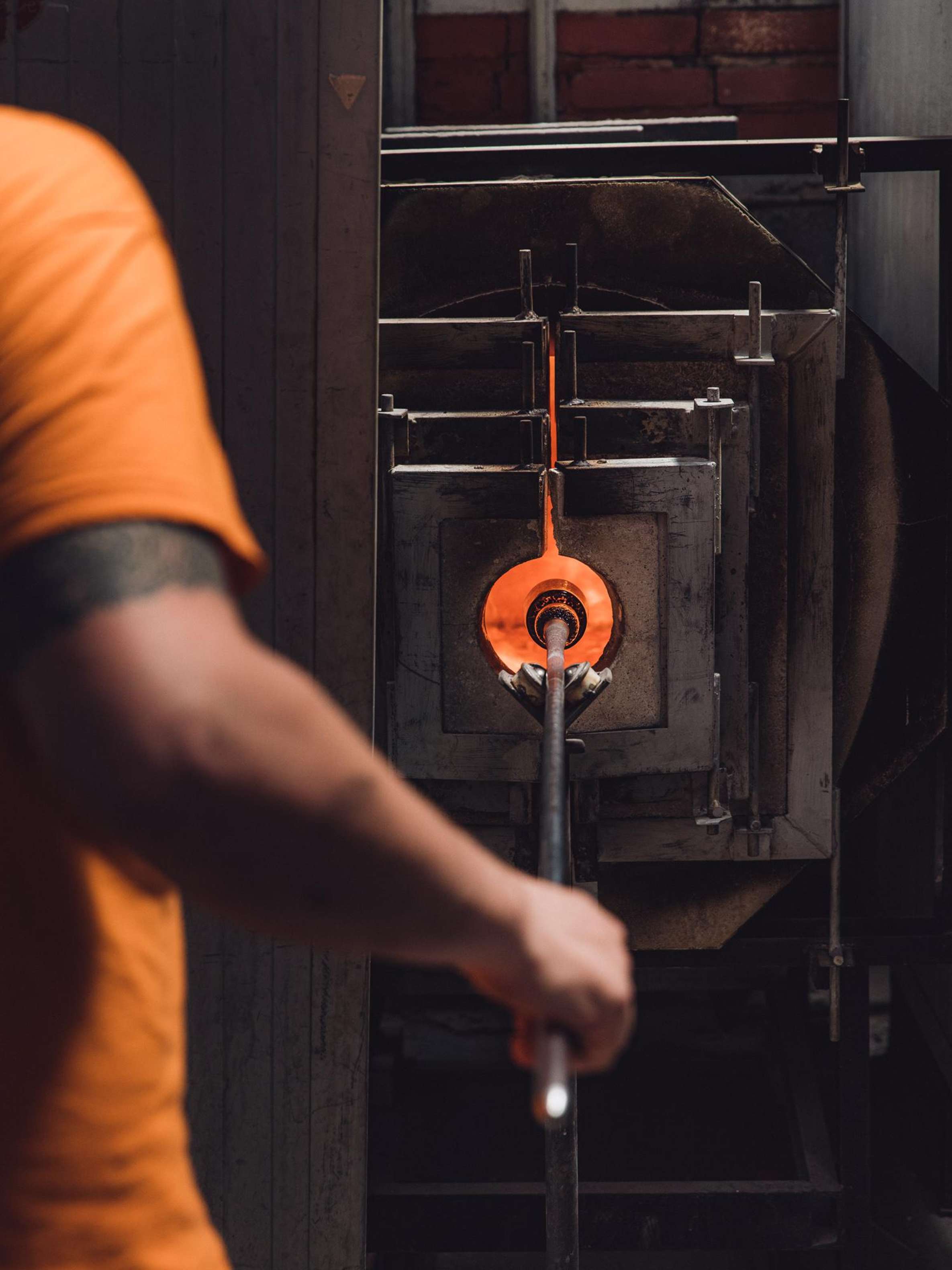
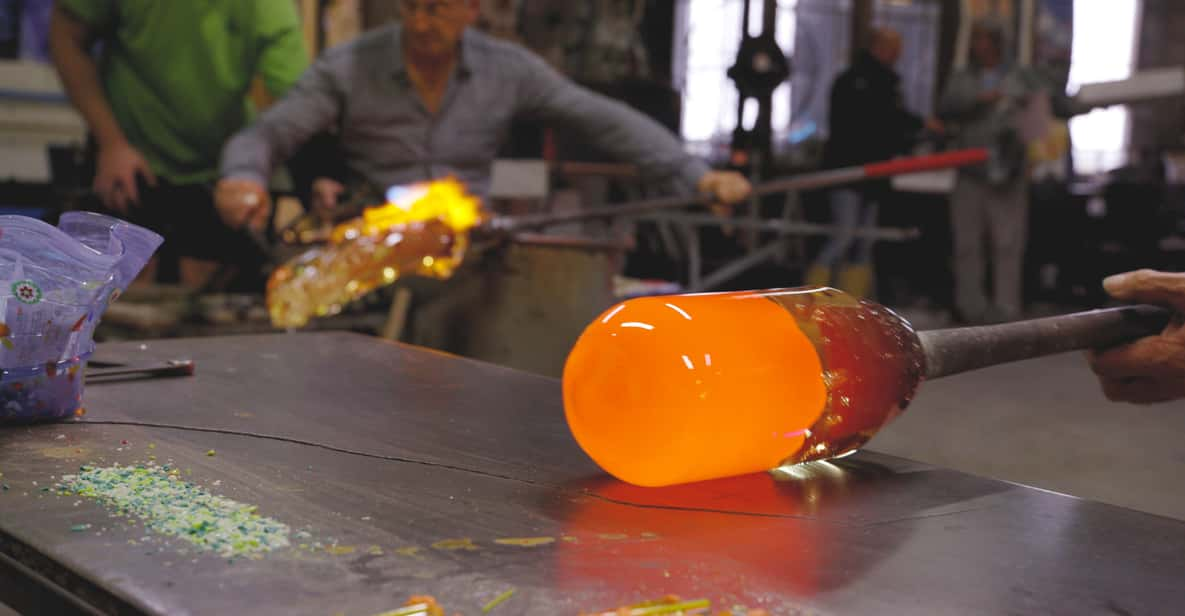
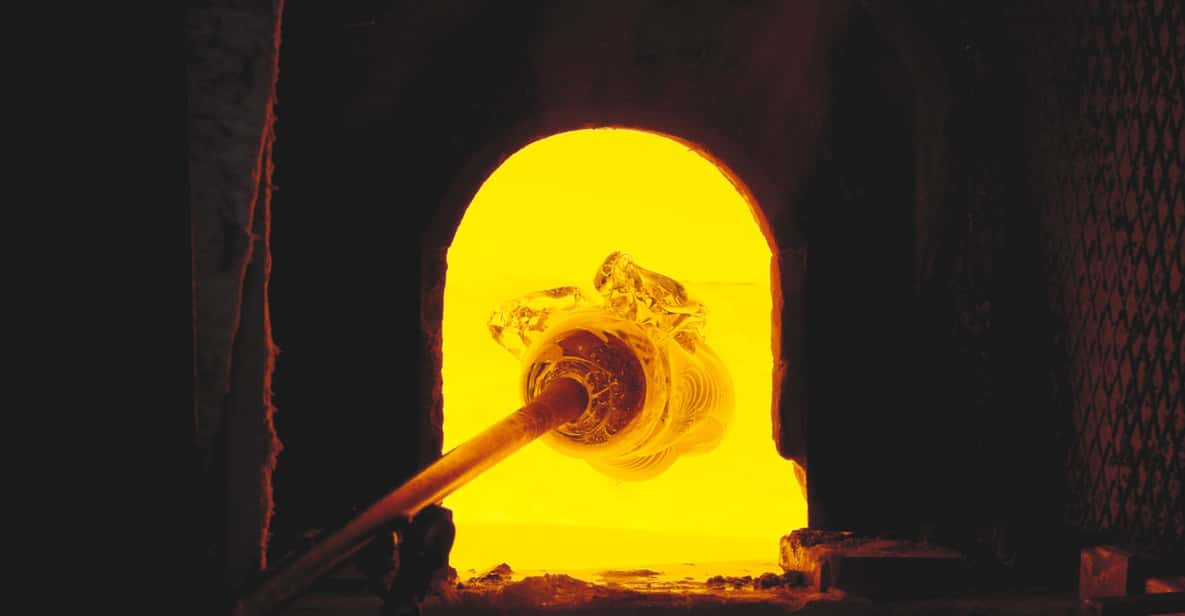
The furnace in a Murano hot shop runs hotter than a pizza oven, around 2,000°F, and the glass on the end of the pipe glows orange. That sounds like work for a professional. It is not.
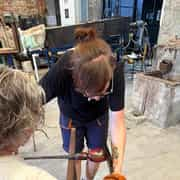
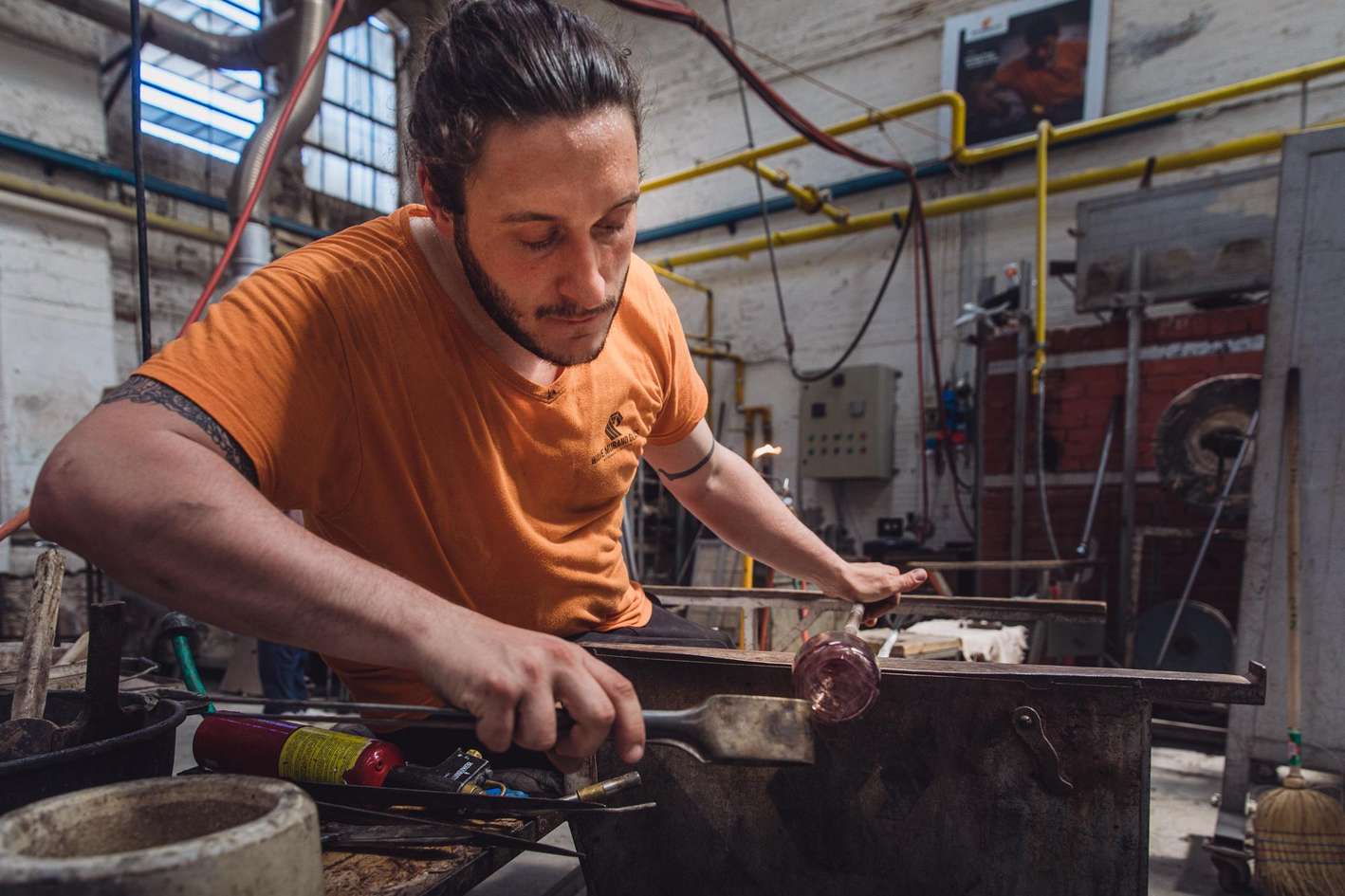
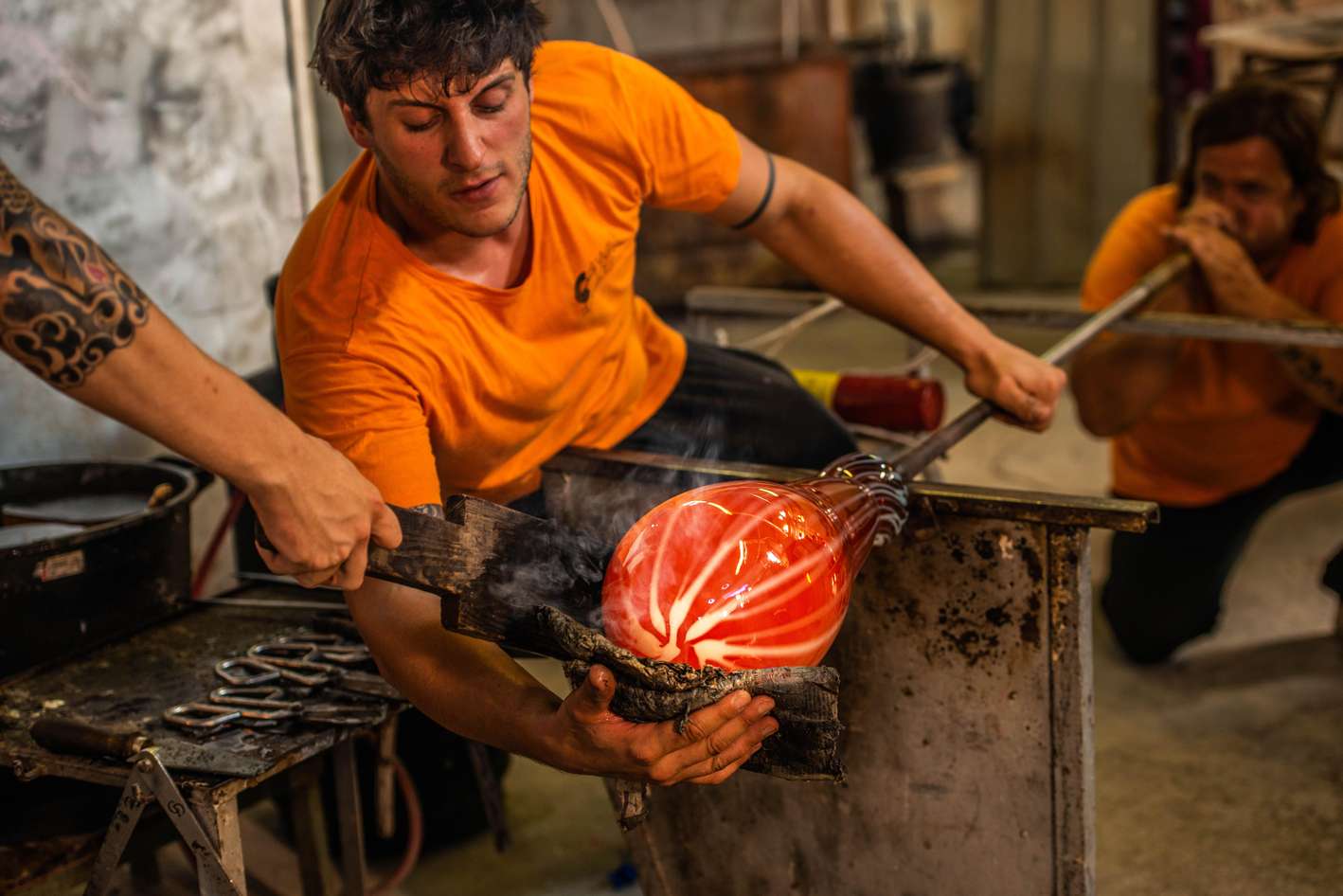
Beginner glass blowing classes are built around forgiving shapes: pumpkins, paperweights, cups, flowers. A slightly wobbly rim or a lopsided curve does not ruin them. The master gathers the molten glass, handles the punty and trims the rim; you do the blowing and the shaping under his hands.
No artistic talent, strong lungs or craft background is needed. Single-gather sessions are quick and hot, so they do not demand continuous arm strength or serious lung power.
What people wrongly assume
MythI need artistic talent to make something decent
Reality
The forms beginners make are organic and forgiving; small errors in blowing or symmetry leave the piece intact
MythI need powerful lungs to blow glass
Reality
Quick, single-gather workshops need no intense lung power, just short guided breaths on instruction
MythA one-day class teaches professional technique
Reality
Commercial one-day classes are introductory sessions built around a guided beginner keepsake; deep technical training needs longer courses
The hour is about standing at a real furnace with a real artisan, and walking away with a piece you shaped.
The blowing class formats, from furnace to bead torch
Three ways to make your own glass are on offer, and they suit different hands. The classic furnace glass blowing class puts a blowpipe in your grip and molten glass at around 2,000°F on its end; you go home with a cup or a small vase.
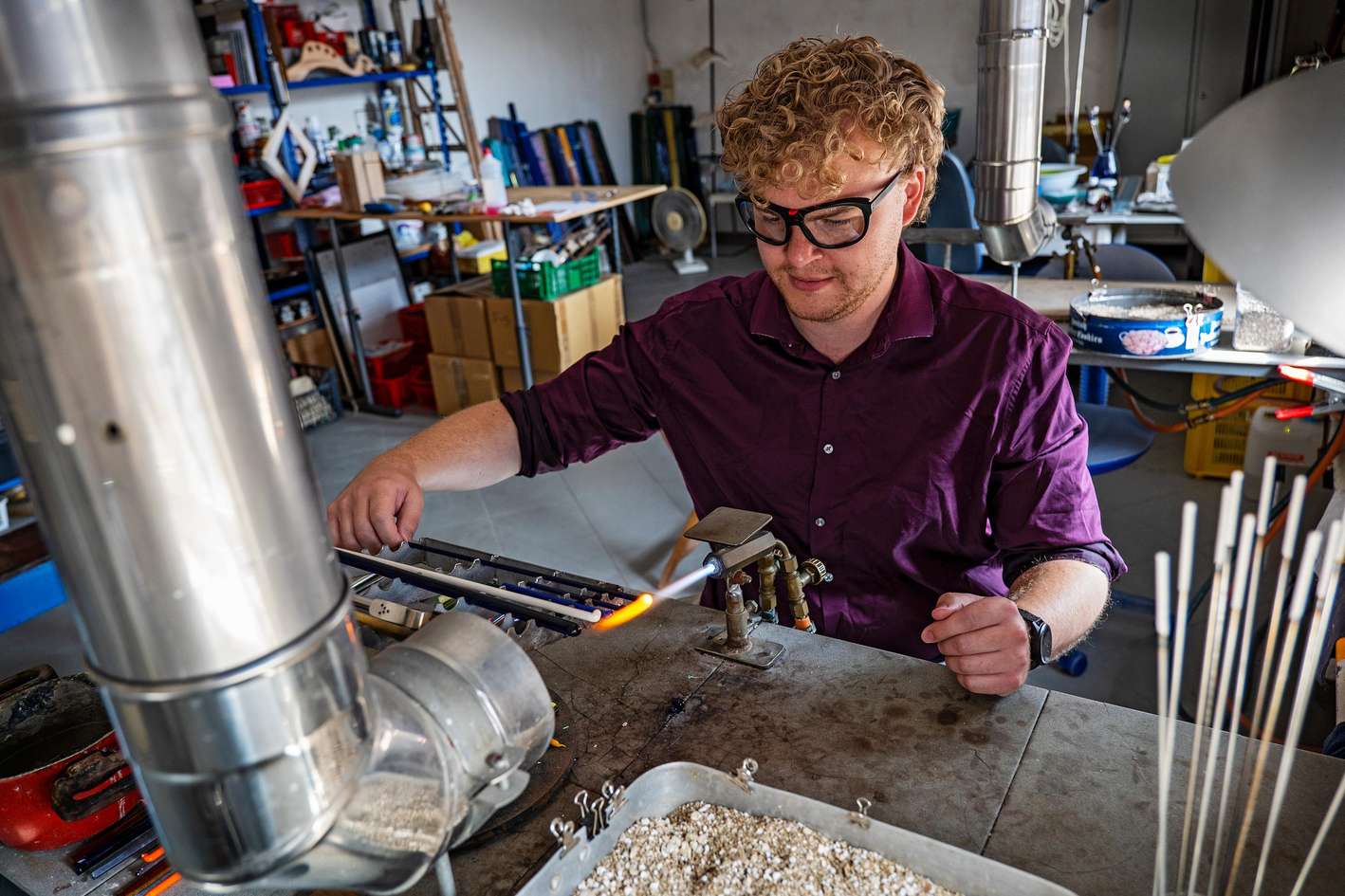
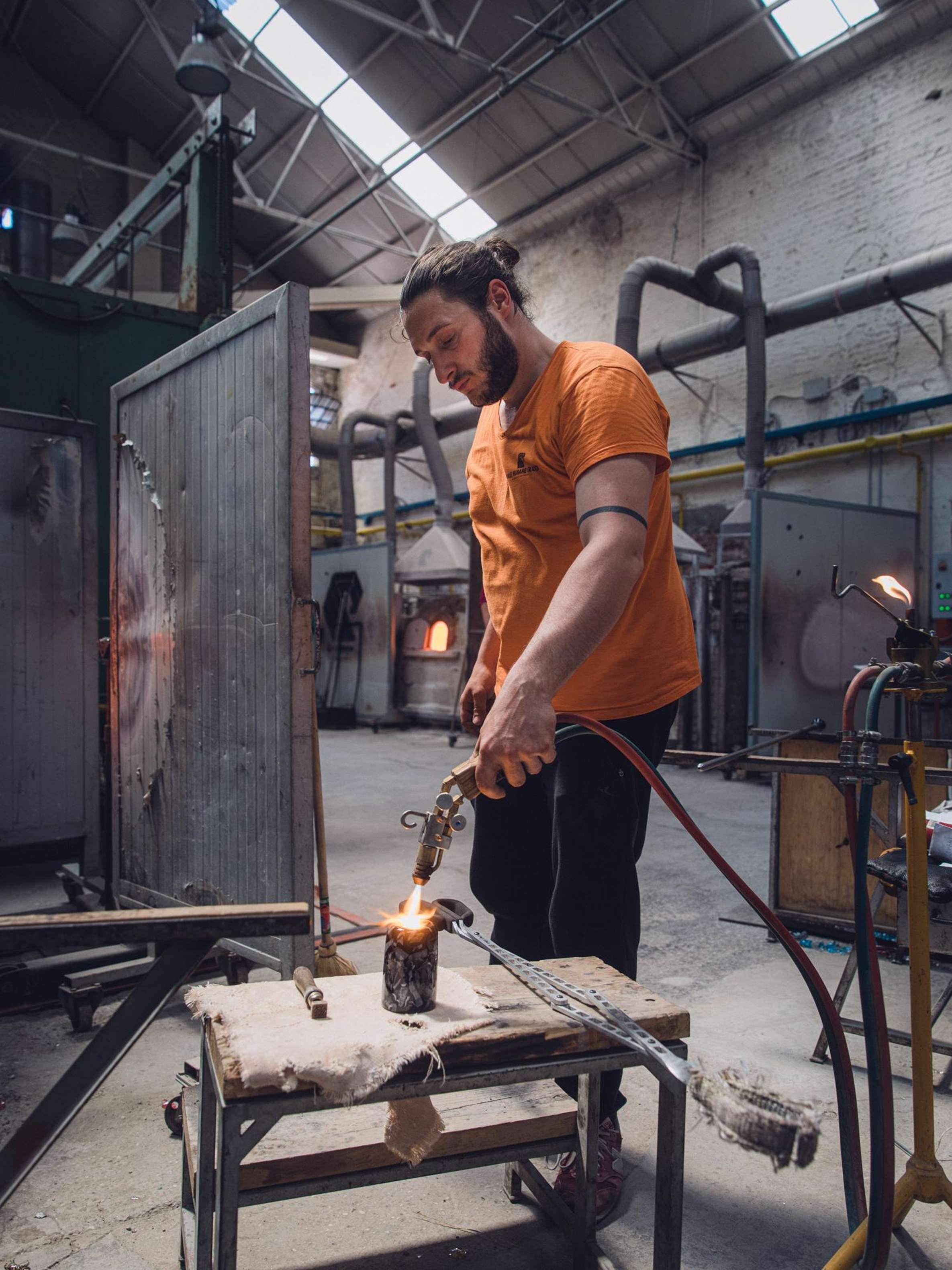
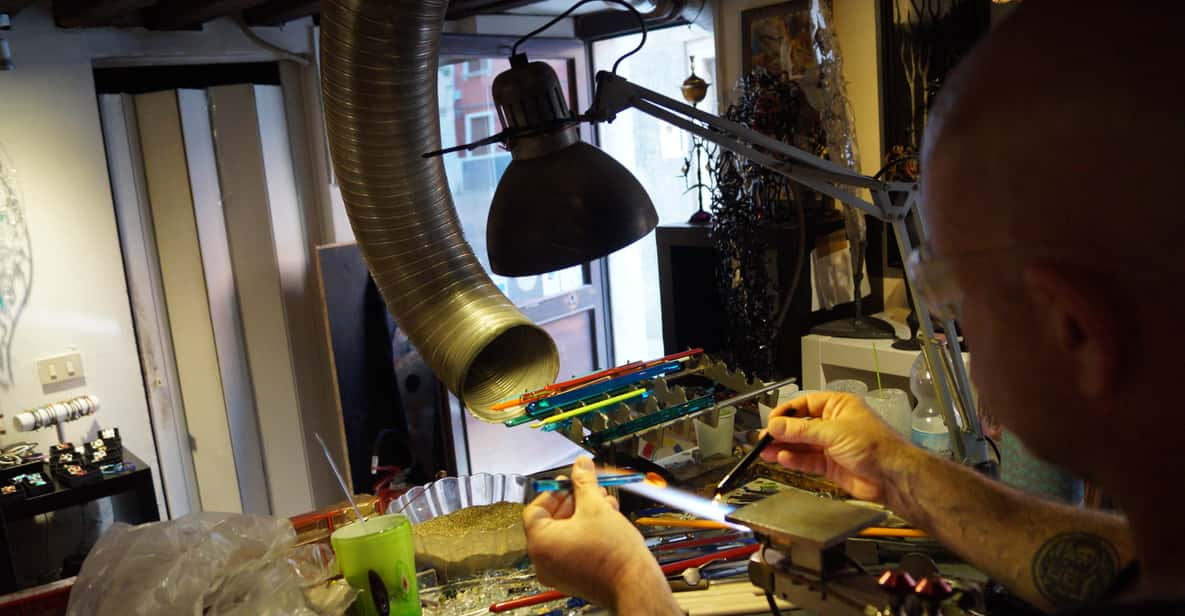
The bead route works at a tabletop torch, melting rods into beads you decorate yourself, with heat held inches from your fingers because glass insulates.
A private lesson with one artisan is the shortest and most personal format, and it comes with stories of the trade told as you work.
Blowing class formats side by side
Furnace glassblowing workshop
Torch bead-making class
Private lesson with an artisan
Technique
Gather molten glass on a blowpipe, blow and shape it
Melt and assemble glass rods in a torch flame
Old Murano techniques, taught one to one
Session length
Around 2 hours
Half a morning, with a coffee break
75 minutes
What you take home
A cup or small vase you blew
Beads in your chosen colours
Your own glass object
Where
On Murano island
In a Murano studio
In Venice
Best for
Feeling the furnace heat yourself
A quieter, seated creative session
Depth and personal attention
Furnace glassblowing workshop
Technique
Gather molten glass on a blowpipe, blow and shape it
Session length
Around 2 hours
What you take home
A cup or small vase you blew
Where
On Murano island
Best for
Feeling the furnace heat yourself
Torch bead-making class
Technique
Melt and assemble glass rods in a torch flame
Session length
Half a morning, with a coffee break
What you take home
Beads in your chosen colours
Where
In a Murano studio
Best for
A quieter, seated creative session
Private lesson with an artisan
Technique
Old Murano techniques, taught one to one
Session length
75 minutes
What you take home
Your own glass object
Where
In Venice
Best for
Depth and personal attention
The two-hour workshop is the full furnace experience for first-timers. Murano: Glassblowing Workshop for Beginners runs 2 hours, starts with practice movements, then hands-on work with hot glass, and includes the piece you make, safety glasses, a protective sleeve and water.
Tour for this
Murano: glass workshop, studio tour and bead making5.0★ (114) · Free cancellation
Walk off the vaporetto and you will be offered demonstrations on every corner. Most are ten to twenty minutes of watching a master shape a souvenir behind a barrier, and the visit ends in a showroom.
That is a show. A real blowing class puts the pipe in your hands and runs one to two hours.
The markers are easy to check. A participatory workshop gives you step-by-step instruction and your own piece to keep. Small artisan studios keep their furnaces lit all day for their own production, so the heat and the work are real. And nobody herds you toward a till.
What nobody tells you
Free shuttle boats from the water bus stops
They steer visitors into high-pressure factory showrooms, so skip the free ride and walk to an independent studio
Large showrooms beside the main stops offering free tours
Their business is sales more than craftsmanship; the glassblowing is bait
Walk-in factory visits without a booking
You get a short demo and then the retail pitch; a pre-booked class keeps the pressure off
Pre-booking is your shield. A paid class on your ticket changes the visit; the studio teaches you instead of selling to you.
Tour for this
Venice: Murano Glass Blowing Experience with Water Taxi4.5★ (432) · 1 - 2 hours · Hotel pickup · Free cancellation
What you actually do at the furnace in your blowing class
The lesson begins with practice movements on a cold pipe, building hand-eye coordination before anything hot enters the picture. Then comes the real thing.
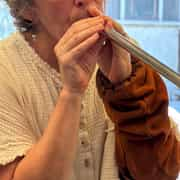
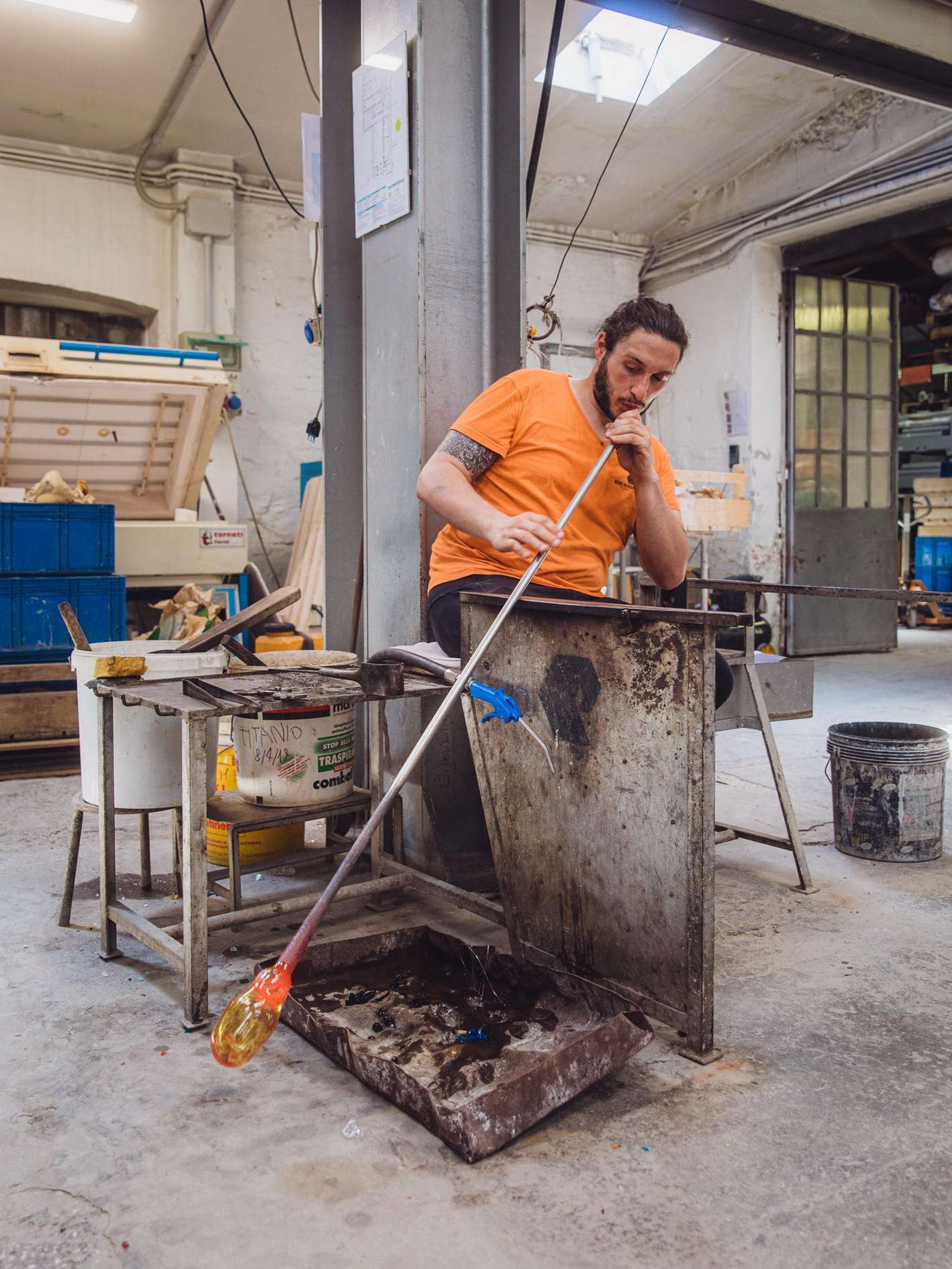
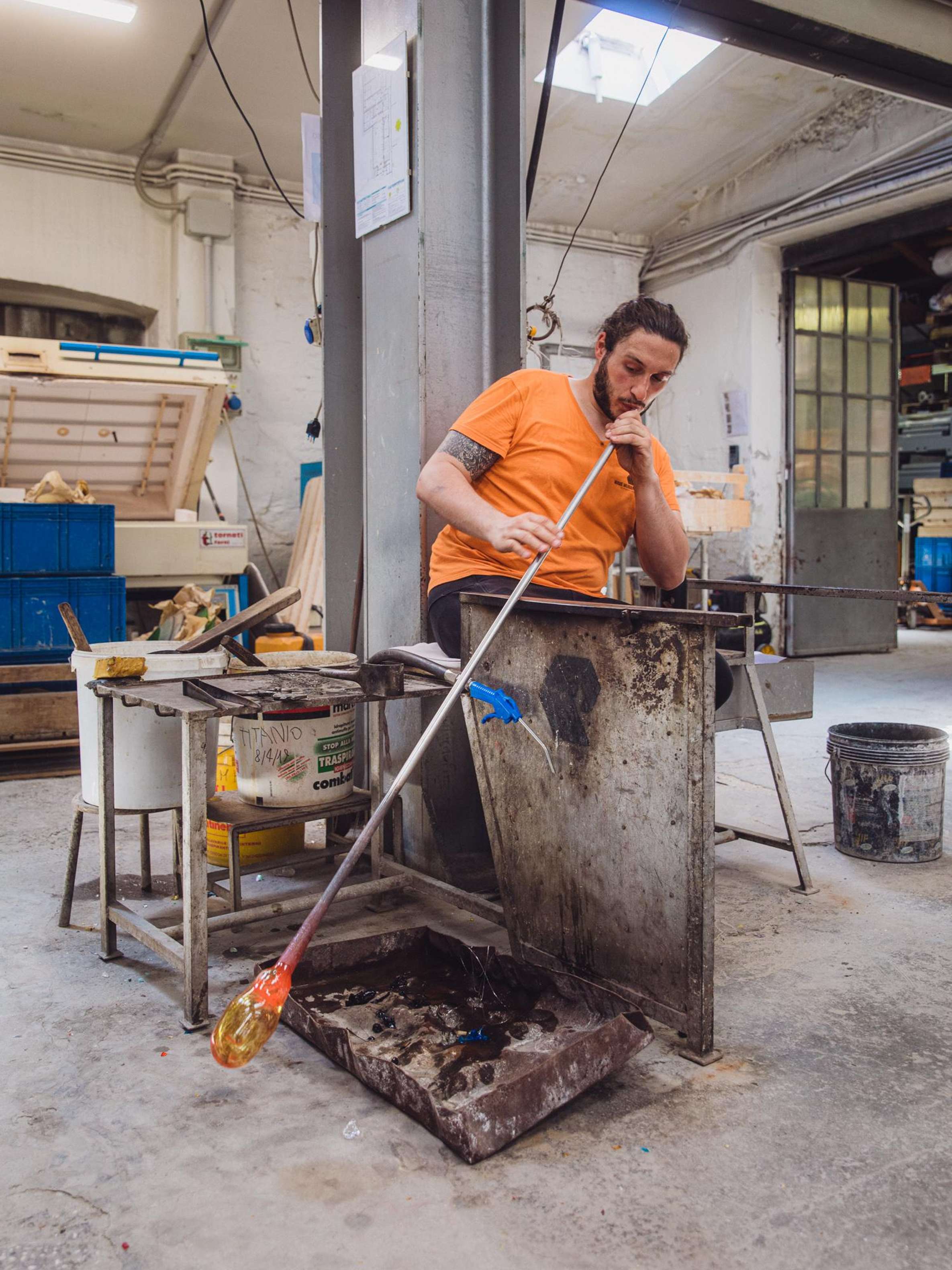
You blow into the pipe on the master's signal, and the bubble grows inside the glowing gather.
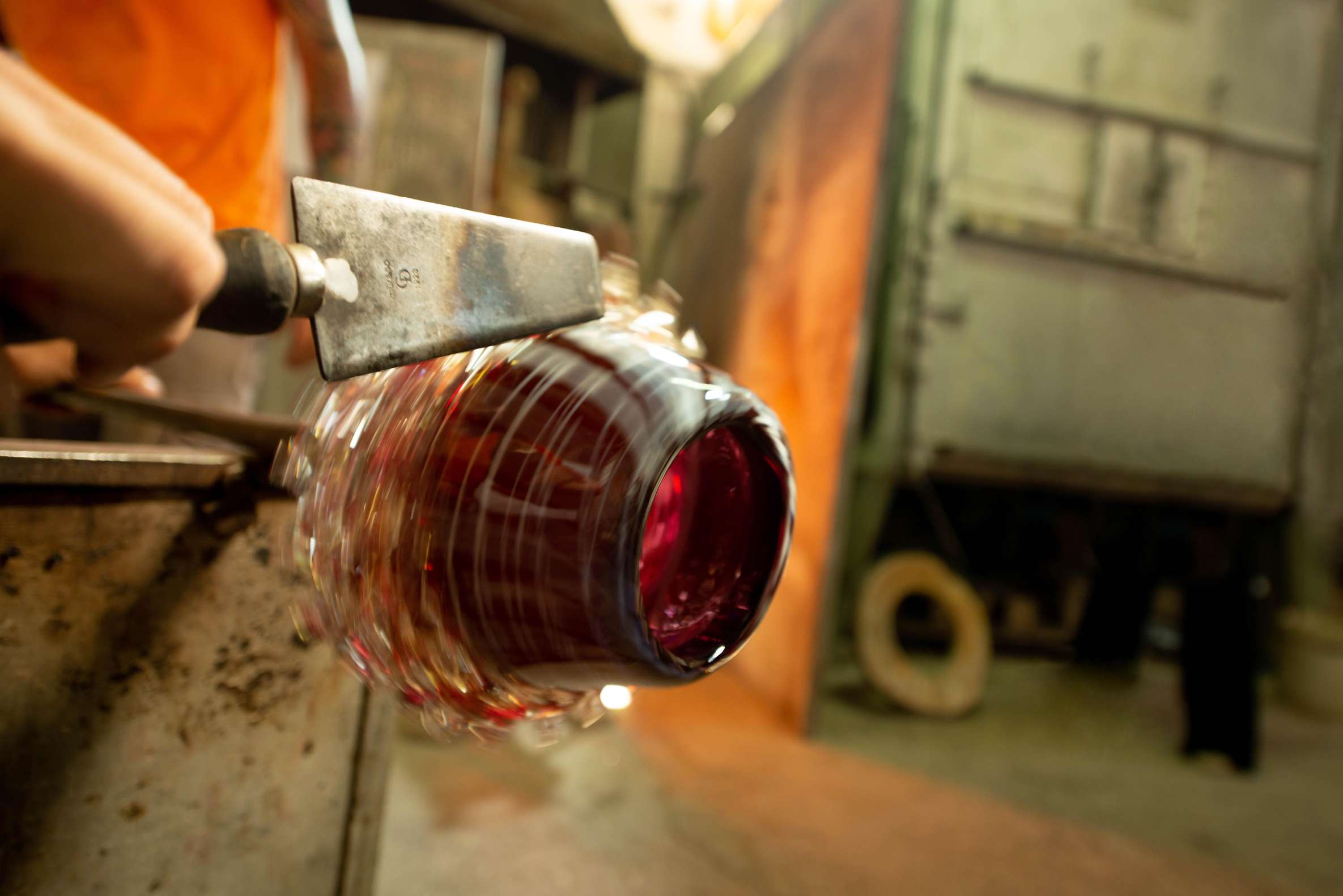
You roll the pipe along the steel bench while the piece is opened with jacks, or you take the jacks yourself with the master's hand over yours. When the shape is done, one sharp, guided tap of the pipe frees the piece.
How the lesson unfolds
1
Warm-up
Practice exercises with the pipe
Basic movements and hand-eye coordination, nothing hot yet
2
The gather
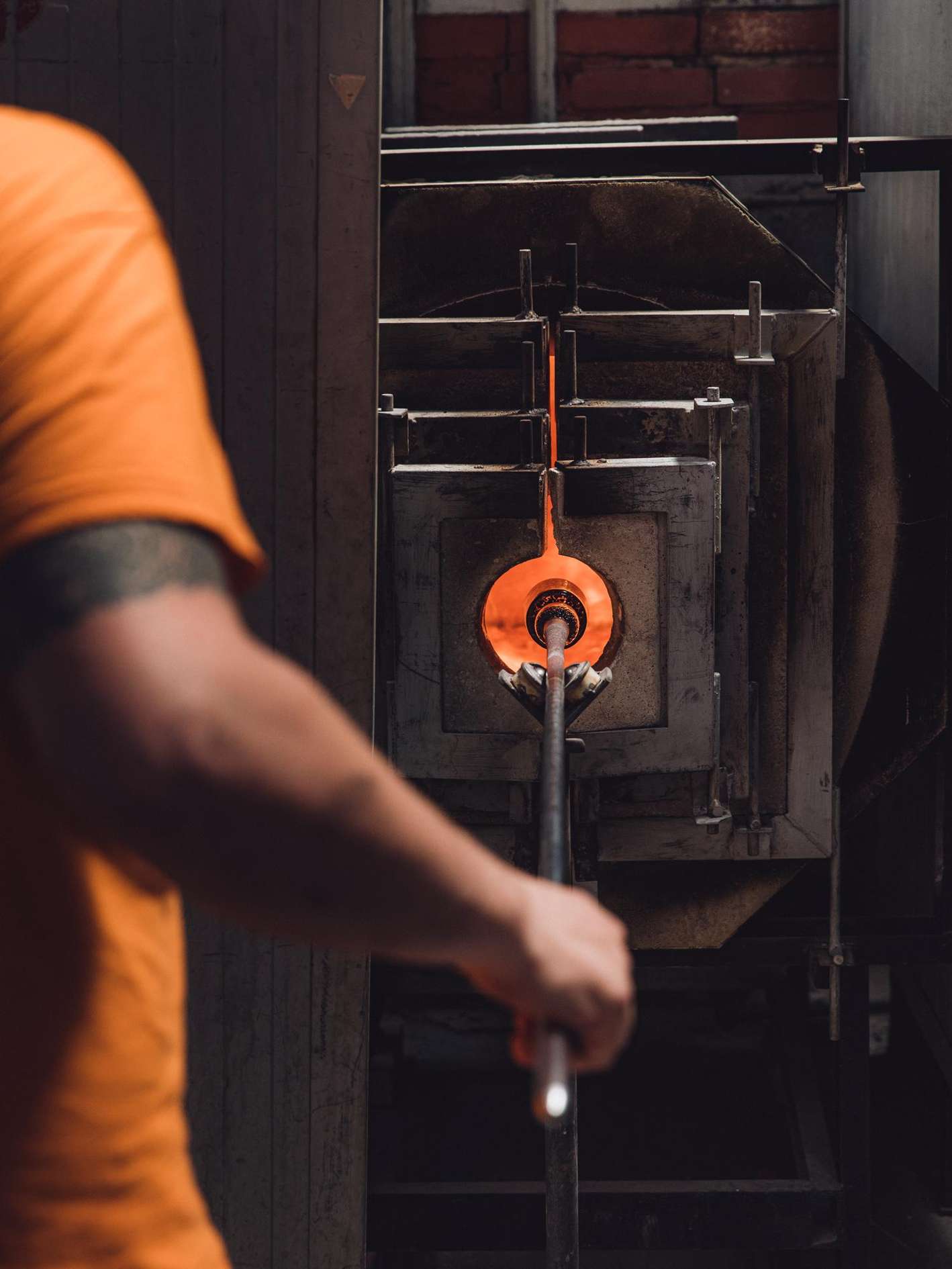
The master alone lifts molten glass from the furnace
At a beginner level, this step stays with him
3
Your blow
Air into the pipe on instruction
The bubble inside the glass expands under your breath
4
Shaping
Roll and open with jacks
Your hands, or the master's hand guiding yours
5
The tap
One sharp, guided strike frees the piece
Then it goes to the annealing oven
Three things stay with the master the whole time: the gather, the punty transfer and trimming the rim. Those need experience. Everything else, you do.
Tour for this
Create Your Glass Artwork: Private Lesson With Local Artisan4.9★ (646) · 75 minutes · Free cancellation
When to book your blowing class - time of day and season
Morning wins, and it is not close. Before noon the furnaces run at full energy, the masters are mid-shift on real production, and the hot shop is still the coolest room it will be all day. By 2:30 pm the floor is hotter and the shifts are winding down.
A morning booking also helps after the class: a piece finished in the morning can sometimes be collected the same day, while afternoon work waits until the next.
Through the year, nothing closes the visitor furnaces completely. Production kilns do shut in August for maintenance and relining, but the demonstration kilns keep running through the summer and the holidays.
Crowds peak in spring; January and February are the quietest months. On weekends the furnaces still fire, though full production happens Monday to Friday, and some trade-only factories close on Sunday. For the fullest show, aim for a weekday morning.
Blowing class with kids - what families can do together
The furnace is the one place children cannot go to work. Hands-on furnace blowing starts at 12 years old, and some studios hold the line at 14, because molten glass and young hands do not mix.
Below that, the craft still opens up. Torch bead-making classes generally take children from about age 10, with each studio setting its own floor, and the bead workshop featured below keeps it at 14. Glass mosaic sessions welcome children from 5, some with no age limit at all.
A few studios bend the furnace rule in their own ways: one allows children under 12 into the class free as long as they keep away from the hot glass, and one island masterclass starts at age 7.
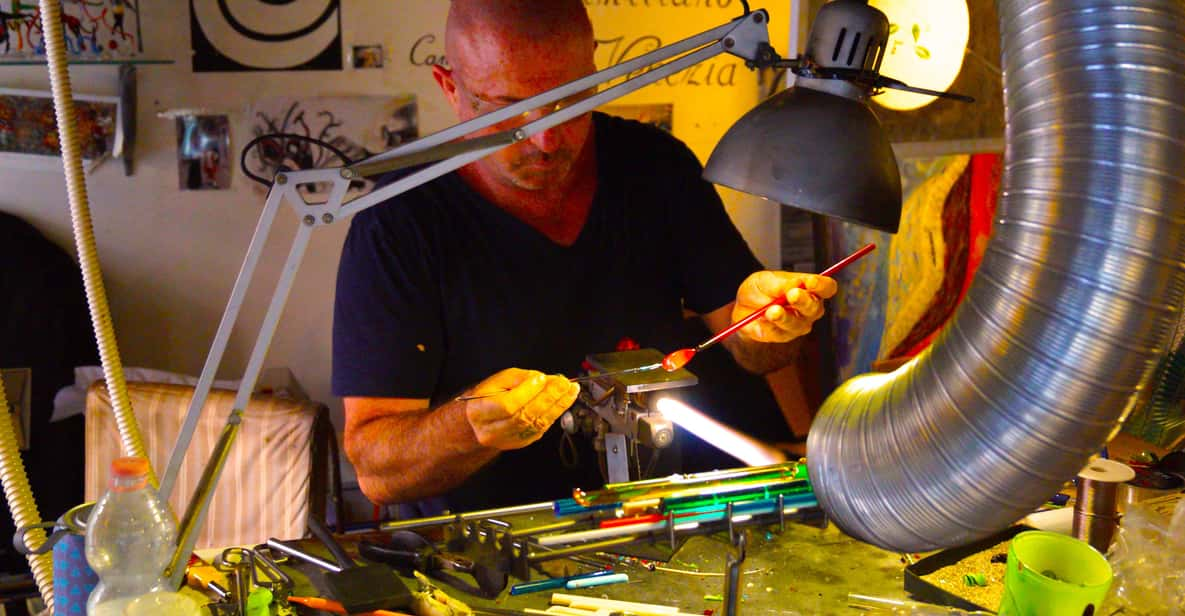
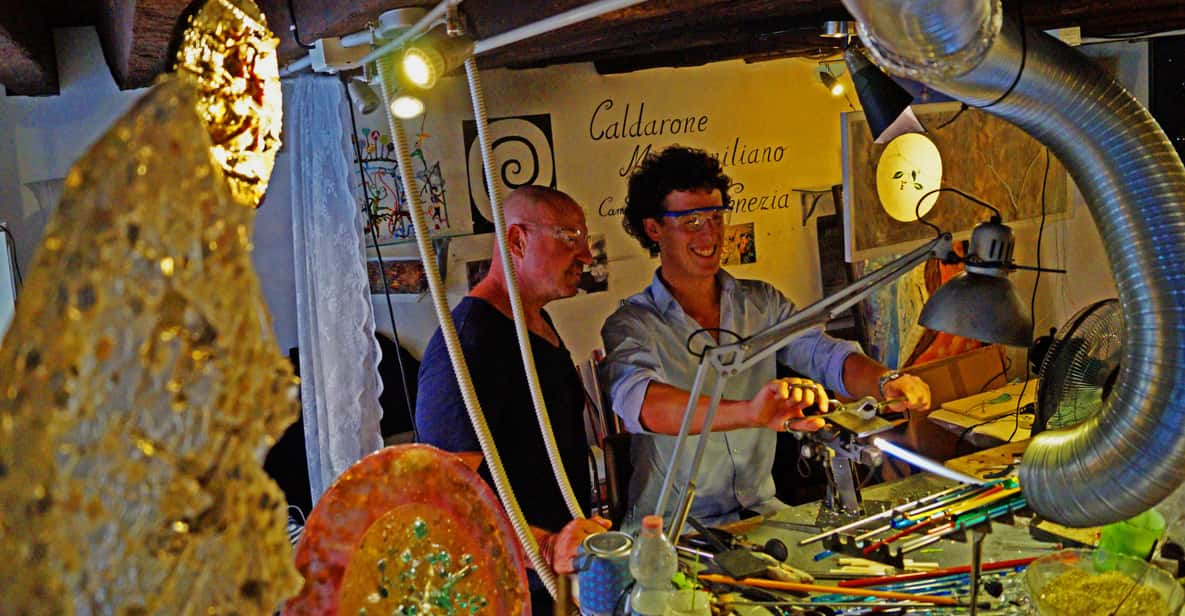
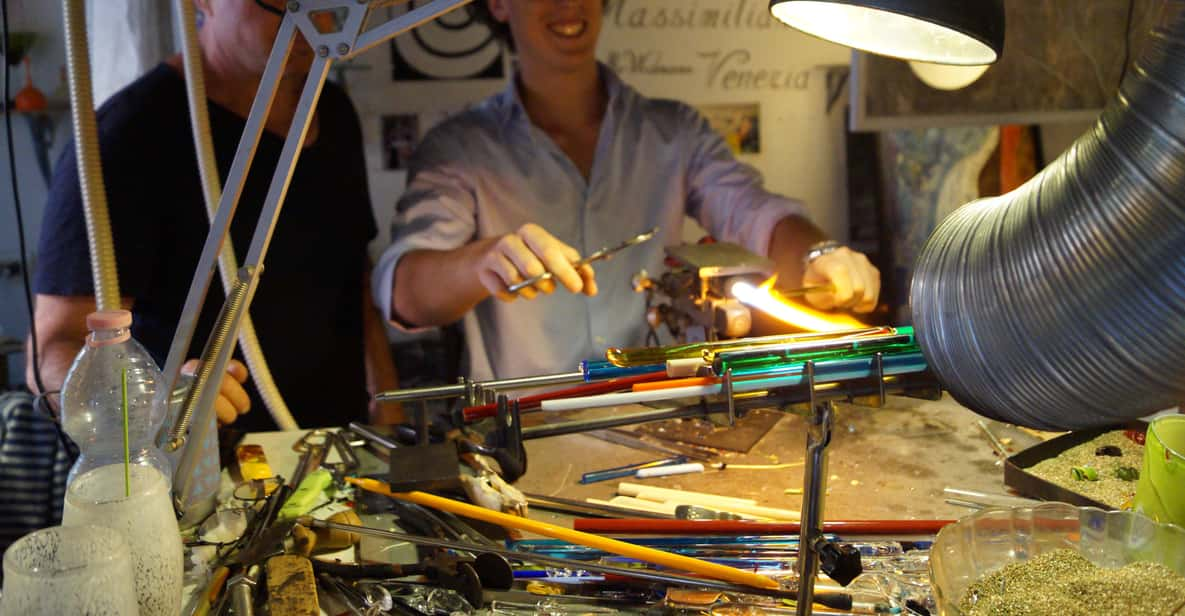
For a family with mixed ages, the bead workshop is the answer. Murano: glass workshop, studio tour and bead making takes place in a working studio where two glass artists first show you lampworking, then guide you as you make your own decorated bead at the torch, in colours you choose.
Your beads cool while you drink the coffee that comes with it, and you take them home the same day. The studio's minimum age is 14, so it suits families with teenagers.
Tour for this
Murano: glass workshop, studio tour and bead making5.0★ (114) · Free cancellation
The furnaces sit on Murano because of a fire. In 1291 Venice ordered every glass furnace out of the historic centre, and by 1295 a glassworker who revealed the trade's secrets risked his life. Seven centuries later, the law of geography still stands: there is no furnace class in central Venice, only island.
Aim your vaporetto at Murano Colonna. It drops you at the entrance of Rio dei Vetrai, the canal street where the working furnaces cluster, closer than any other pier.
Timing matters more than route. From Fondamente Nove in the north, lines 4.1 and 4.2 cross in 9 to 10 minutes, so board 20 to 30 minutes before your class.
From San Zaccaria near St Mark's, the direct line 7 takes 24 to 30 minutes when it runs, spring to early November, and circular lines take over 40 minutes, so leave 40 to 50 minutes of margin.
The vaporetto costs less than any organized tour and lets you set your own pace, which a class schedule needs.
If you would rather hand the crossing to someone else, Venice: Murano Glass Blowing Experience with Water Taxi includes a private water taxi ride, a guided demonstration and your own turn at blowing the glass.
One caution: a free water taxi offered by a hotel is a sales funnel for a showroom, so book transport you choose yourself.
Tour for this
Venice: Murano Glass Blowing Experience with Water Taxi4.5★ (432) · 1 - 2 hours · Hotel pickup · Free cancellation
What to wear to a blowing class, and who should think twice
The furnace radiates heat above 2,000°F, and the dress code exists for a reason. Closed-toe shoes are a condition of entry: sandals and flip-flops stay at the door.
Long pants of natural, non-synthetic fabric, jeans included, are the other rule, because synthetics melt near molten glass. Safety glasses and a protective arm sleeve are handed to you on site, and furnace blowers wear no bulky gloves, since feel matters more than padding.
The season changes the layers, never the rules. In July stick to breathable cotton and expect a hot room; in January wear a warm jacket you can peel at the studio door. Jeans work all year.
Health deserves an honest word. Beginner blowing classes are not suitable for people with respiratory issues, and the rising heat and humidity of a hot shop make breathing harder for anyone with asthma or another chronic lung condition.
The workshops also screen out pregnant travelers and people with heart, back or mobility conditions, and the class is not wheelchair accessible.
One last etiquette note: ask before you photograph the furnace. Flash disturbs the masters at work, and filming needs permission in many studios. Stay behind the safety lines, even for a better angle.
Here is the surprise nobody warns you about: the piece you blew stays behind. Fresh glass is still dangerously hot long after its glow fades, and rapid cooling cracks it. So it goes into an annealing oven to cool slowly overnight, releasing the stress that would otherwise shatter it.
A piece finished in a morning class can sometimes be collected later the same day; afternoon work is ready the next day. If you fly out sooner, studios ship finished pieces anywhere in the world for an extra fee.
Beads are different. The small beads from a torch workshop cool in about the time it takes to finish your coffee, and you carry them out the door.
For the flight, airlines advise packing breakables in carry-on baggage, where each piece can be wrapped individually, shielded at its fragile points and cushioned inside a rigid box away from the case walls. Airport screening officers have the final say at security, but glass itself is permitted through.
The lagoon runs on its own weather. Rain changes nothing: boats cross in ordinary rain without trouble. What stops the water is fog and exceptional high tide.
When visibility drops below 150 meters, harbour rules restrict lagoon navigation, and operators suspend departures. Rising tides begin rerouting water routes at about +95 cm, when the direct express services halt, and all lagoon transport suspends at +140 cm.
Independent studios add their own risk: artisans occasionally cancel a scheduled workshop at short notice, so confirm before you cross.
What happens if the day changes
If this happens
What happens then
Dense fog or acqua alta cancels transport
Boats reroute or suspend, so shift the class to another slot rather than waiting out the fog
The studio cancels the workshop
Cancellation up to 24 hours in advance brings a full refund, so rebook another day
You cannot make your slot
Cancel up to 24 hours ahead for a full refund on every class on this page
Your piece cannot be collected in time
The studio ships it worldwide for an added fee
Book with the 24-hour cancellation terms and a foggy morning costs you nothing but a reschedule.
What else to see on Murano around your blowing class
A class is an hour or two. Murano deserves the day, and everything worth seeing sits within a short walk of the furnaces.
Start at the Basilica dei Santi Maria e Donato, where a mosaic pavement of coloured marble and glass was finished in September 1141, and bones said to belong to Saint Donatus hang behind the altar.
Just along the canal, the Museo del Vetro fills the 17th-century Palazzo Giustinian with the largest historical collection of Murano glass anywhere, from Roman glassware of the first centuries to Renaissance cristallo.
Small museums, galleries and gardens line the same canal within a few minutes' walk of the studios, so an afternoon on the island fills itself.
There is stranger history too. The former church of Santa Chiara, built before the 1291 decree that sent the furnaces here, ran as a glass factory for 150 years, and Venetian doges lie buried in it.
Plan a full six to eight hours if Burano is on the list. A morning class leaves time to reach Burano by midday: from Murano Colonna, take line 4.1 or 4.2 one stop to Faro, then line 12 across, 30 minutes in all.
Buying real glass and going deeper than one blowing class
After you have shaped glass yourself, you shop differently. The checks are simple.
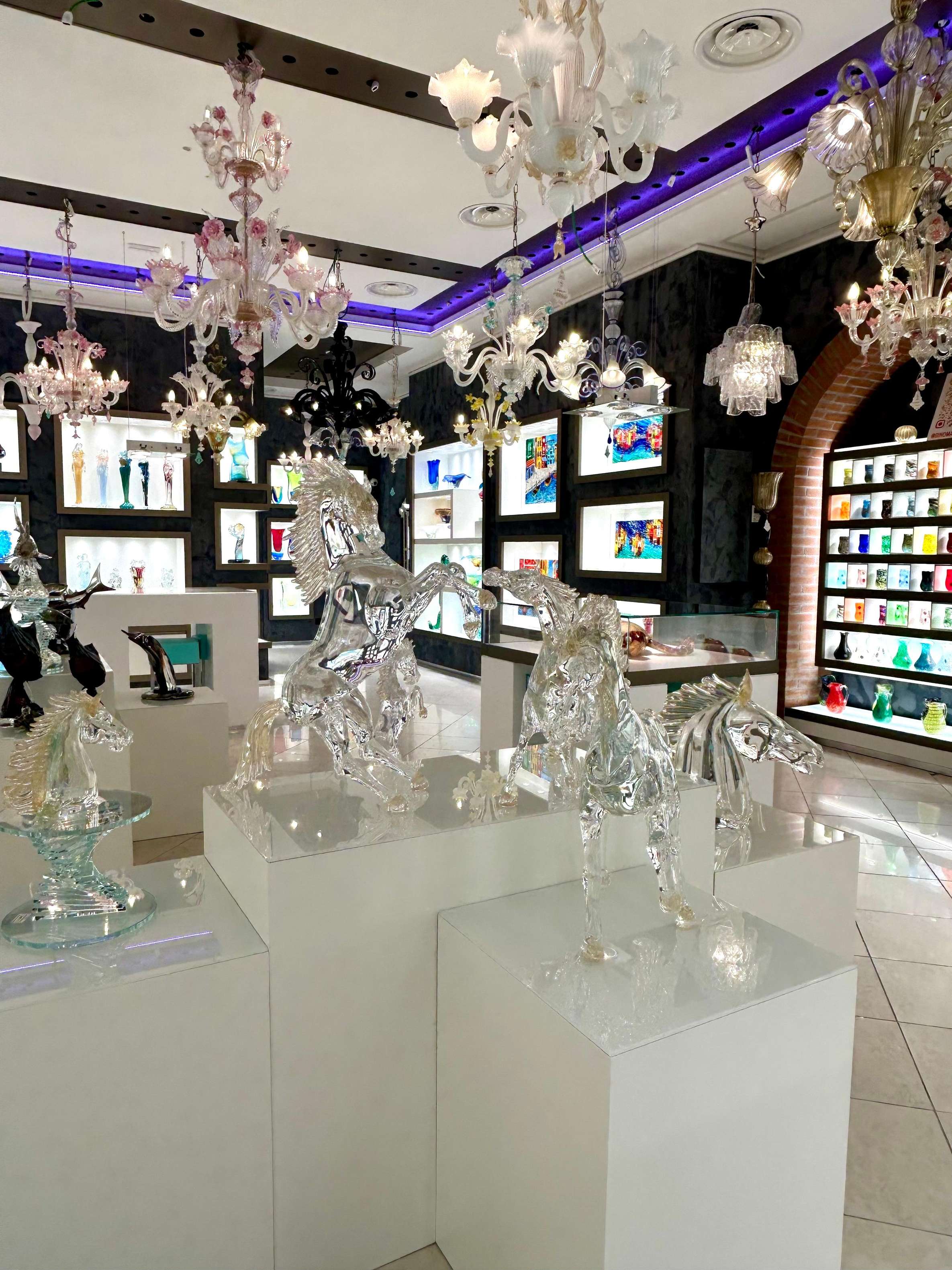
Genuine pieces carry the official Vetro Artistico Murano trademark sticker with a QR or producer code, set by regional law, and a legitimate workshop issues a certificate of authenticity on request; sellers of imports refuse.
Turn the piece over: hand-blown glass shows a polished pontil scar on its base, not a raw shaved bottom. Gold flecks and millefiori patterns prove nothing, foreign factories copy both, and stacks of glass in a tourist window or deep discounts mean imports.
Where you buy matters too. Showrooms on the island can cost up to three times what certified shops in central Venice charge, and small studios along the quieter canals sell custom jewelry at better rates than the waterfront. Prices vary widely by maker, technique and age rather than by size.
A traveler's note
A must in Murano. Friendly guide, exciting masters. Flavio made it next level by engaging us. With our Prosecco we each tried blowing glass, amateurs but so fun. Private water taxi, no fuss!
Experienced glassworkers get more from the island's specialists than from a beginner class: the historic toolmaker Carlo Donà sells authentic glassmaking tools straight from the maker, and the Scuola del Vetro Abate Zanetti runs structured courses.
Masters rarely teach advanced techniques in single-day sessions locally; deep training means multi-day courses at glass schools. If you want real technical instruction, contact independent studios before you travel and arrange a one-to-one session.
A blowing class in Murano delivers what the demonstration behind the rope never will: the pipe in your hands and a piece you made. Book a weekday morning, wear closed shoes and natural-fibre pants, and plan around the overnight cooling.
Go ifYou want to shape molten glass yourself, not watch someone else do itYou can stay another day or have your piece shipped homeYou are 12 or older and can stand the heat of a working furnace
Skip ifYou have a respiratory condition that heat and humidity would aggravateYou are traveling with children under 12, for whom beads or mosaic are the fitYou only have a couple of hours and no time to collect or ship your piece
Quick answers to the questions people ask before booking a hands-on glass blowing class in Venice and Murano.
Venice2026
The furnace hums, your cup glows orange, and the master's hand steadies yours. Wear closed shoes, and plan pickup the next day.
Can a complete beginner do a Murano glass blowing class?
Yes. Beginner glass blowing classes assume no craft background at all. The master guides your hands directly while you work, and the sessions focus on forgiving shapes like pumpkins, cups, paperweights, and flowers, where a small mistake in blowing or symmetry will not ruin the piece.
What do you actually do yourself in a beginner glass blowing lesson?
You blow air into the pipe when the master tells you, to expand the bubble inside the hot glass.
You roll the blowpipe along the bench while the piece is opened with jacks, sometimes guiding the tool with the master's hand over yours, and you tap the finished piece off the pipe. At beginner level, the master alone gathers the glass, handles the punty transfer, and trims the rim.
Can you take home the glass piece you make the same day?
Usually not on the day. Blown glass has to cool slowly in an annealing oven overnight, or it will crack.
Most glass blowing classes let you pick up your piece the next day, and studios can ship it anywhere in the world for an extra fee. Bead-making workshops are different: the beads you make there come home with you.
How old do children need to be for a glass blowing class?
Hands-on furnace glass blowing classes generally require participants to be at least 12, and some studios set the bar at 14. The heat near a working furnace is not safe for younger children.
If you are traveling with kids, look instead at glass mosaic activities, which welcome children from age 5, or torch bead-making classes for ages 10 to 14.
What should you wear to a glass blowing class in Murano?
Closed-toe shoes are required; sandals and flip-flops are not allowed in. Long pants made of natural fabric, such as jeans, are the safe choice, because synthetic clothing can melt near glass at 1000°C to 1400°C. The workshop provides safety glasses and a protective sleeve for your arm.
Can you take a hands-on glass blowing class in Venice itself?
No. Fire laws moved all glass furnaces out of Venice's historic center to Murano back in 1291, and they have stayed there ever since. Classes that meet near the Rialto Bridge include the boat ride to Murano, where the furnaces are. Anywhere hands touch hot glass, it happens on the island.
How is a furnace glass blowing class different from a bead-making workshop?
In a furnace class you work with molten glass gathered from a furnace at over 2000°F, blowing and shaping it on a pipe.
In a lampworking bead workshop you melt glass rods in a tabletop torch flame and shape beads at a bench, which takes less lung power and arm strength. Both are beginner-friendly; the furnace version is hotter and more physical.
How do you tell a real glass blowing class from a sales showroom demo?
A real glass blowing class runs one to two hours, puts you at the bench, and ends with a piece you made.
A standard factory demonstration lasts 10 to 20 minutes, keeps you behind a barrier, and moves quickly into the showroom. Booking a workshop in advance also spares you the sales pressure that comes with free factory visits.
Do the furnaces close in August or on holidays?
Commercial production kilns shut for maintenance in August, but the visitor-facing demonstration furnaces keep running through August and every major holiday. You can book a glass blowing class at any time of year.
What if you have asthma or breathing problems?
Beginner furnace glass blowing classes are not suitable for people with respiratory issues, because of the heat and humidity around the furnace. Simply watching a demonstration may still work for you. If a condition could stop the visit, confirm with the studio before you book.